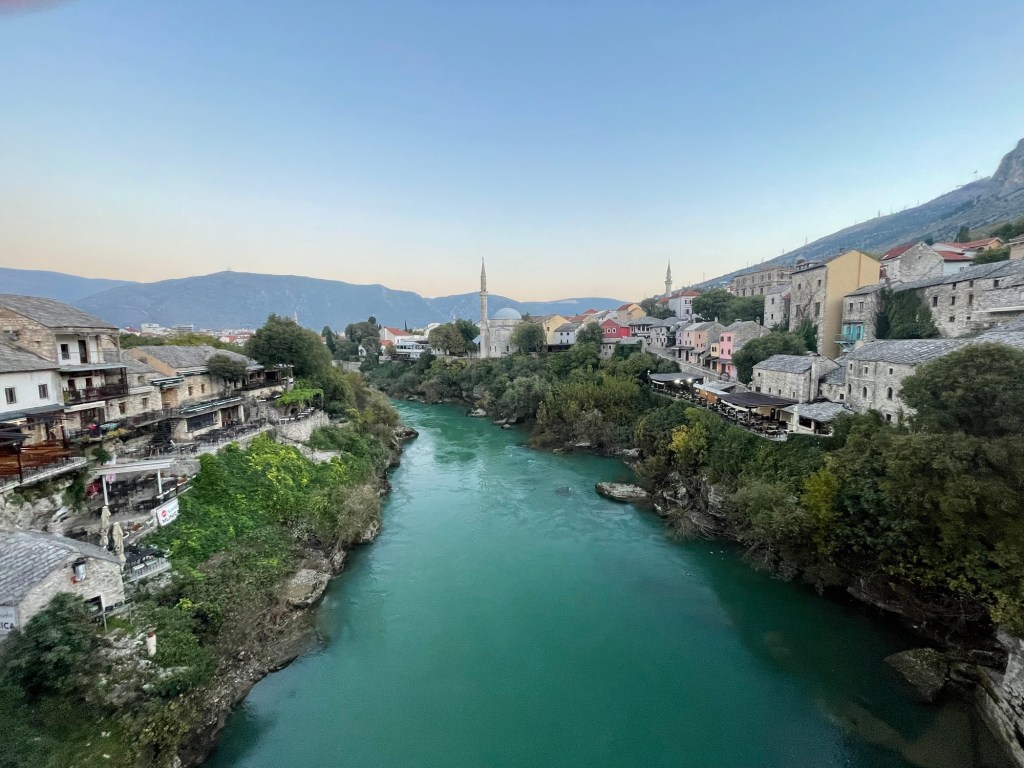
Tucked beside one of Eastern Europe’s most popular tourist destinations — Croatia — is a country that rarely makes anyone’s bucket list. Not so tourist-friendly. Less picturesque. And, as I would soon learn, a history that still drives the country to this day.
My friend Morghan and I decided it was time for another trip together. We’ve traveled enough now that the destination matters less than the opportunity to see a different part of the world. After a few suggestions, I proposed Croatia and she, Bosnia.
I shrugged. Bosnia. Why not? Any travel is time well spent.
The trip took place in October of 2024. I’d been with Morghan abroad a few times now and wanted to do my absolute best to plan the trip so we could optimize our fun. Even with all the intention I put forth, Bosnia was nothing I expected it to be.
Sarajevo
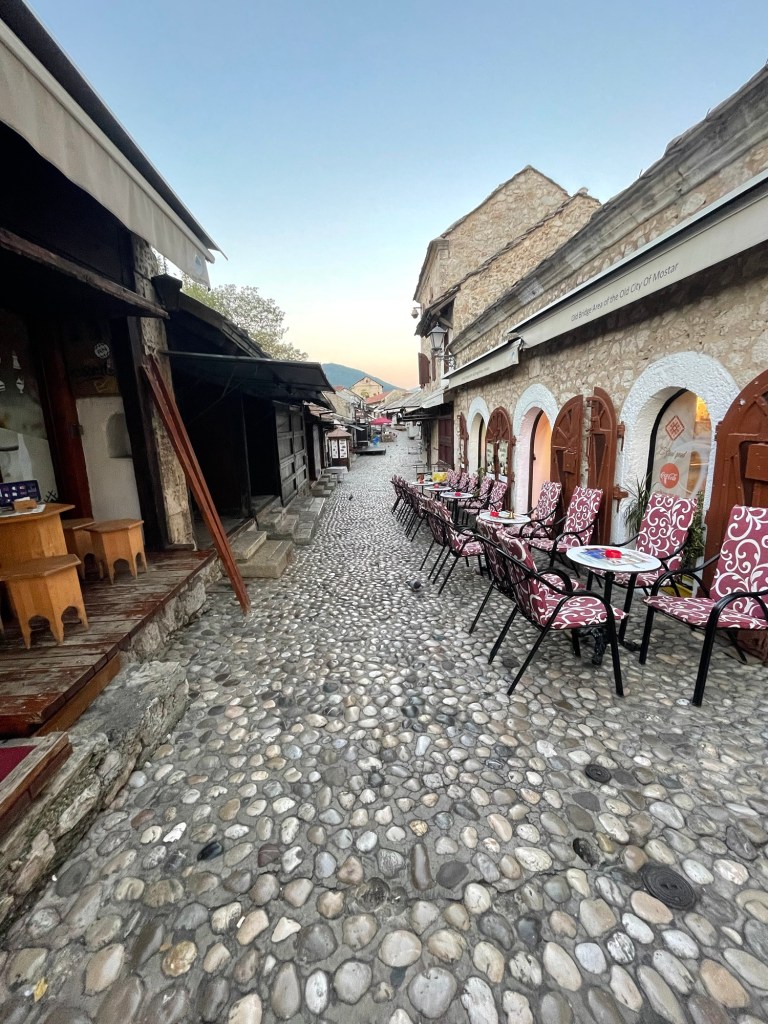
Arriving in Bosnia and Herzegovina felt a bit like stepping into a time portal and landing fifteen years in the past. Less people with their noses to their phones, more modest accommodations, and a culture where people would sit and chat for a while. Our first stop was Sarajevo, where Morghan confidently navigated narrow cobblestone streets in a tiny rental car that felt wildly optimistic for the task. I’m grateful to Morghan and her ability to drive a stick shift, an acquired skill from a previous trip to Europe.
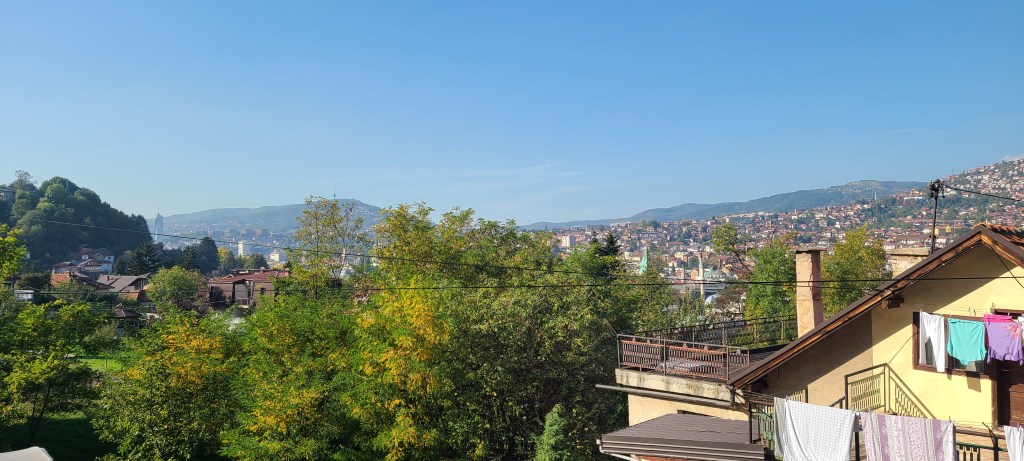
That afternoon, we joined a walking tour. The information came fast and heavy. Between jet lag and my selective interest in history, I quickly fell behind. Morghan — far more historically inclined — absorbed it all with ease.
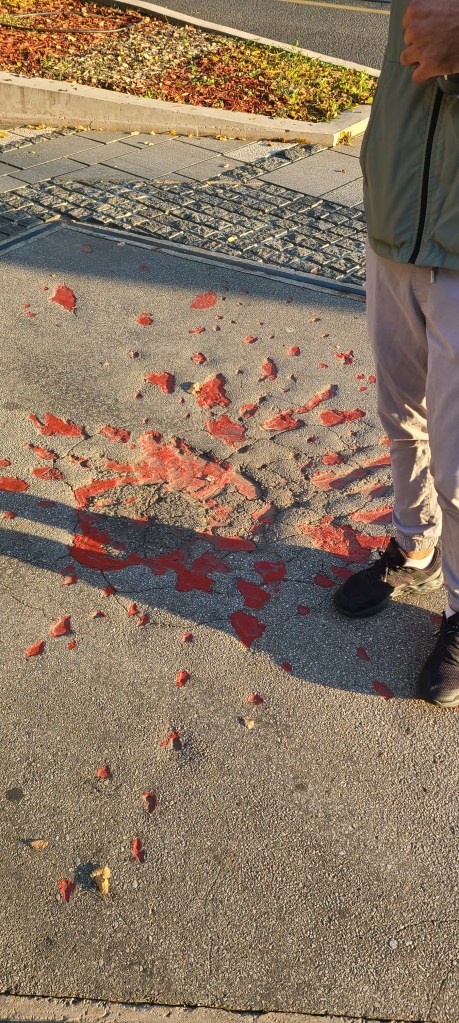
Sarajevo’s identity is tethered to the Siege of Sarajevo, which began in the early 1990s and still shapes daily life. It came up everywhere. When you look down you might just find that you’re standing on a Sarajevo Rose, a red resin-filled crater that marks the places where three or more people were killed. They resemble a splatter of blood and are everywhere.
Before the war, Bosnia was home to three main people groups: Bosniak Muslims, Serbs (Orthodox Christians), and Croats (Catholics). They lived side by side, intermarried, and largely identified as Yugoslavs first. Within this socialist society, life was relatively stable— and by many accounts, pretty good.
Things shifted after the death of Yugoslav leader Josip Broz Tito. Without his unifying leadership, nationalism surged, especially in Serbia. Slovenia and Croatia declared independence, followed by Bosnia. Bosnian Serbs, backed by Serbia, opposed this move, and conflict followed.
A siege is when a city is surrounded and cut off from essential supplies. Sarajevo, a deeply multicultural city, stood in direct opposition to the push for ethnic separation. For nearly four years (1992–1996), the city was encircled — food, water, and electricity were cut off, and civilians were targeted. Thousands of people died — men, women, and children.
The war eventually ended, but the peace is complicated. Today, Bosnia has three presidents — one for each people group — who rotate leadership every eight months. As locals like to joke, there are three presidents… but not much gets done.
Our guide, a friendly, olive-skinned guy in his early thirties, spoke openly about his childhood during the siege.
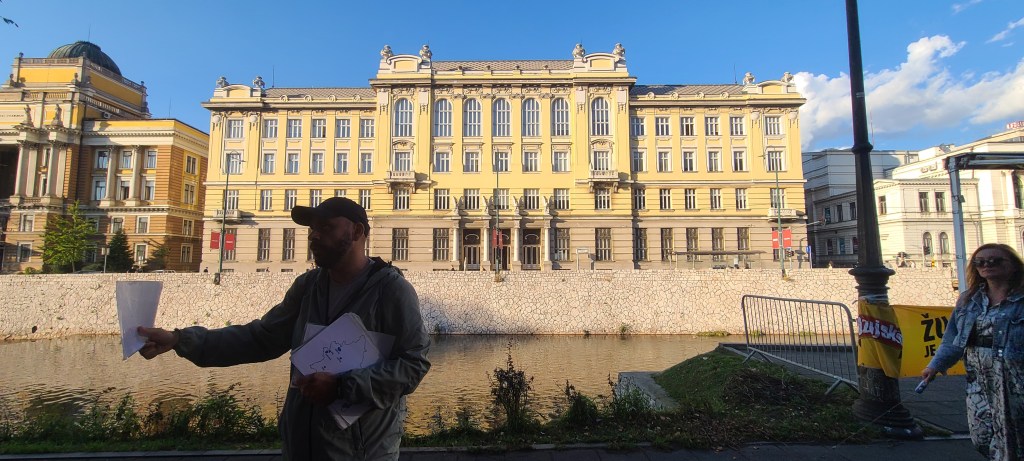
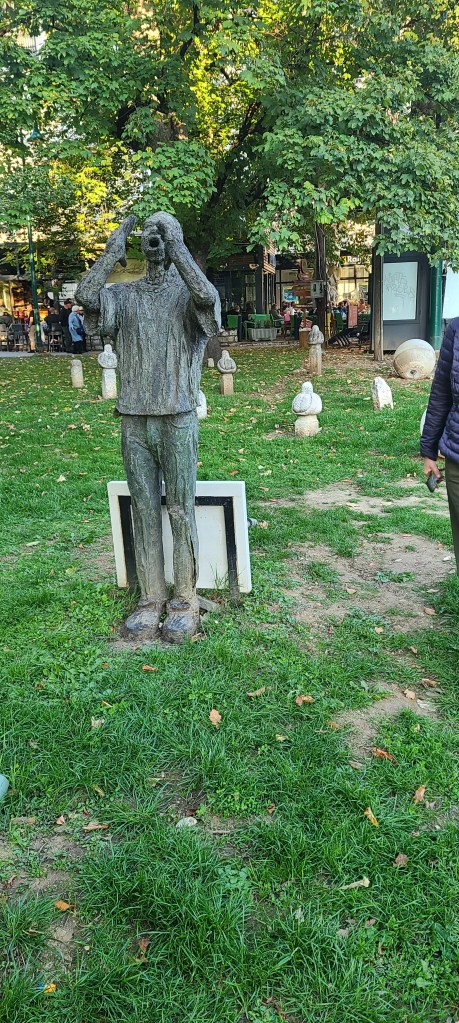
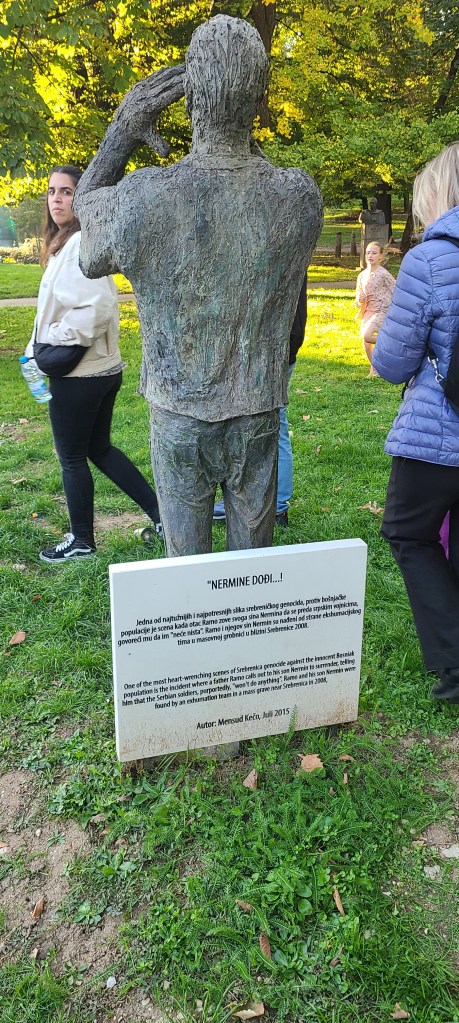
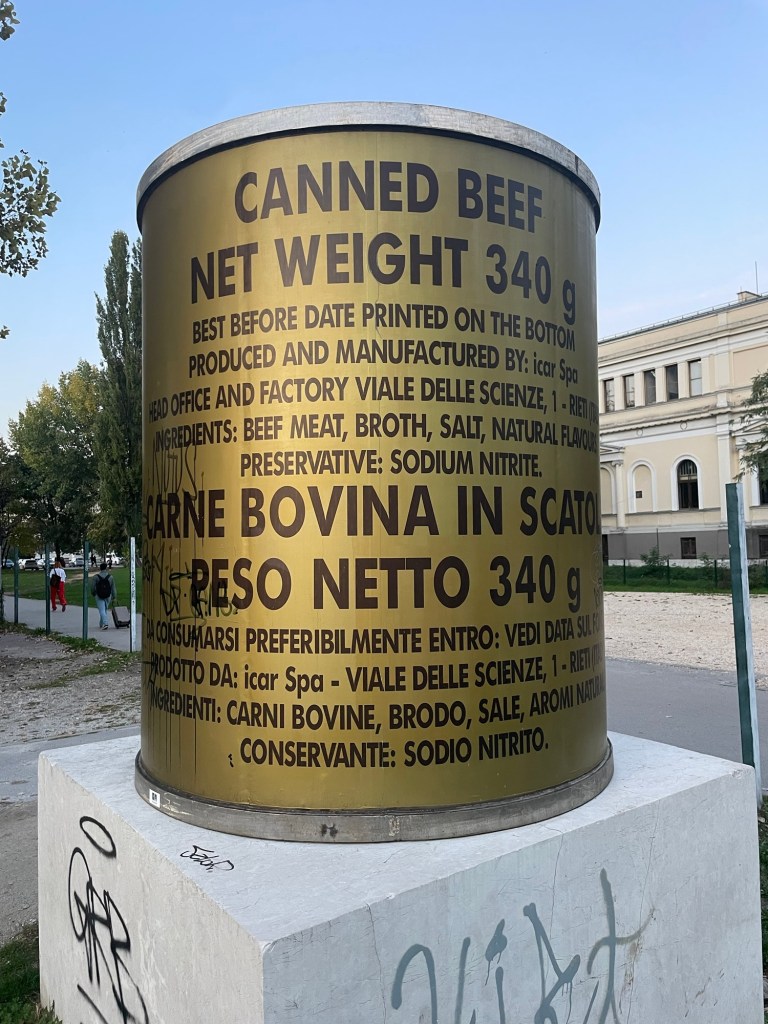
“This monument,” he said, pointing to a marker, “represents when the UN sent us food. But it was no good. Sometimes expired as much as twenty years old! Not even the dogs would touch it. If we set it out for the dogs, and the sniffed and turned their noses away, we knew it was no good for us.”
The Siege of Sarajevo was a time of starvation. He told us how his mother would make dinner, and he and his sister would pretend to enjoy the meal so she wouldn’t feel bad. They all knew how limited the food was. Often, they would pretend to eat but sneak the food in the trash. Sometimes they’d eat anyway and get sick later.
His mother was considered lucky — she still had a job, even though it was unpaid. It was a job that mattered to society and it gave her purpose. This was a time where people scuttled from place to place, always on the lookout for danger. People learned to move quietly. Children were educated in secret, though nothing resembling a real school existed. Many died by the hand of snipers, simply standing in line for free bread or playing at a playground.
This was a dramatic introduction to Sarajevo, but these are memories that the country still holds close.
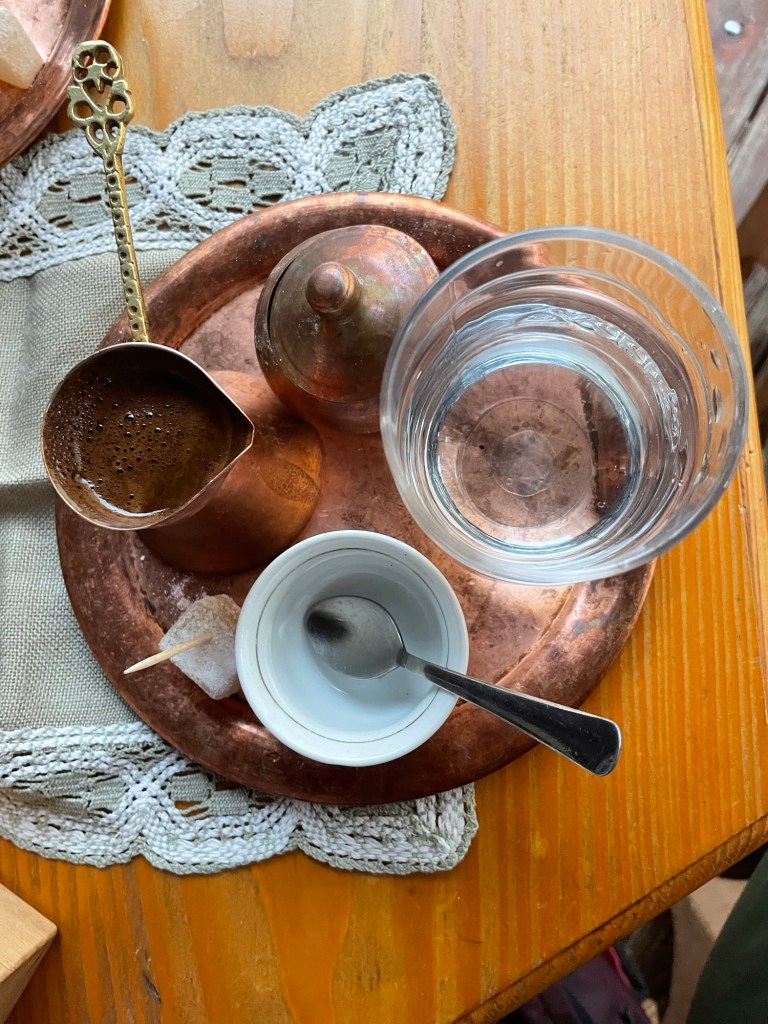
Our first morning abroad, we wandered downtown until we found a local coffee shop. Bosnian coffee became a daily ritual: a small cup, a glass of water, and a cube of Turkish delight or a sugar cube. Having no idea what the glass of water was for, I chucked it to the pavement. I immediately made eye contact with one of the customers inside the cafe through the glass wall. The gentleman and I bursted out laughing. As I told Morghan what had just happened, he must have been telling his friends the exact story.
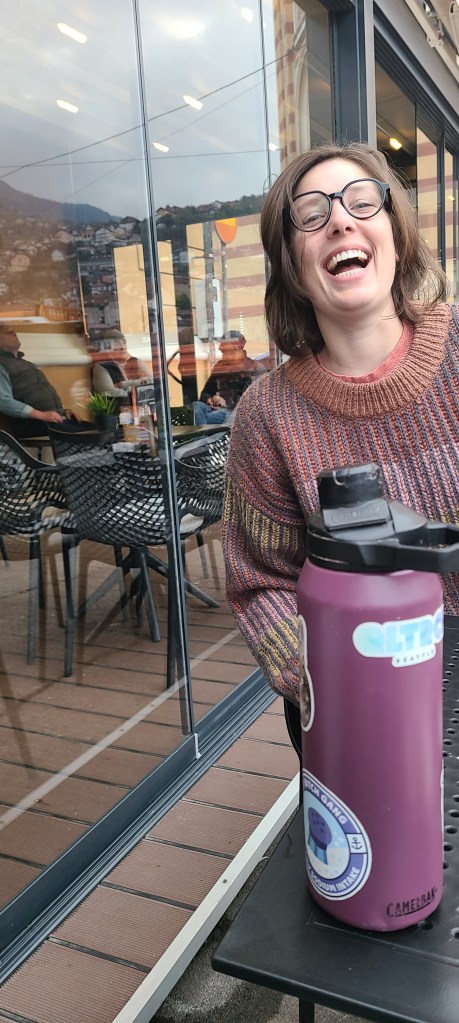
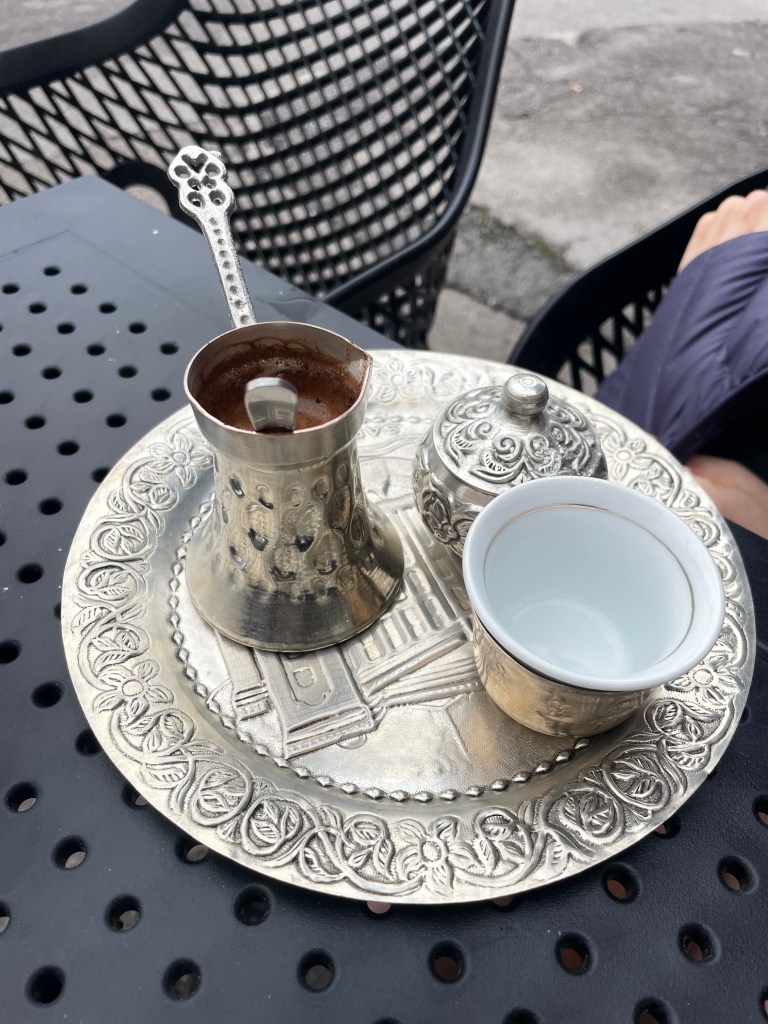
A traditional Bosnian coffee has a specific order to drinking. You sip the water, skim the froth from the coffee and add it to the cup, then pour the coffee into the cup. Next you dip the sugar cube into the coffee, take a bite, then sip the coffee.
The flavor of the coffee is earthy and intense. The Turkish delight ranged from soft and lovely to old and rubbery. Those went straight into the trash.
Mornings were frequented by men, young and old alike, gathering over coffee behind a cloud of cigarette smoke. Oddly enough, we rarely saw women in these early mornings. When they did appear, they wore thick makeup with upturned collars and moved quickly down the streets, eyes looking straight ahead. It may have been Morghan’s shorts or my wide-brimmed hat that screamed Tourist!, but men stared at us hard. We simply stared back and eventually they broke eye contact.
Probably one of the best and most informative parts of the trip was our food tour. Our tour guide had straight blonde hair and spoke with an accent similar to that of an Australian. She wanted us to love Bosnia — to talk about it and tell others about it! Tourism means jobs, and jobs are scarce. Many young people leave the country to find work and opportunities. One local told me people often show up for work without knowing when they’ll be paid.
“Why don’t they just quit and find something else?” I asked.
“Because every job is like that.”
The food tour consisted of lots of bread and ćevapi (sausages), plain greek yogurt, and thick rice milk. Burek — a spinach or sausage filled bread — would soon become one of the most available foods as we ventured into more remote areas. This was unfortunate since Morghan and I found it quite unappetizing.
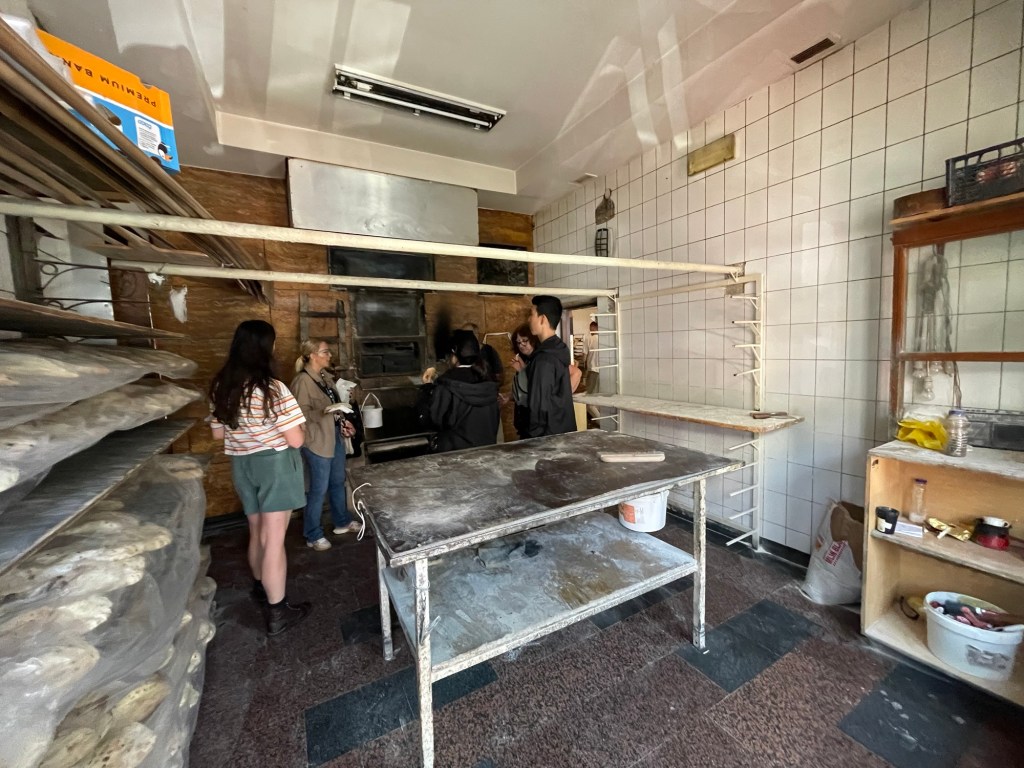
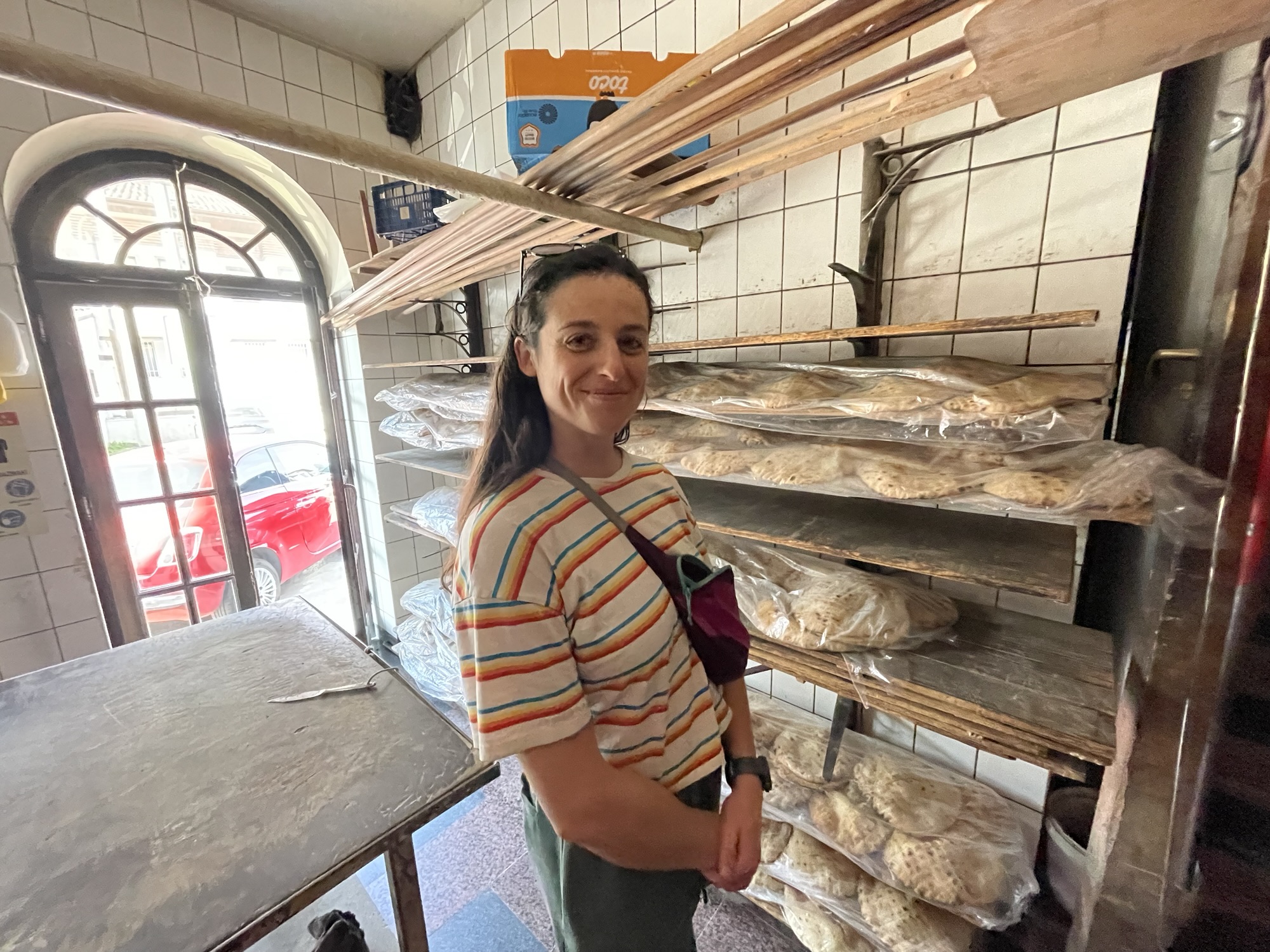
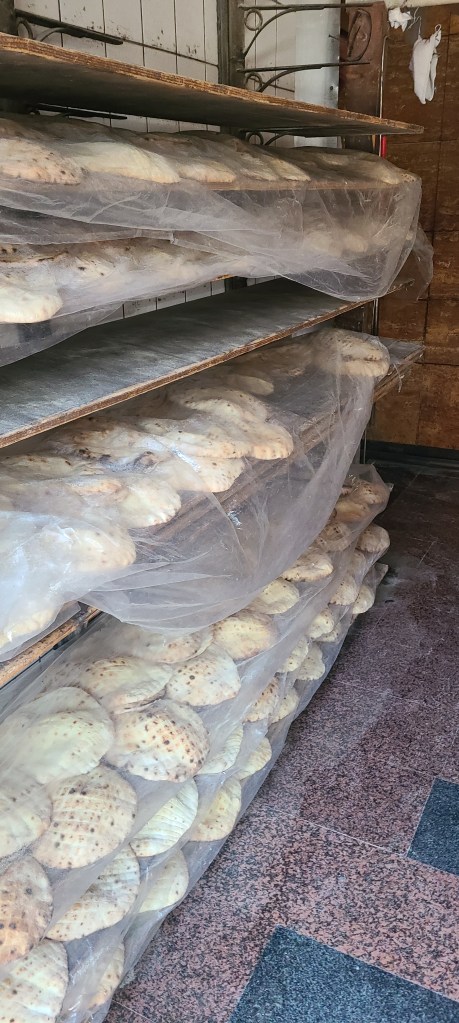
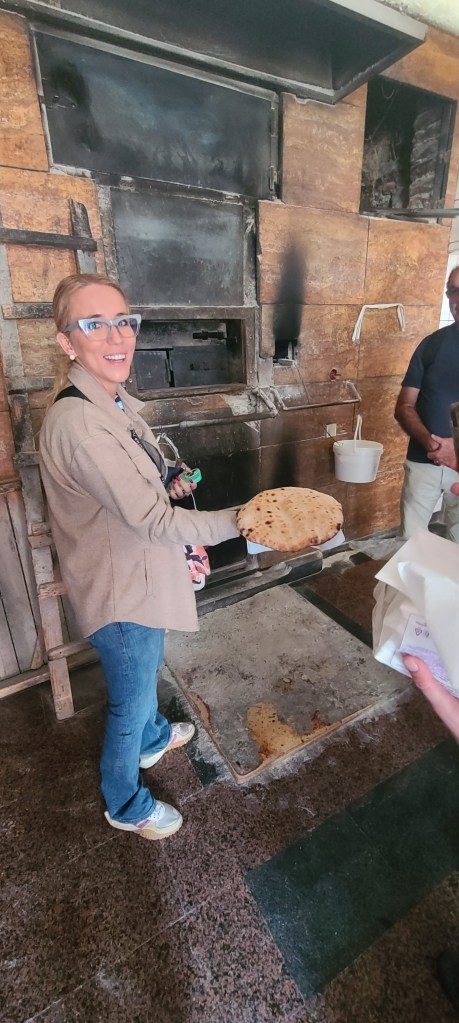
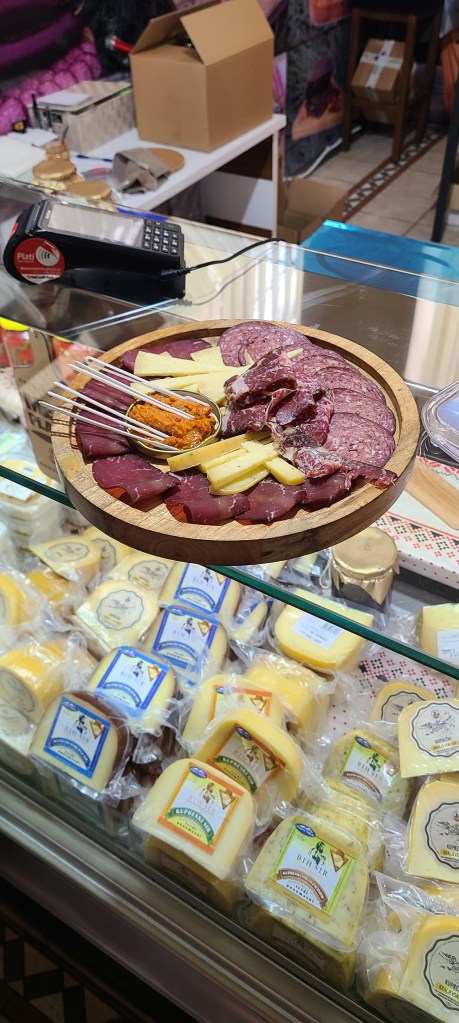
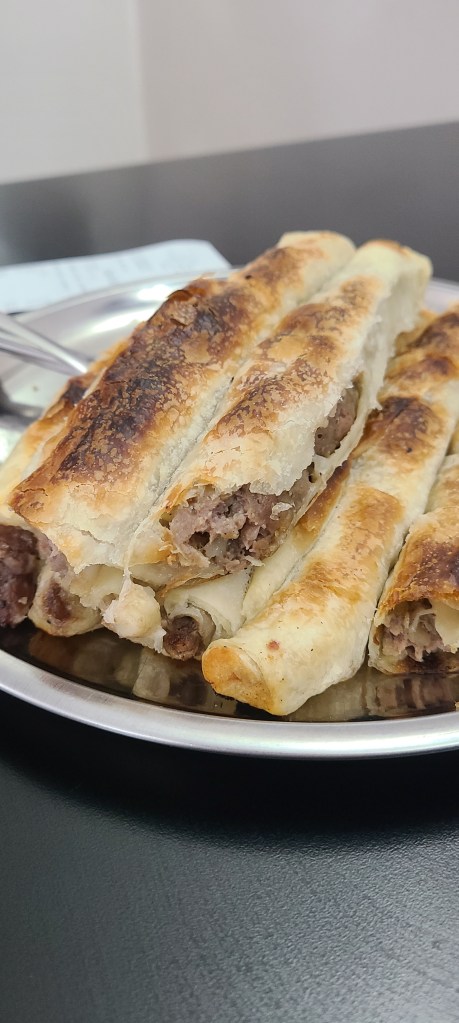
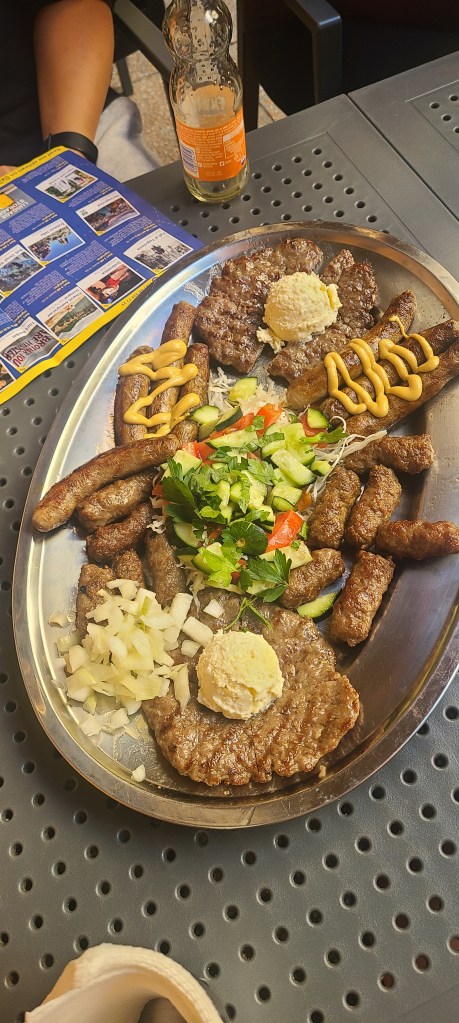
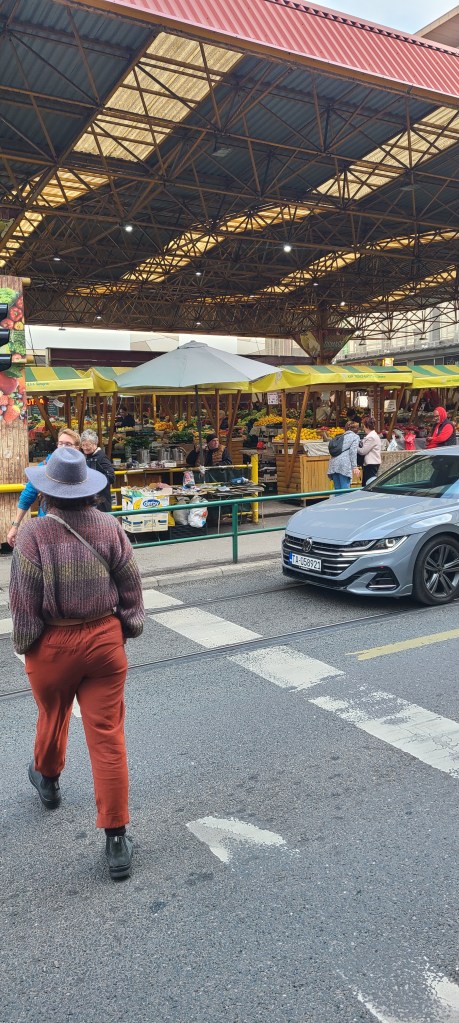
While eating, our guide continued to speak of Sarajevo history. While people often spoke openly of the siege, many, like the father of our guide, prefer to stay silent due to the torture they experienced. Even though our guide was just a baby during the time of the siege, she, like many young Bosnians today, carry the scars of the war as their own. It’s their parents’ scars, but it hurts them too.
The museums provided an extra layer of insight into the horrors of Sarajevo’s history. One museum, squeezed in between buildings on a cobblestone street, wound through room after room of drywall, its black painted walls layered with stories of brutality. About thirty minutes in, Morghan turned to me and said, “I think I’m ready to go.”
Some of what I read there I’ve never repeated aloud. Those stories don’t need repeating.
We wandered through shops which all seemed to sell the same touristy items: coffee sets, towels, war relics. In one store, Morghan bought a shell casing that would later be confiscated at security. As we lingered, a six-foot-four Canadian lumberjack with a booming accent walked in. Morghan and I locked eyes and fled. Our fake Canadian cover story was about to unravel.
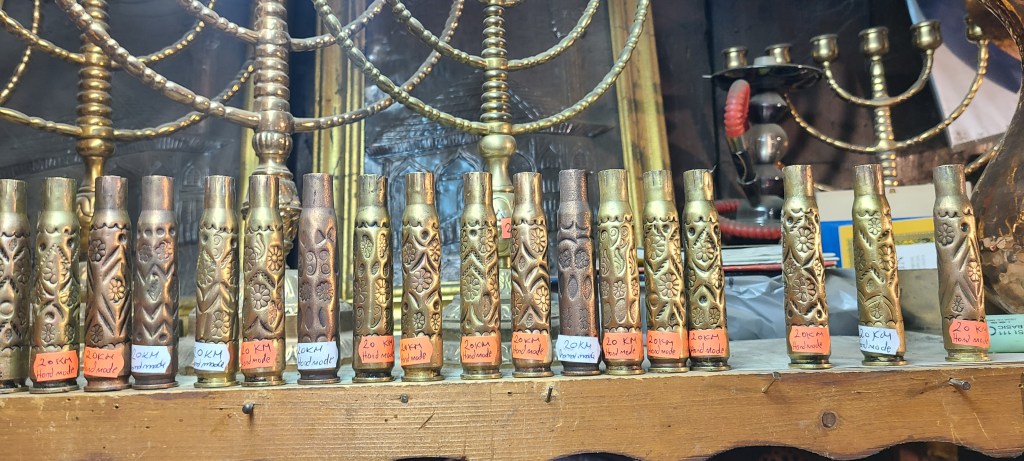
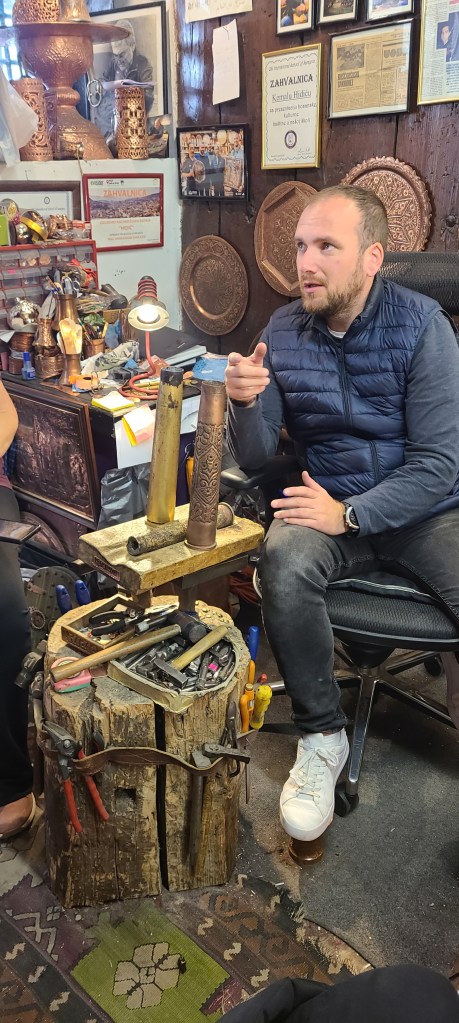
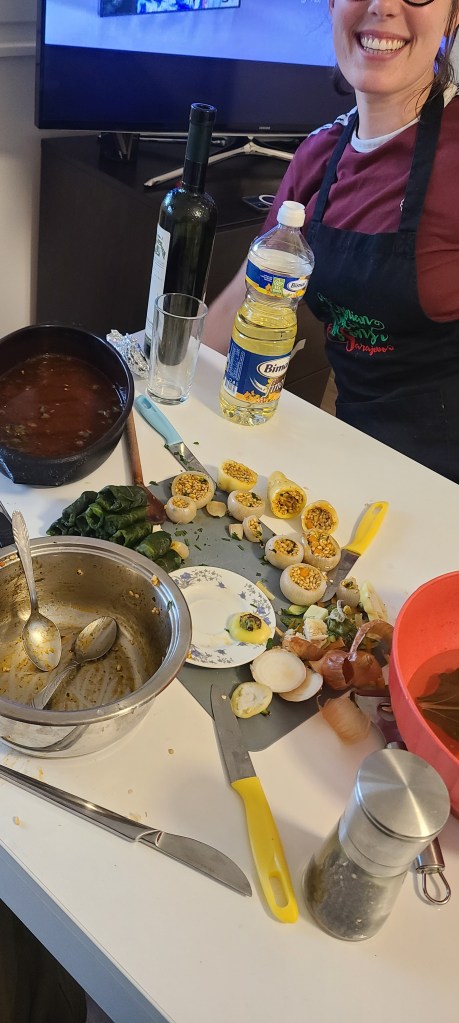
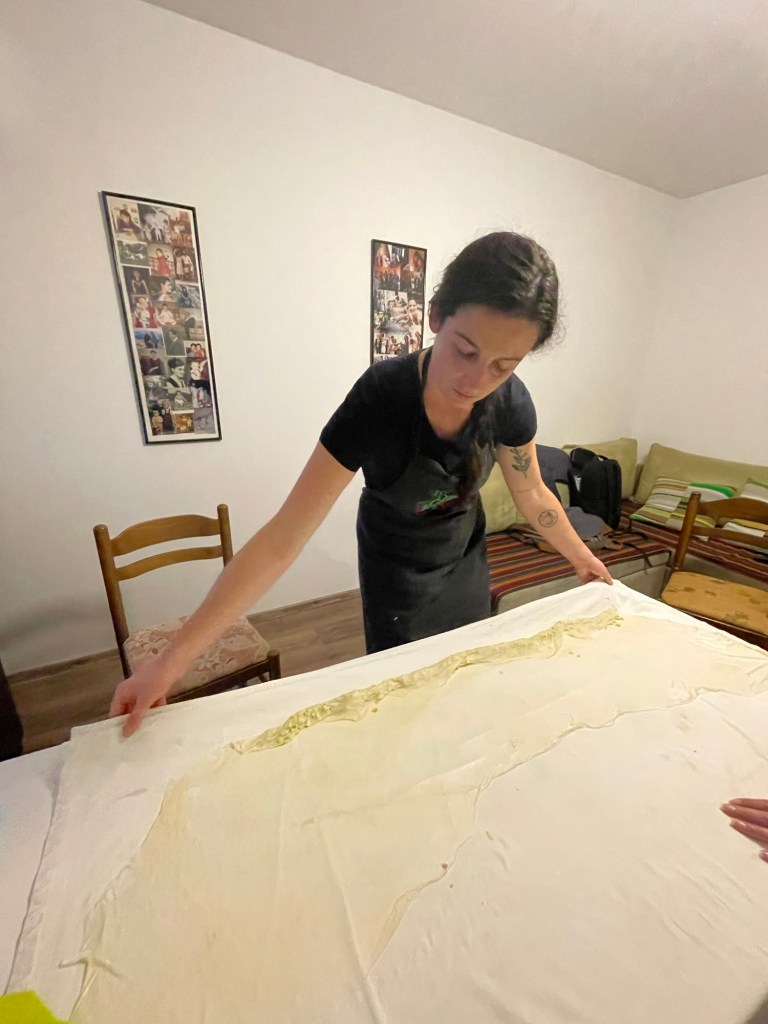
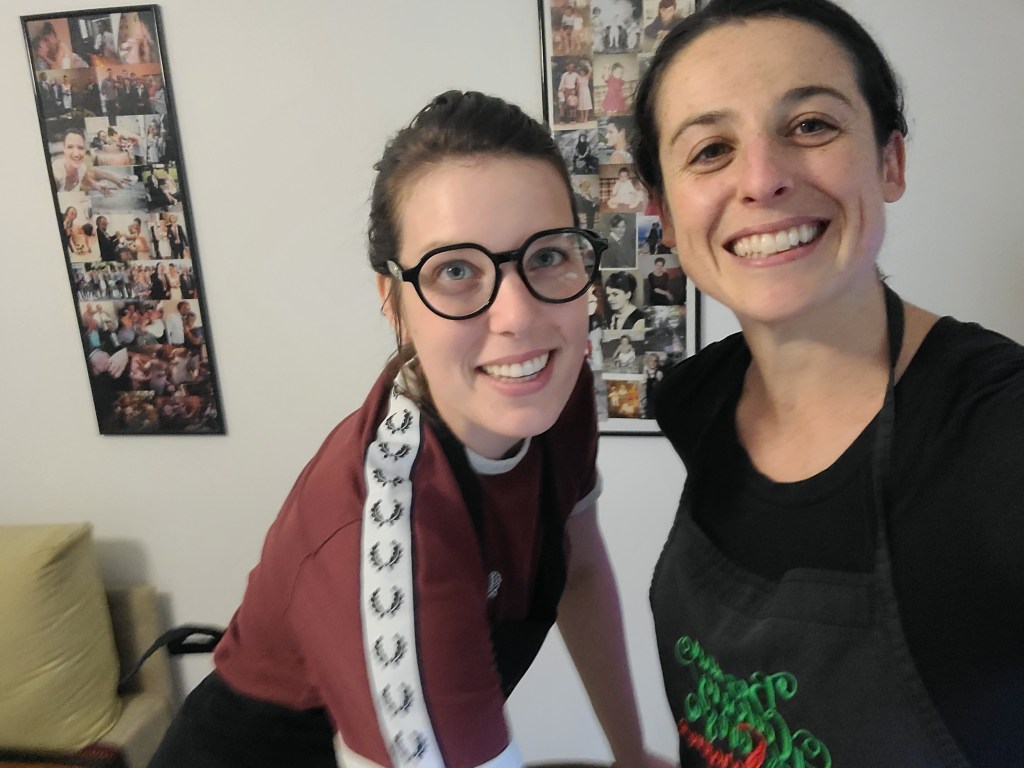
That evening, we climbed a steep hill to a cooking class to which we arrived slightly late on the account of a misreading the time — whoops! Our host welcomed us anyway. We rolled out phyllo dough until it was “as supple as a breast — or an earlobe,” as our chef instructed. Her husband joined us, and we talked more about the war. She inherited the house she owned, living there as a child. There used to be a policy where everyone was given a house — this sustained her and her mother throughout the war, but this act is no longer in effect.
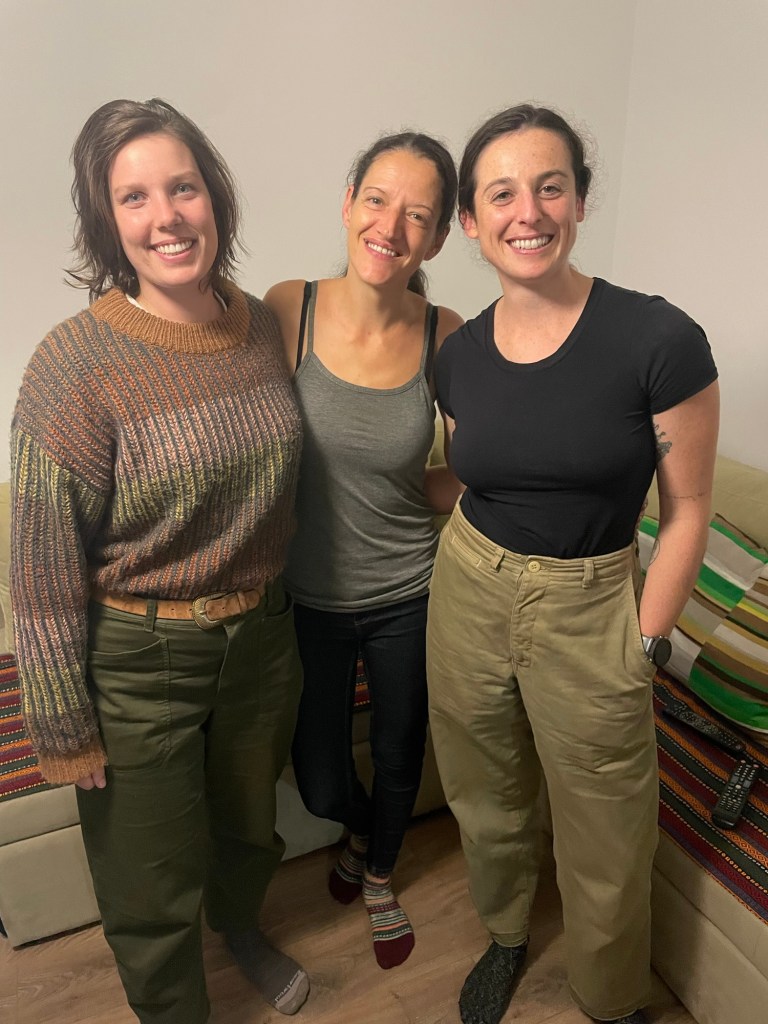
Sarajevo carries its scars openly. Blood-splatter monuments. Playgrounds turned into cemeteries. Violent war footage looping outside museums. The wounds here never healed.
Šipovo
We left Sarajevo to explore the countryside. As there were only washing machines and no driers — typical European fashion — our clothes were laid out across the back of our car. Morghan planned for us to explore some nature tours. I admired that Morghan saw such beauty in a landscape I found to be so arid as we drove through windy roads.
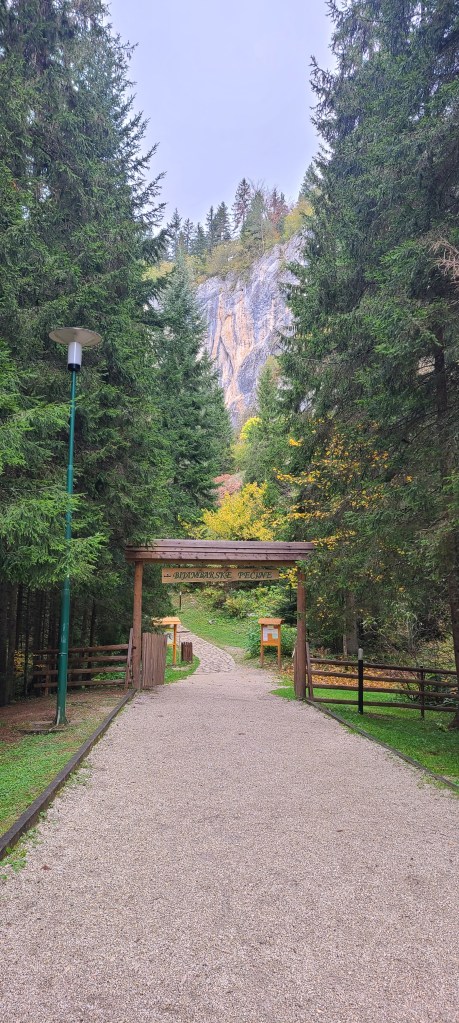
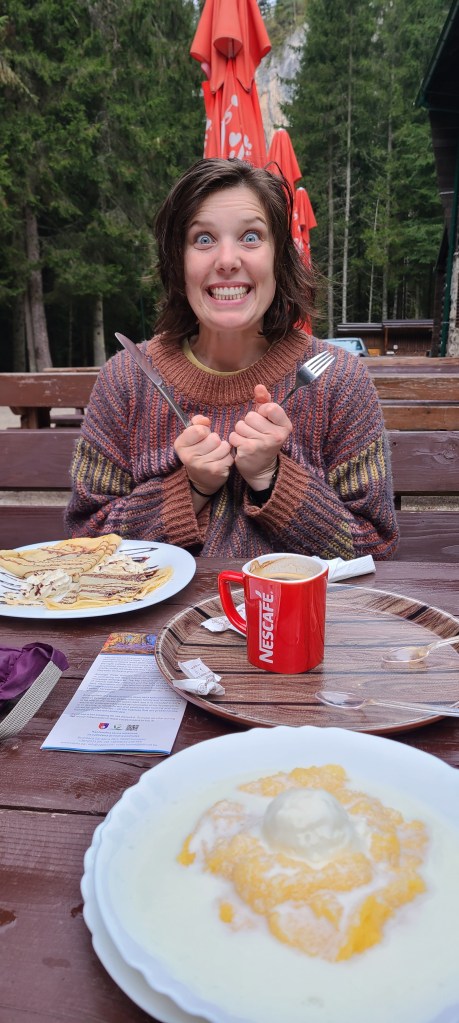
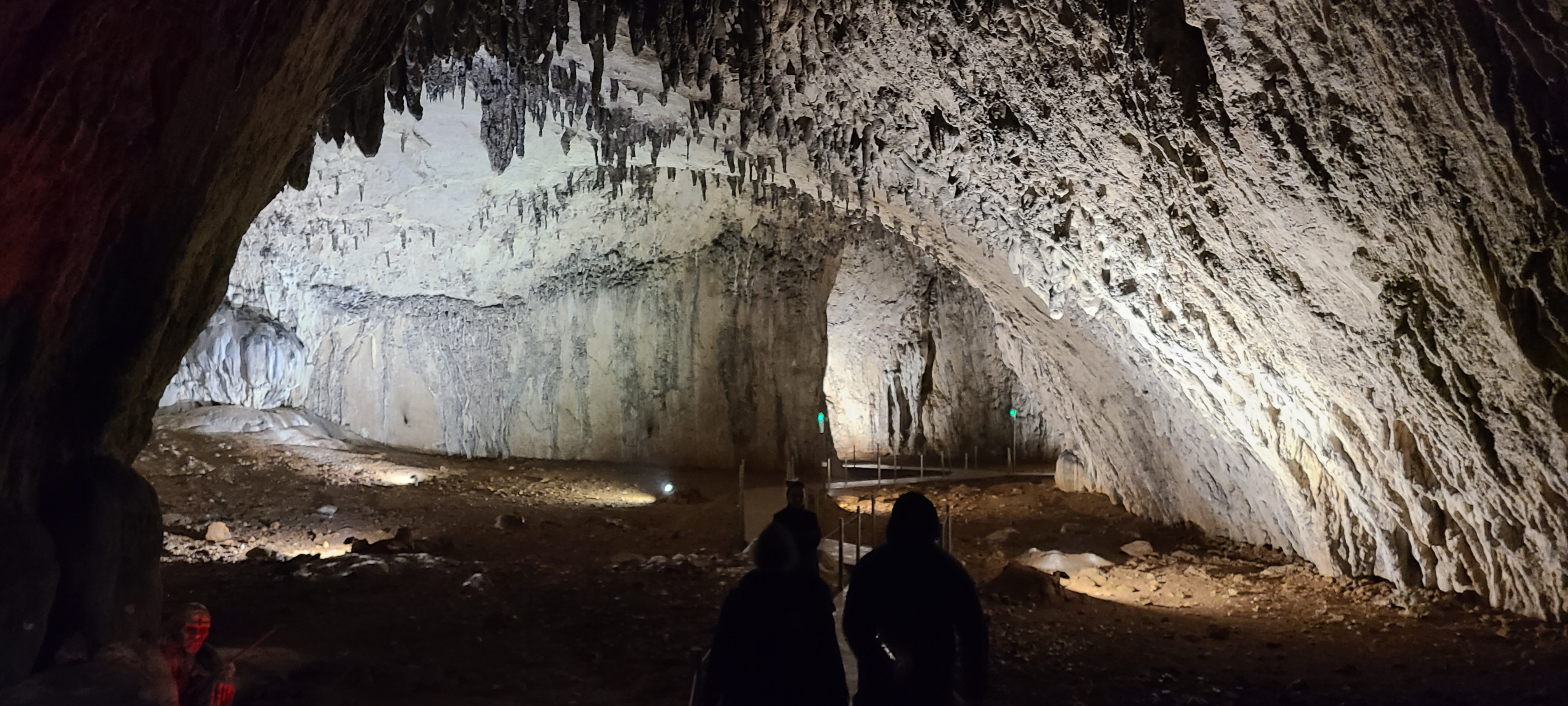
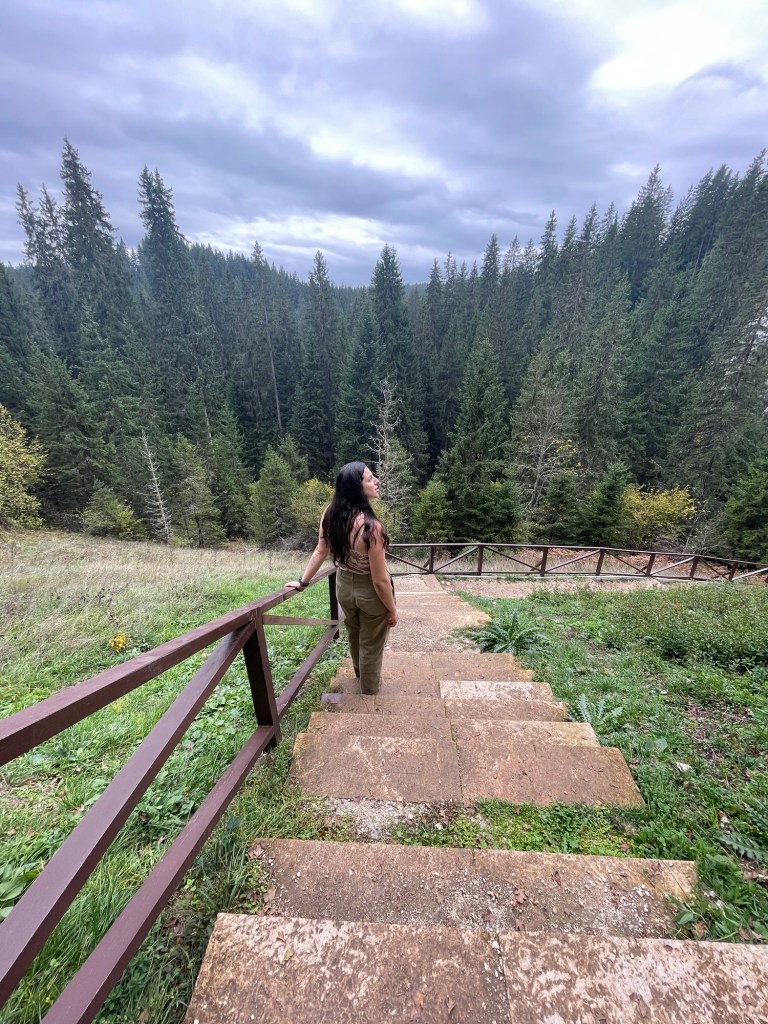
The first cave — Pećina Orlovača — required a walk before the visit. I enjoyed some chocolate covered crepes before we walked through a trail through woods, down a little staircase, and there we stood in front of a cave opening with a chain draped across the entrance. This one would be guided with a few other people to join us. The temperature dropped the dramatically as we stepped into the darkness. Our guide mentioned the acoustics were perfect for singing, so naturally I sang. This being said, I am not a singer. But I am confident. The gentlemen we toured with seemed to be quite impressed with my singing abilities and videoed it. So, I’m basically professional.
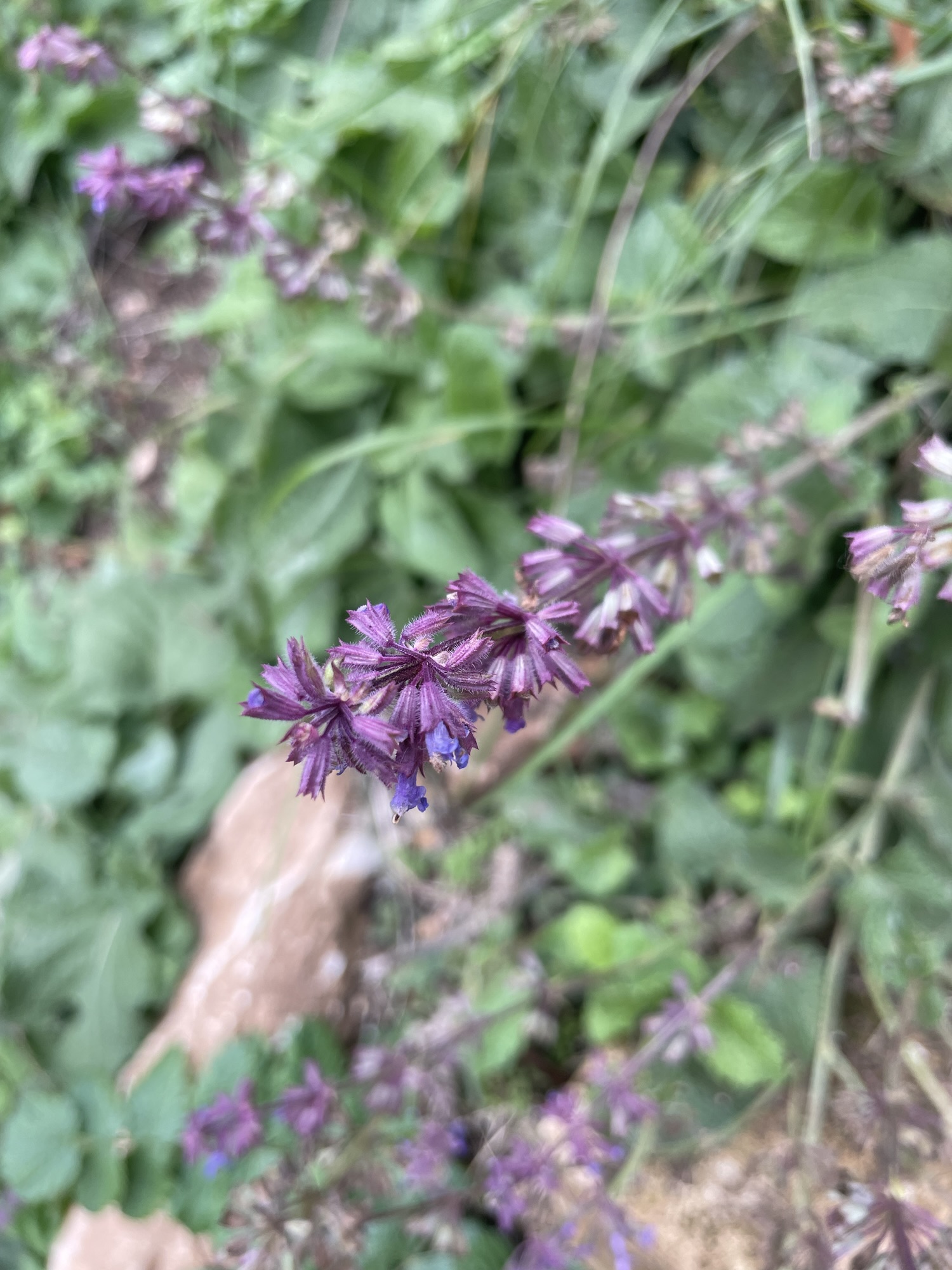
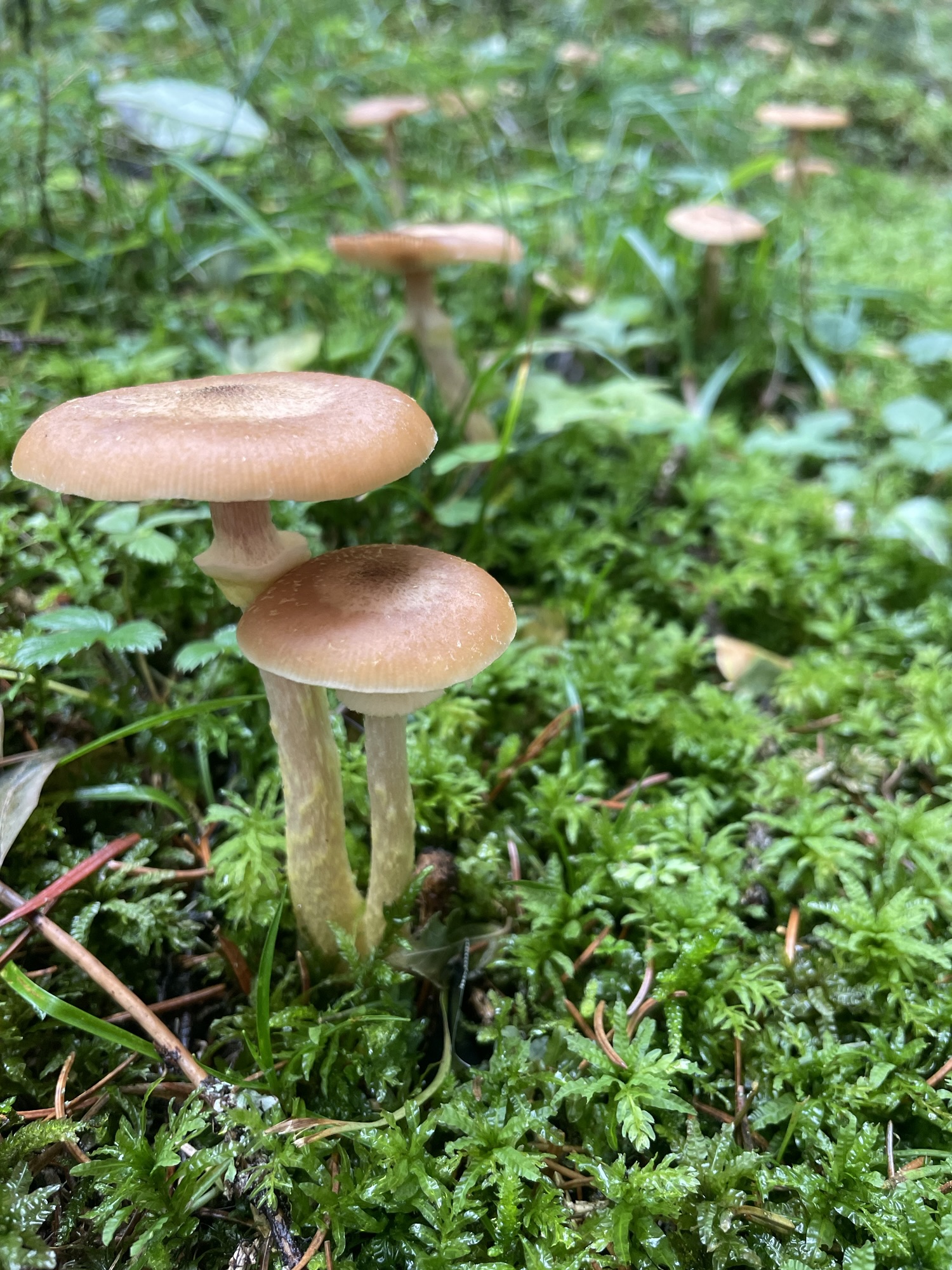
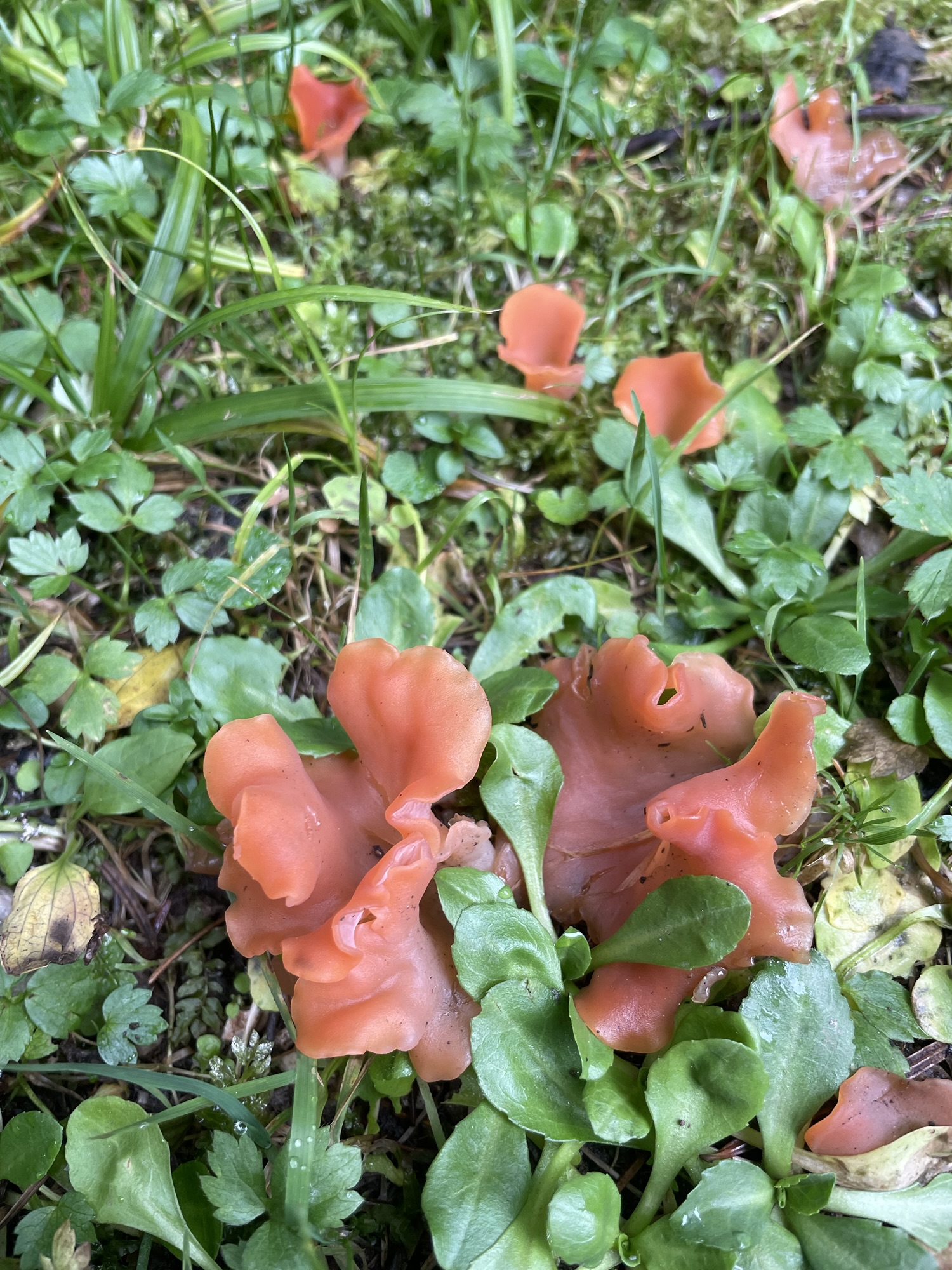
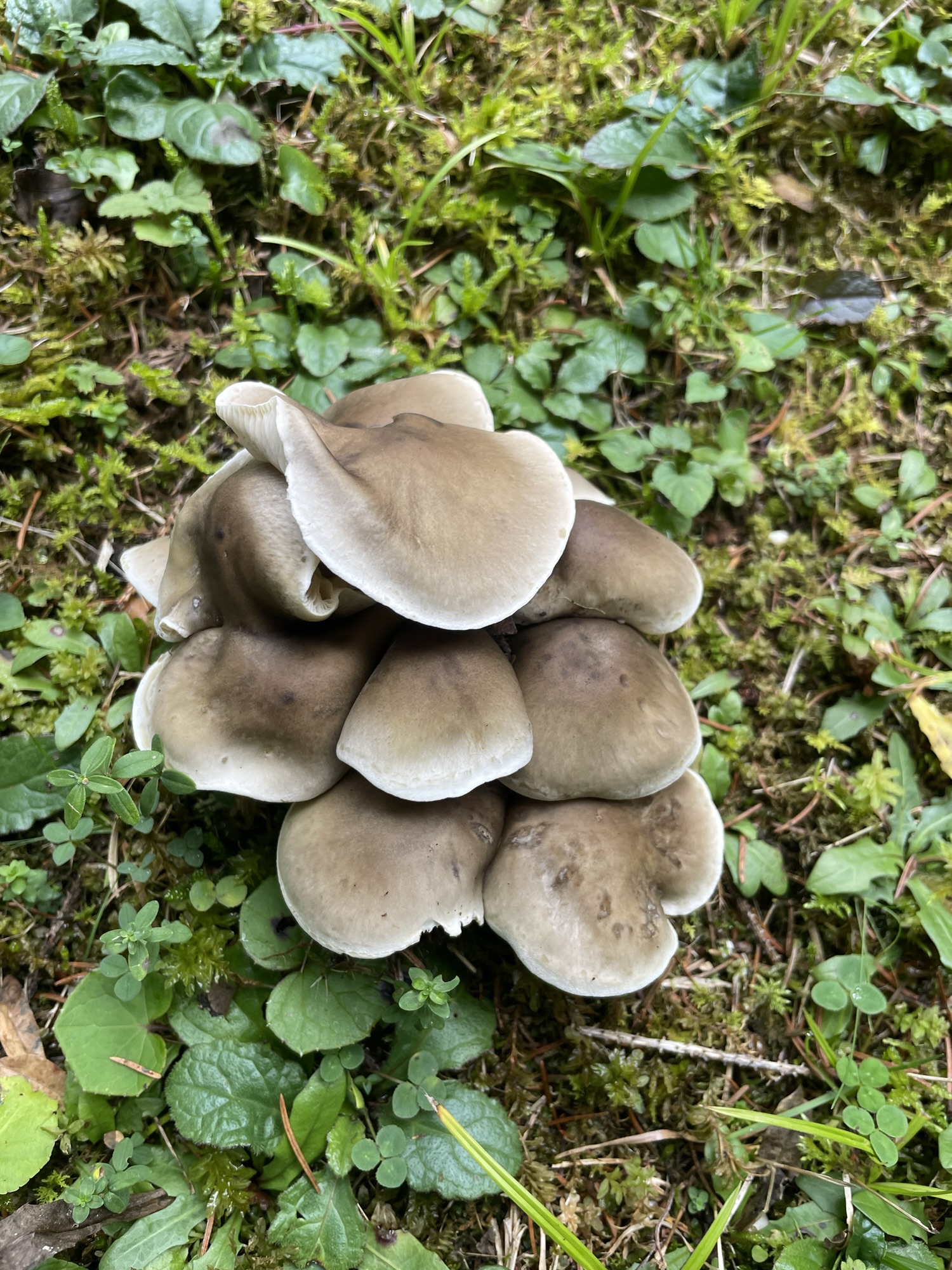
Morghan, who’d taken an interest in foraging over the last year, stopped to inspect every mushroom and berry. I silently assumed most would hospitalize us. Slowing down to inspect the earth was a good way to be present in a world so different from my own, even though the vegetation looked so similar.
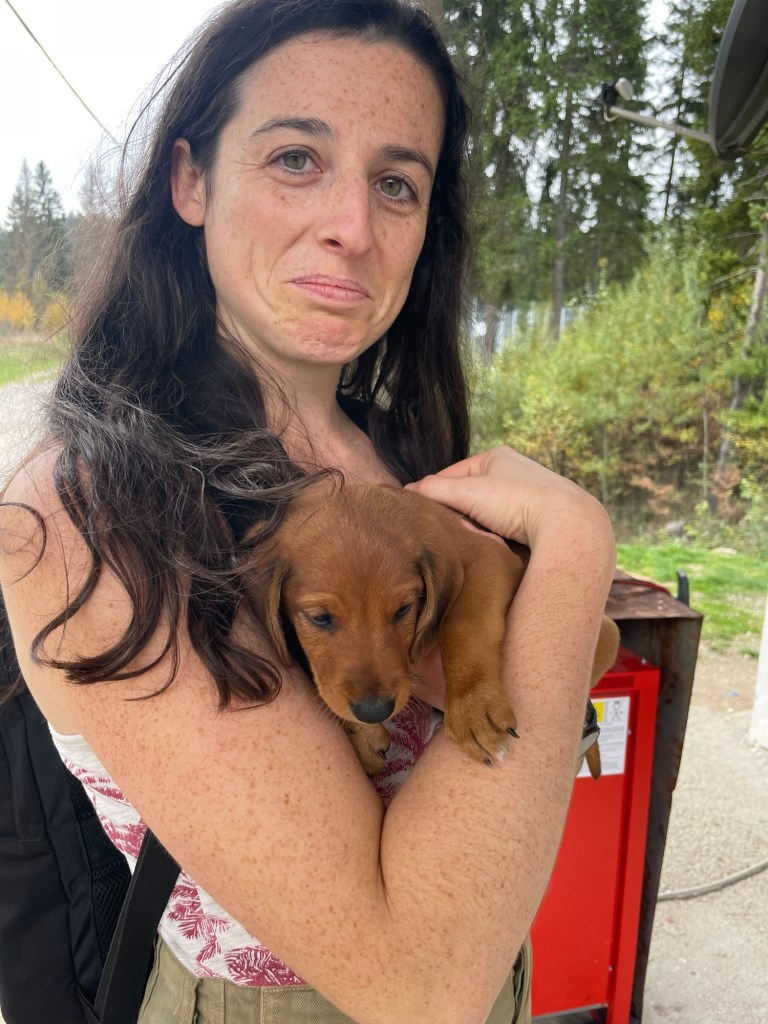
On our walk back from the caves, we met an orphaned puppy with a swollen belly. The road was long and vacant, but we backtracked to a service station to ask nearby locals —via translation apps — if they were caring for it. Communicating with people of a different language through an app is a lot like trying to fish an eggshell out of raw eggs. Sometimes it’s easier than others. After a few minutes of this, the young men said they already saw the puppy and were caring for him. I wasn’t so sure about that, but it’s one of those sad things that you just have to hope for the best.
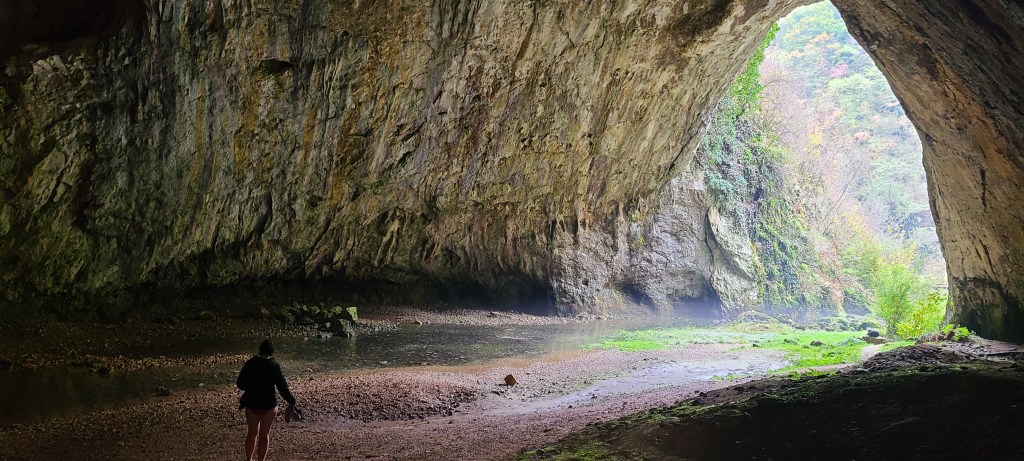
Our next cave adventure had a wide open mouth that led into cold waters. Wading into the water, I quickly realized going any further without shoes and headlamp might potentially lead to danger. Ahead of us, the waters grew deeper, the ground rocky underneath the icy water. The cave continued on around a bend. Oh, how I desperately wanted to see what was around that corner!
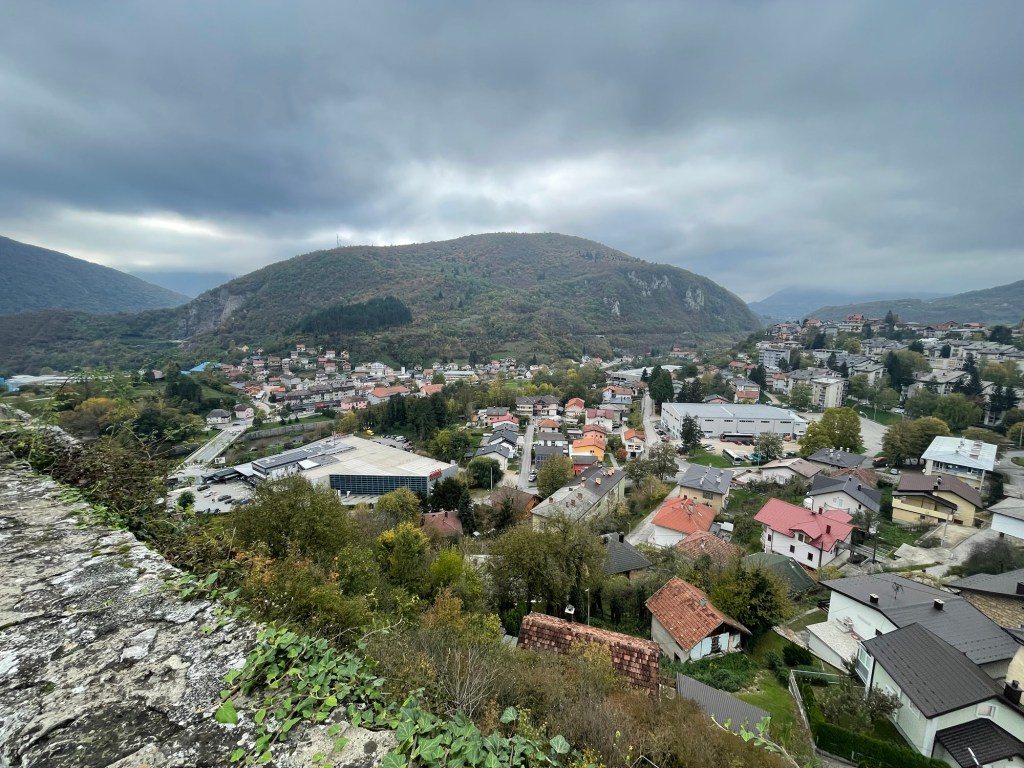
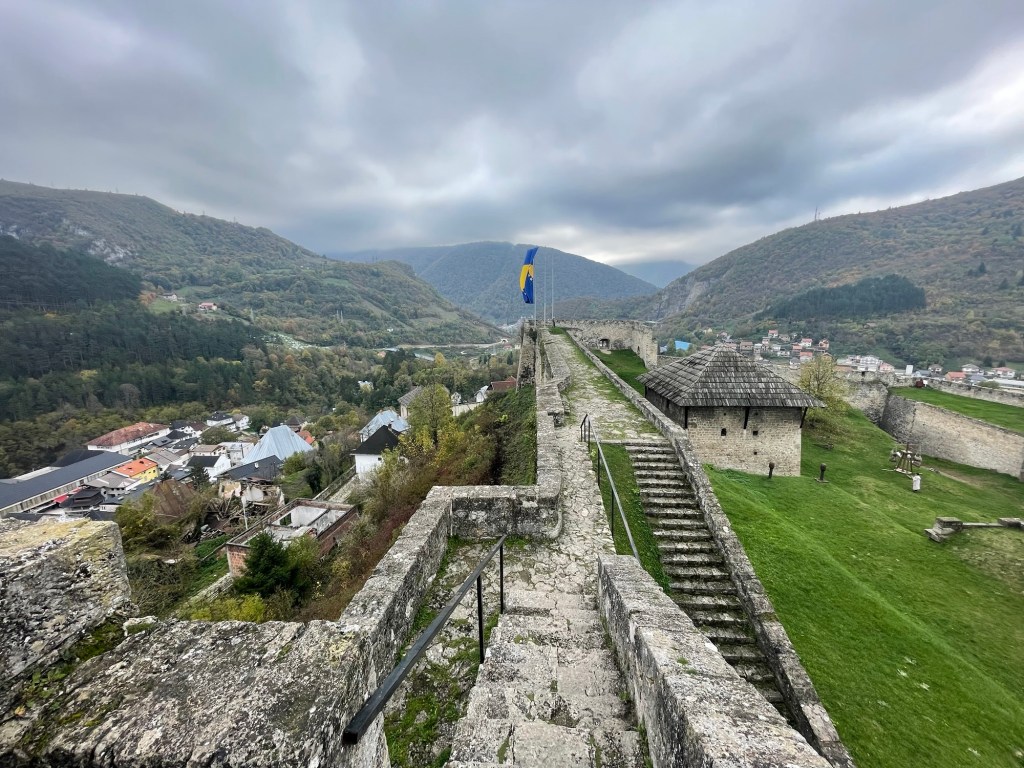
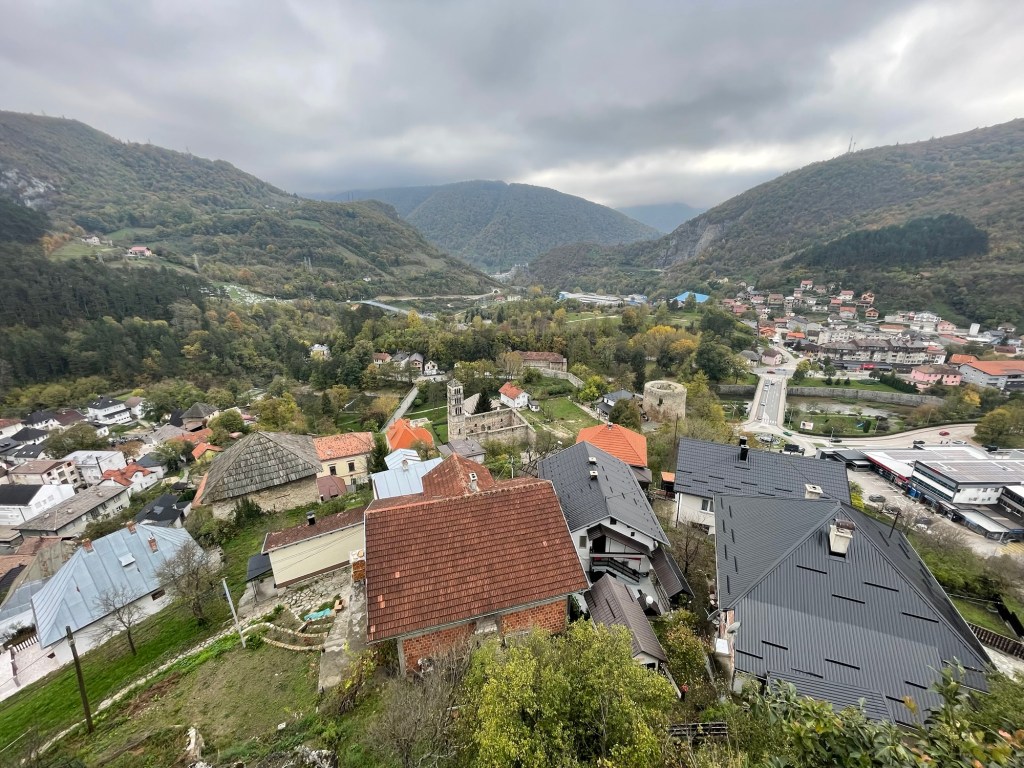
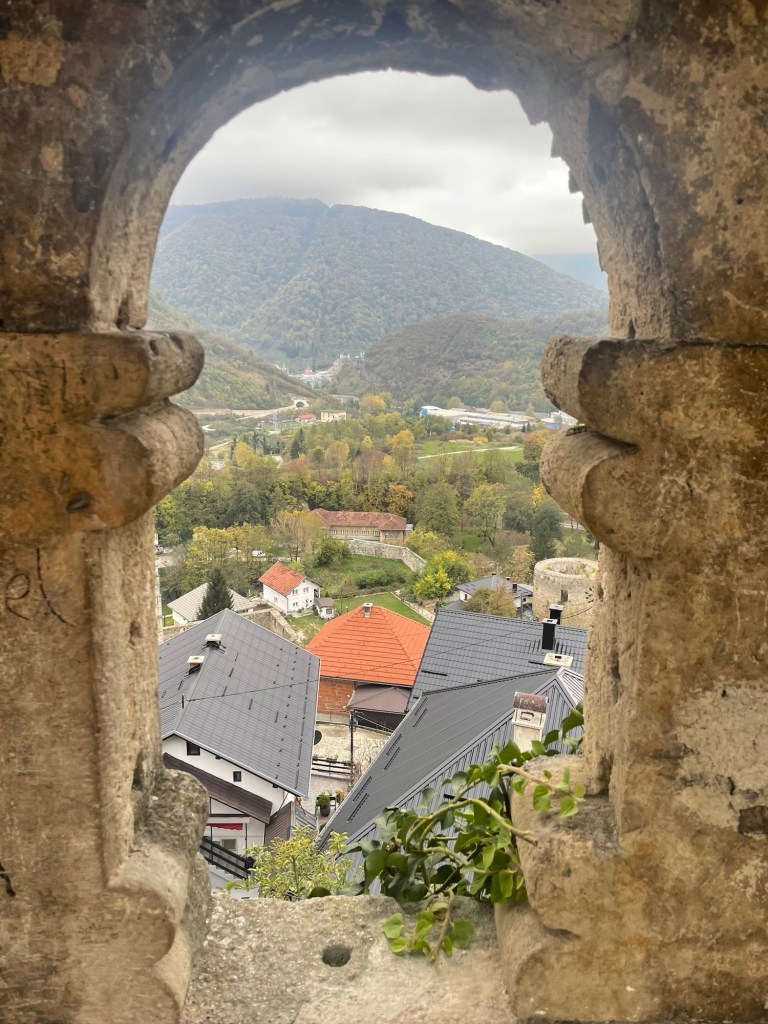
On our way out of our cave adventure, we came across a hidden overlook and castle ruins near Šipovo. Parking the car seemingly suitable space, we walked around to admire the red-tinged rooftops among dusty mountains on the horizon. This was one of those hidden views we saw and took the opportunity to further explore.
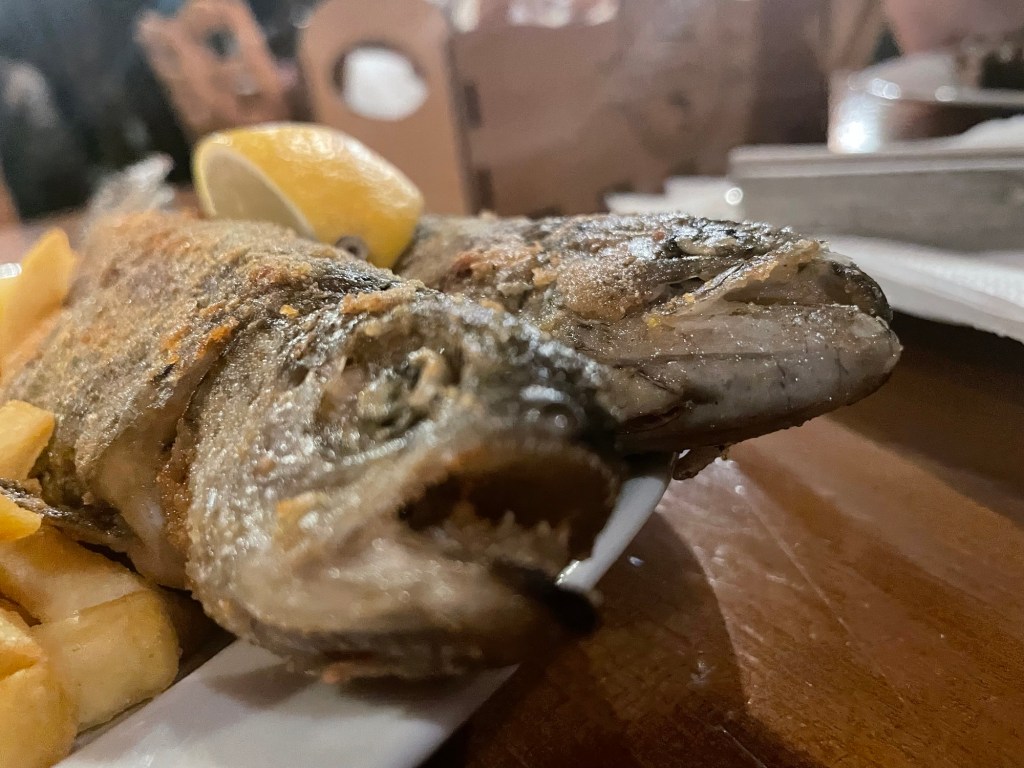
By the end of today, we were starving and found the only place available near our remote hostel: fish and chips.
In the two nights we stayed in Šipovo, we learned Republika Srpska doesn’t often make it on the travel itinerary for tourists. The residents here were much different from those more familiar with foreigners in Sarajevo. The culture was staler and colder. More isolated. However, it was Šipovo that allowed us to find some unexplored treasures of Bosnia.
Mostar
The next morning we found a spot for breakfast where we were able to enjoy American breakfast — eggs! Breakfast food here proved to be rather difficult to come across. When we did find it, usually eggs, sausage, and bread was the option. Sold!
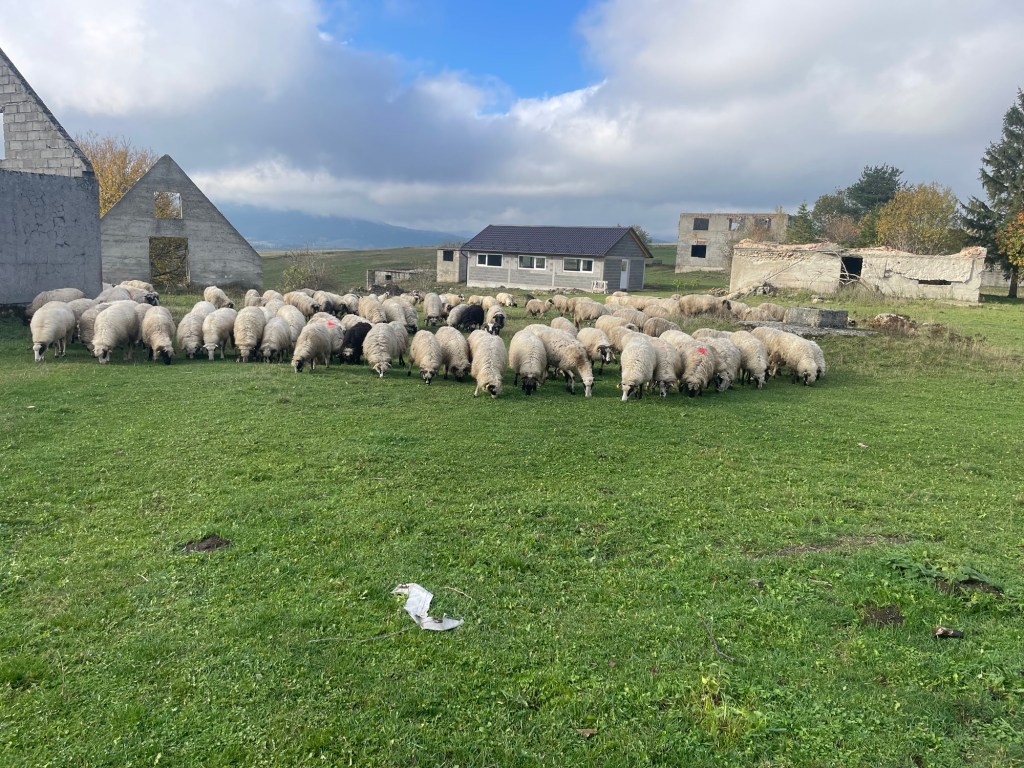
Morghan had planned for us to visit a canyon on the way to Mostar. It was a bit tricky to find, but we roamed onto a sheep farm where we met an underfed sheep dog who warmed up to as after we gave her our leftover fish dinner.
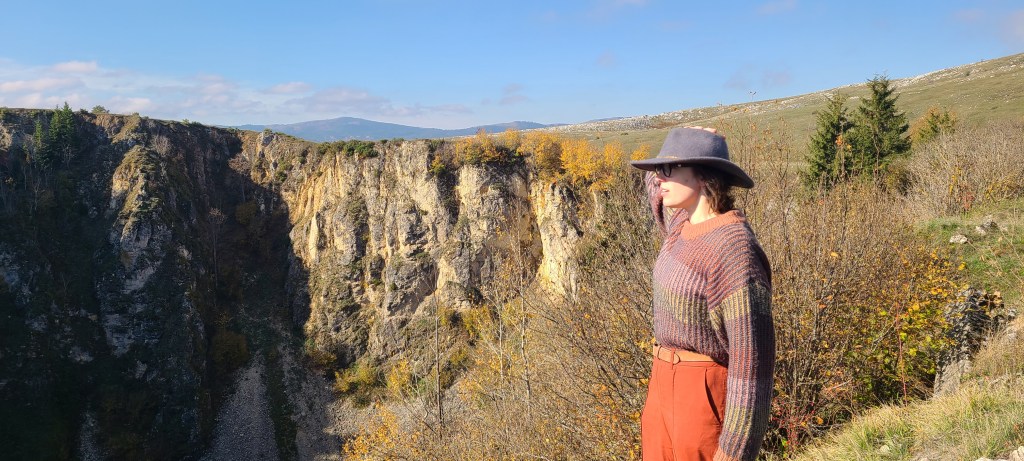
The crater was huge, a gaping hole in a field. The day was sunny with a slight breeze in the air. It was a sweater on and off type of day.
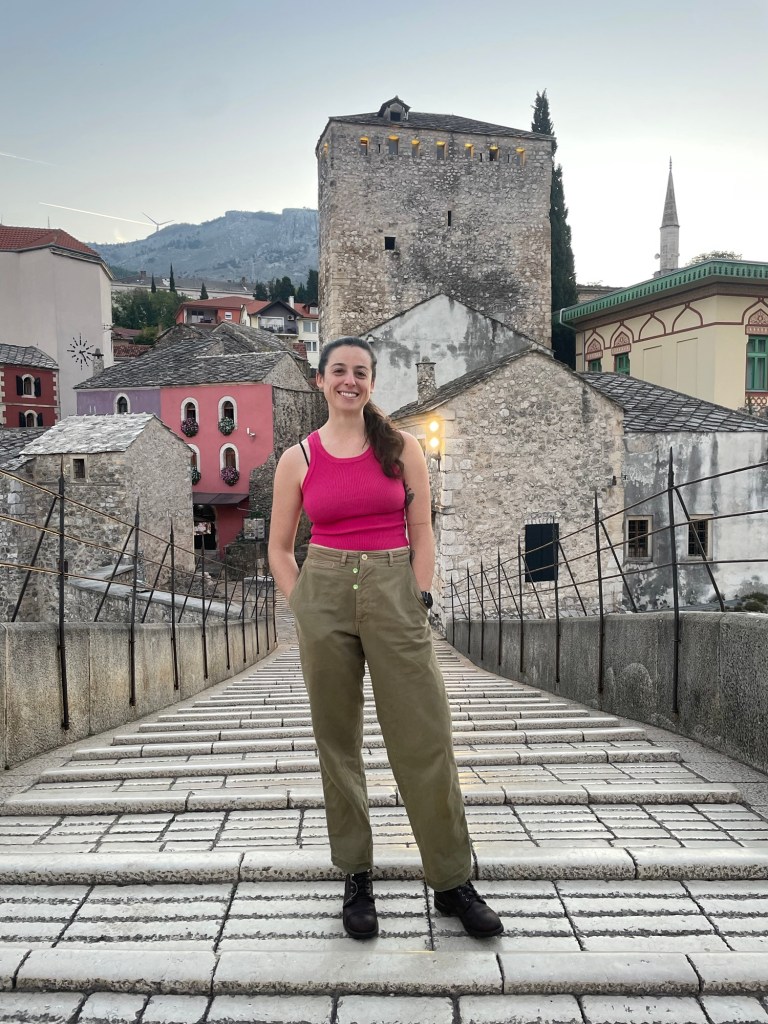
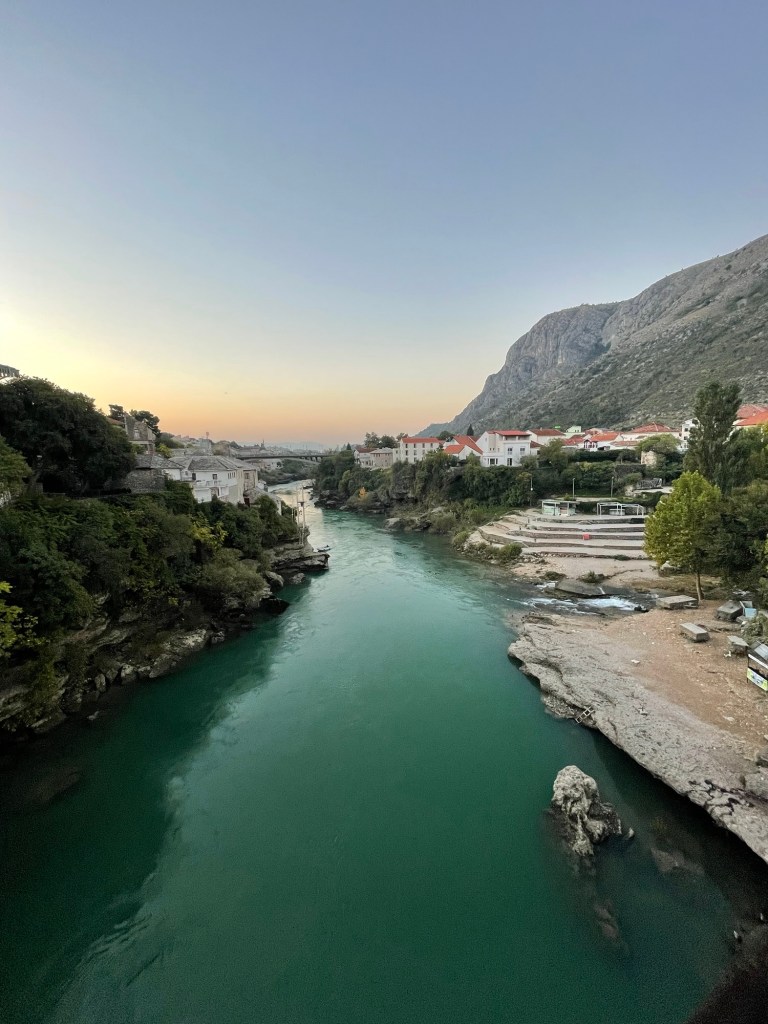
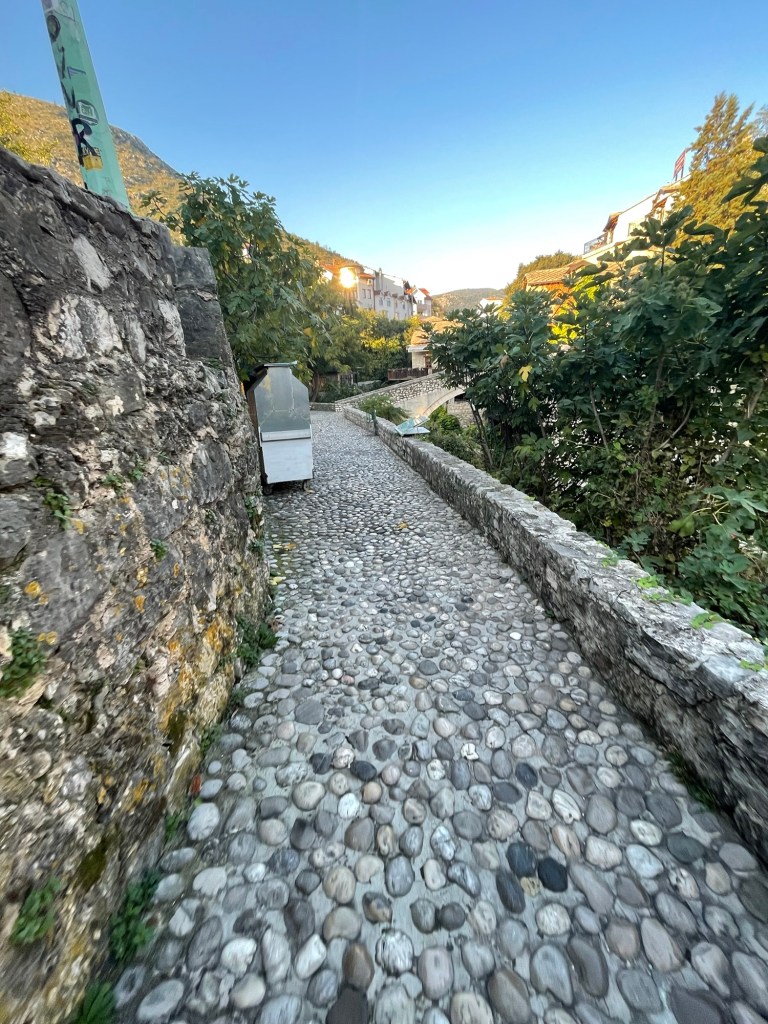
Mostar felt like a more touristic version of Sarajevo: the same streets, food, and souvenirs — just busier and less friendly. The best part of Mostar: the iconic photos.
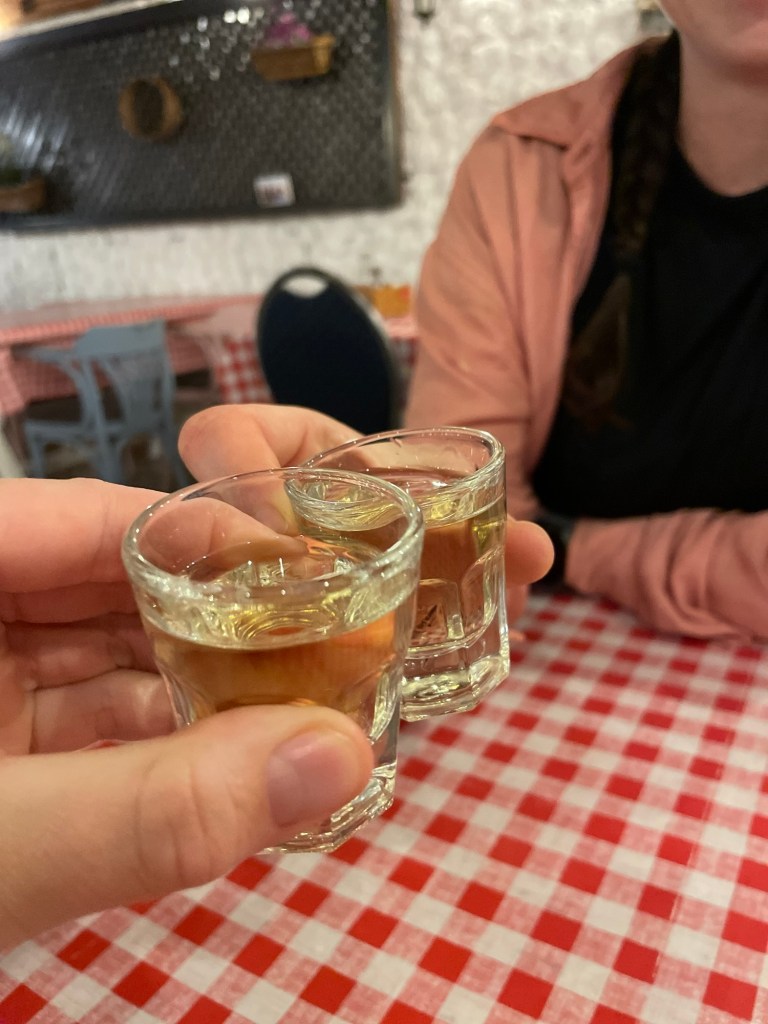
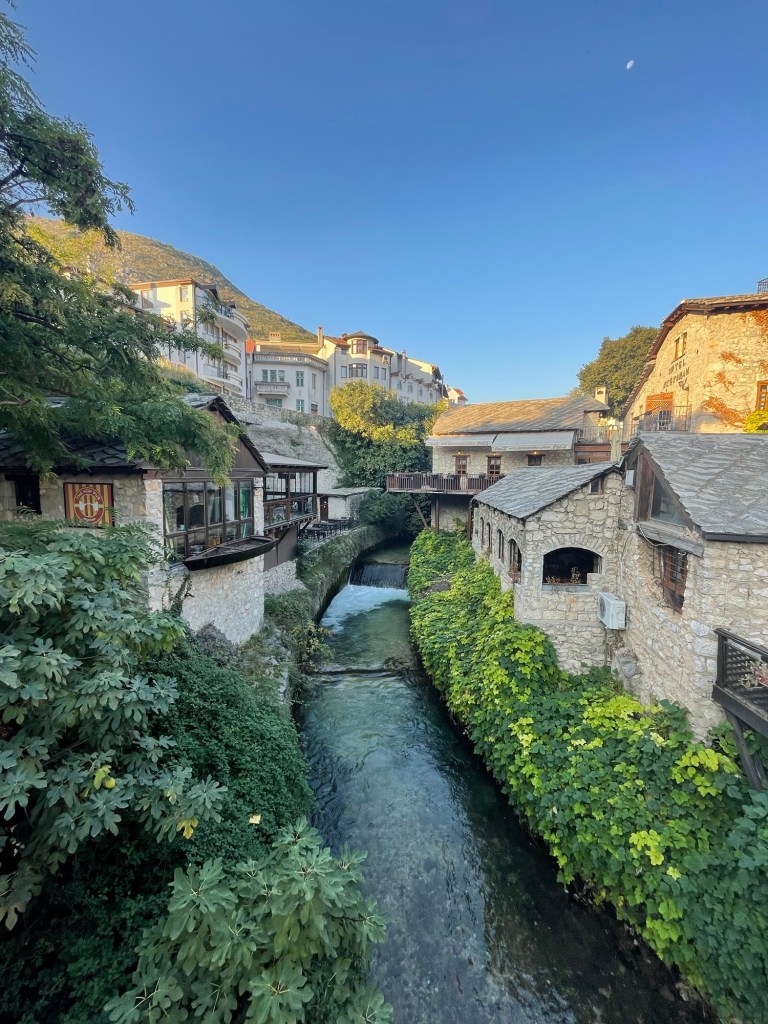
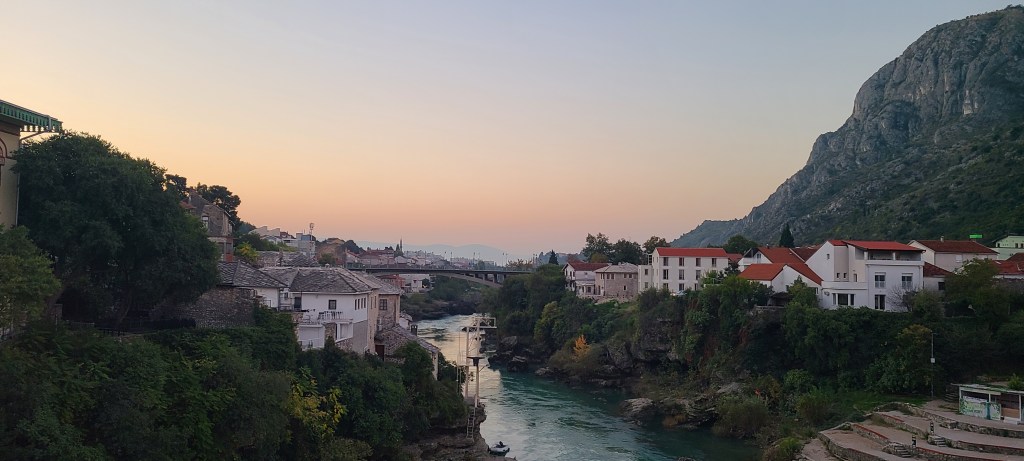
Our hostel climbed upward endlessly and smelled faintly of wet rags. Hostels can often be a place where travelers have the opportunity to meet with others and even go explore the city together. This common room crowd felt curious but stagnant. As I waited for Morghan before we went out into the city, I humored the conversation here. Again, my Canadian cover story was nearly blown when one of the young ladies said, “Oh! You’re from Vancouver! I’m from York!”
Right. York. Where is that again?
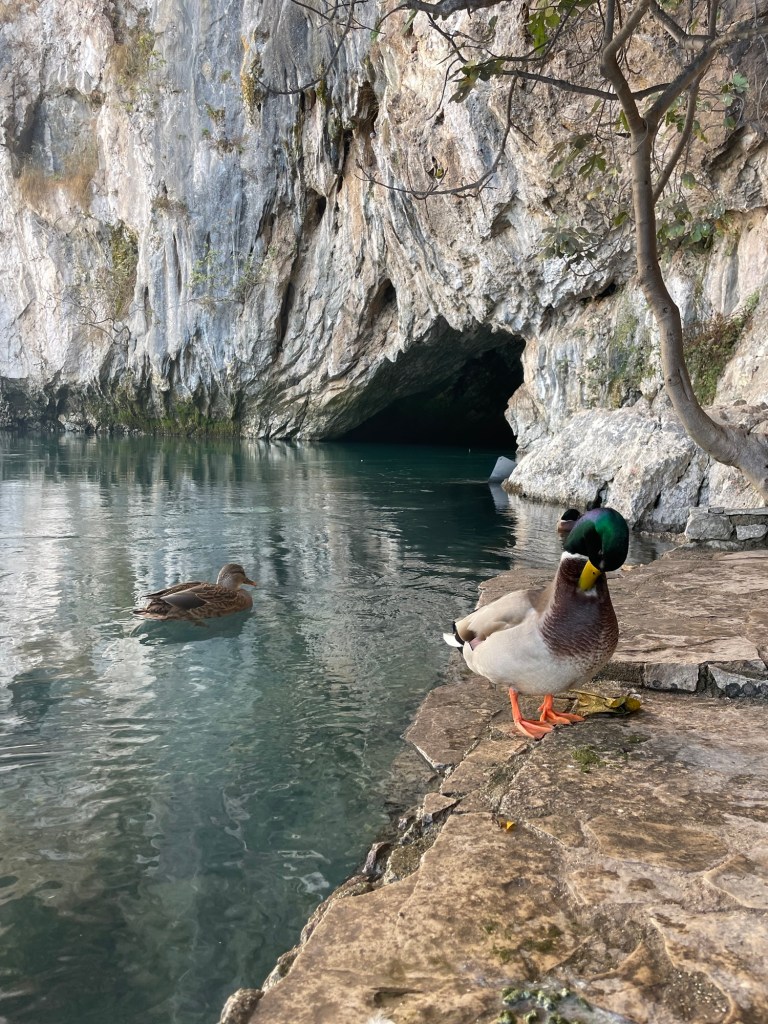
We visited Blagaj Tekke, a mosque set against green water and a cave wall. Scarves on, shoes off! This was one of the most popular tourist destinations in Mostar.
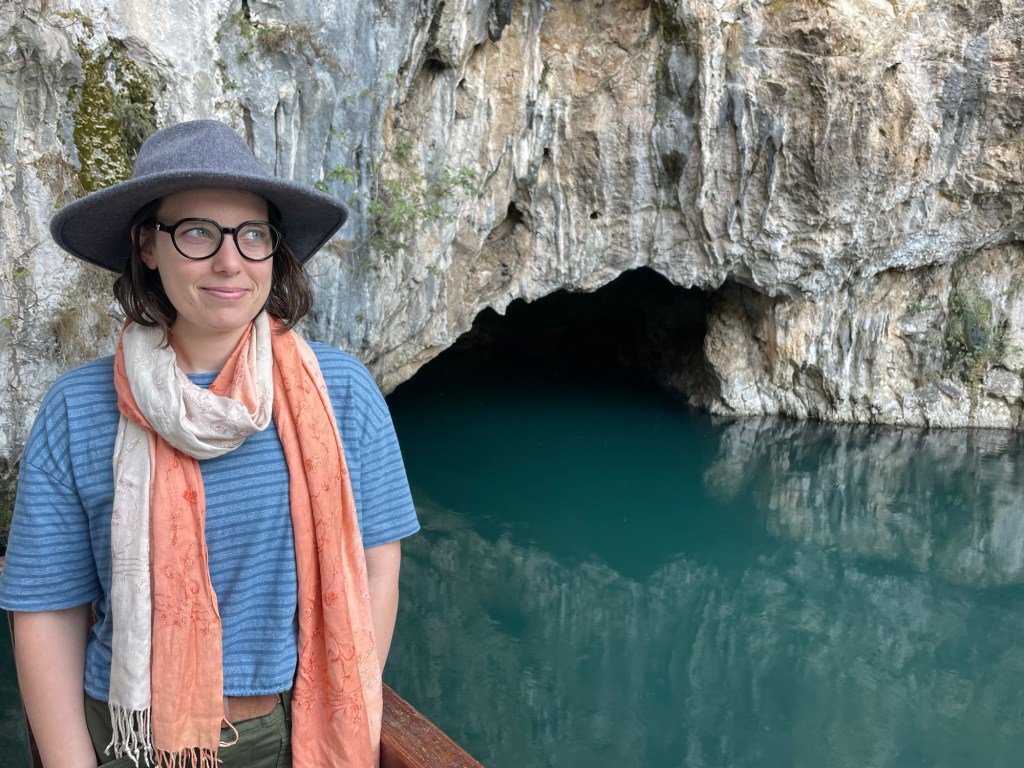
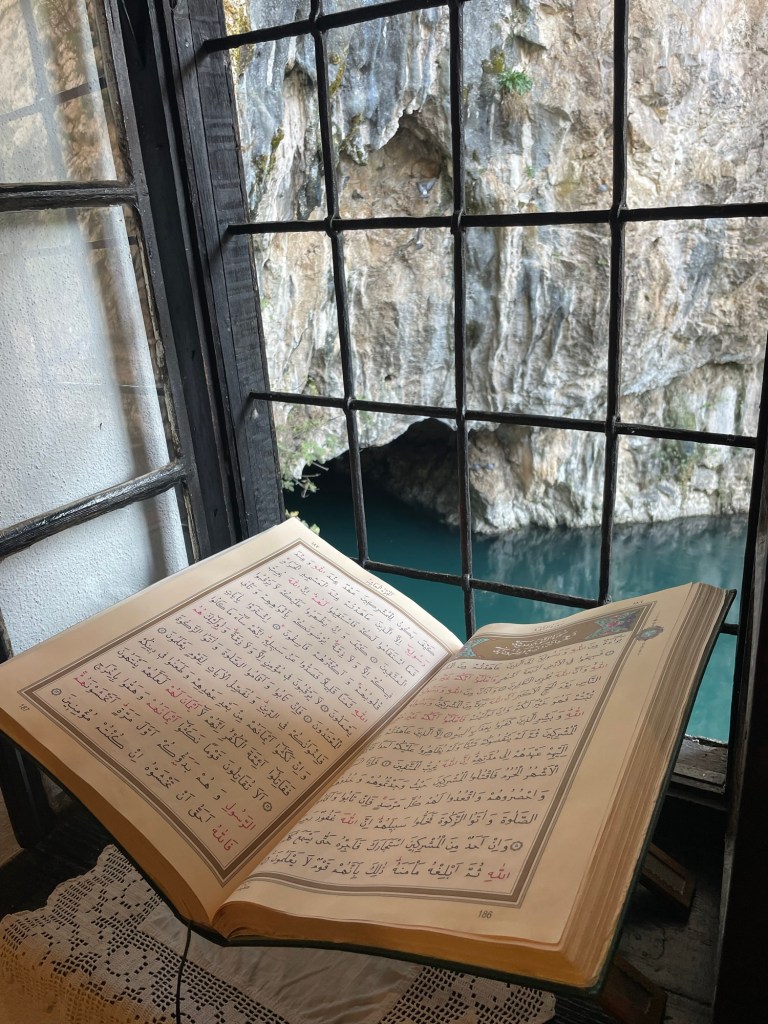
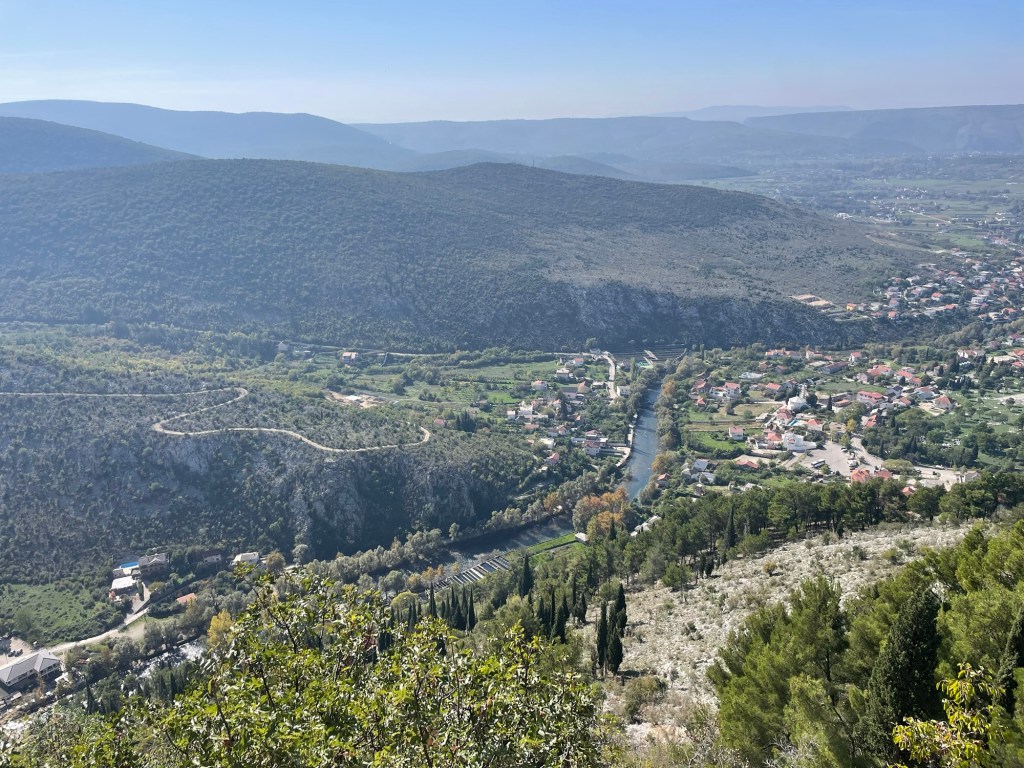
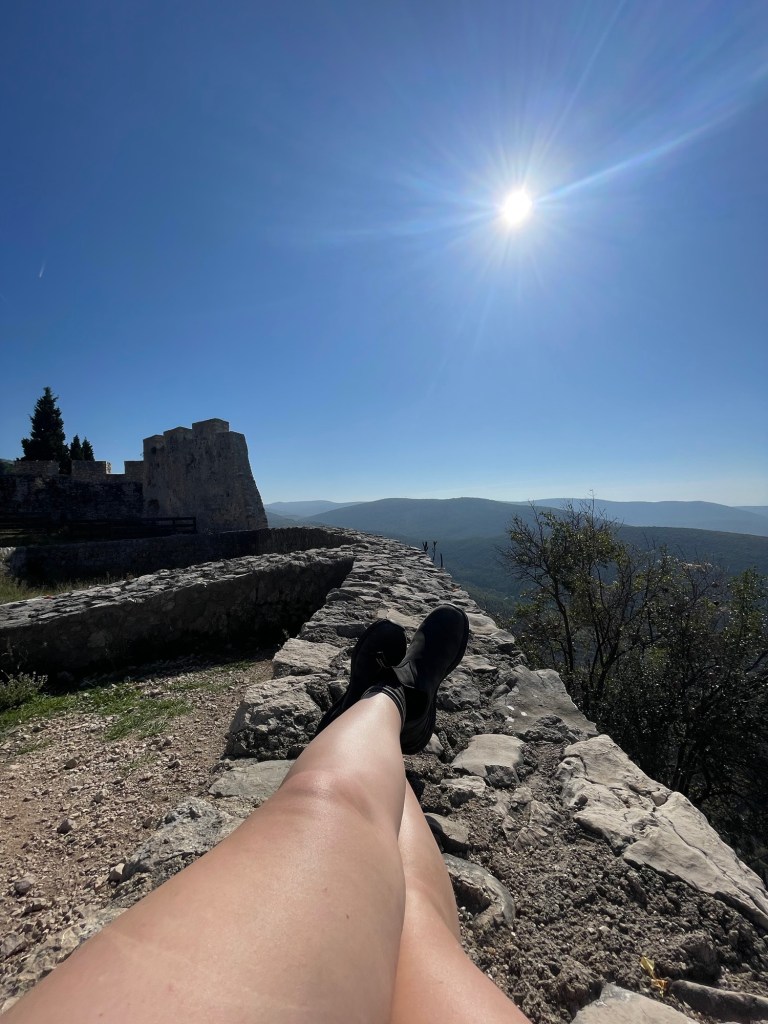
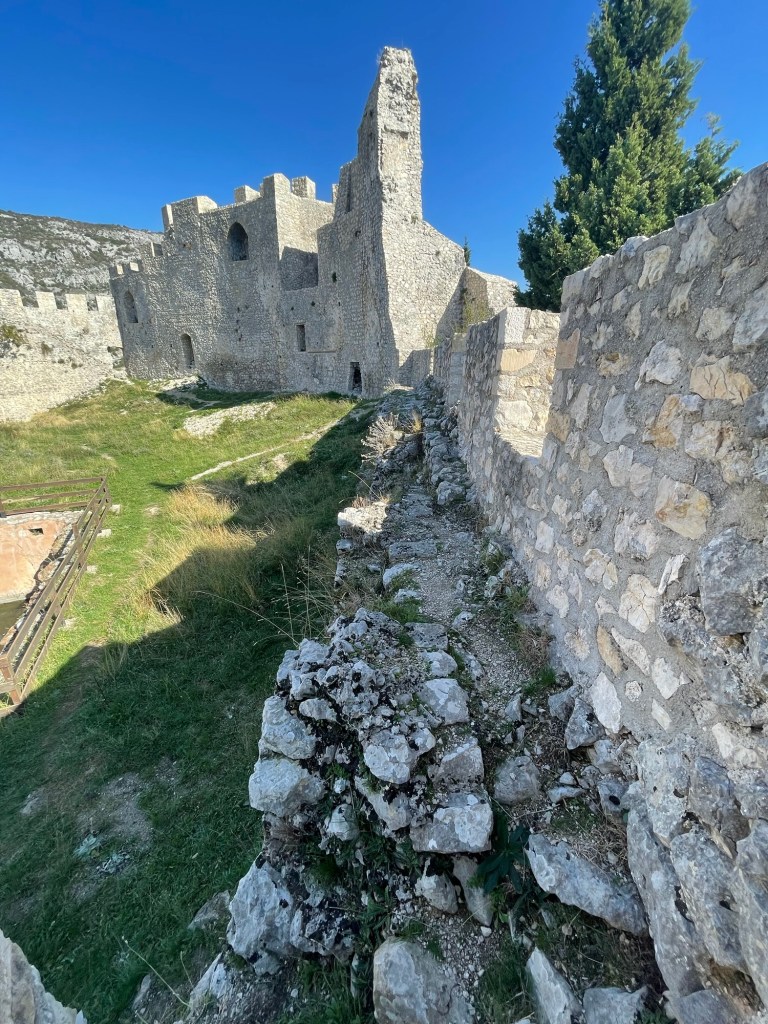
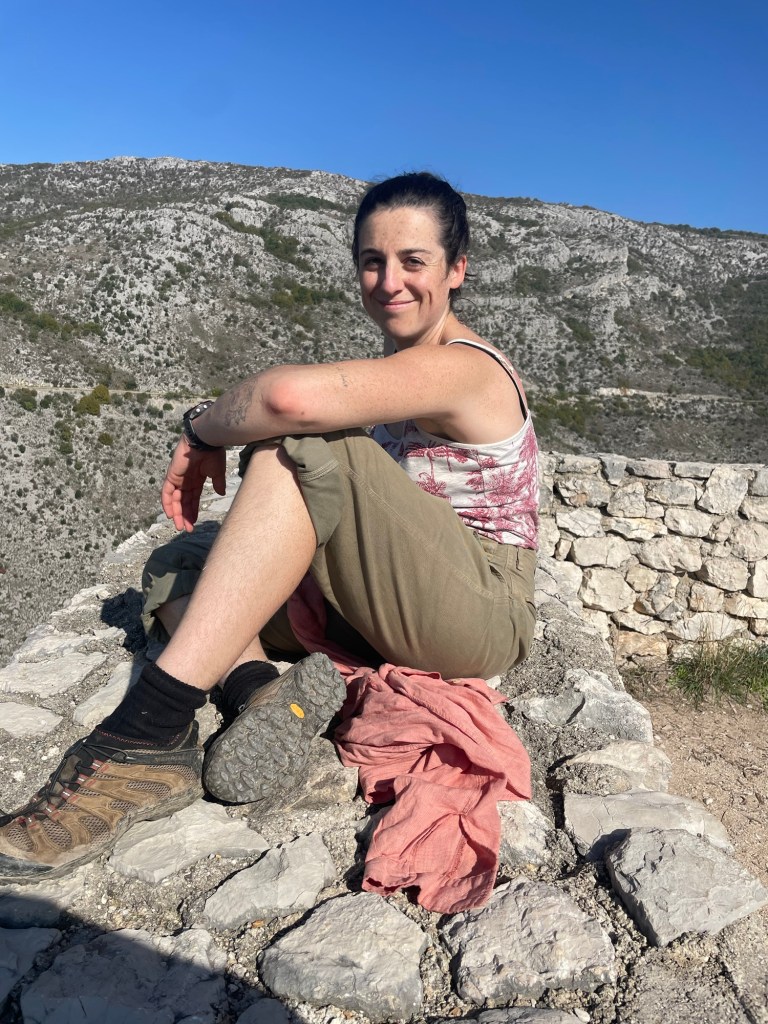
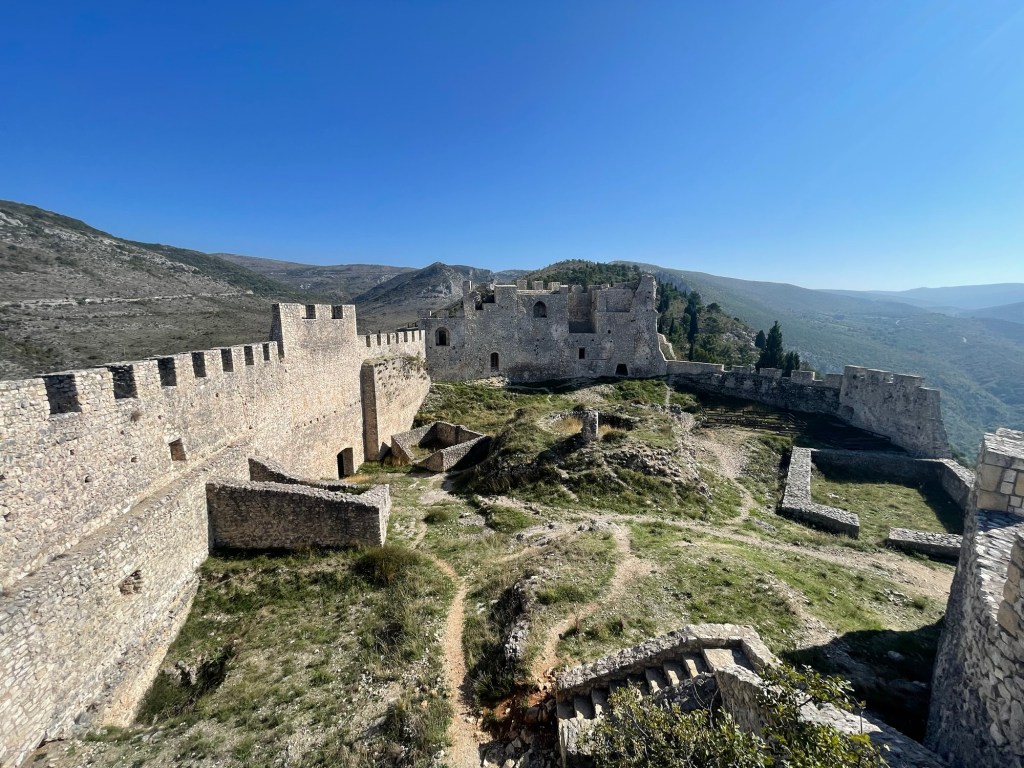
Later, we hiked switchbacks for a few minutes in the hot sun to reach a vast set of ruins that offered a quiet overlook of the landscape. These ruins reminded me closely of the old castles strewn across Ireland. There were many nooks and crannies to explore in such an old place.
Lukomir
After enjoying a coffee and a cigarette, it was time for our mountain town destination. Prior to our visit to Bosnia, landslides gave ruin to some of the towns. The carnage was distressing as we drove by construction sites on nothing but rocks and splinters. This had been a concern prior to the beginning of our trip, so I’d done some reading on the disaster. It was so awful to read of people who once had everything, and now had absolutely nothing.
The road to Lukomir became increasingly rocky. The rental car jarred up and down into precarious potholes. Because I didn’t take time to study the directions given by our host in Lukomir (a recurring theme), we found ourselves with a problem. Our car couldn’t go any farther. We parked in a field and wandered to the home of nearby villagers. A thirty minute conversation — with much gesturing — and asked if our car was safe here. Although they spoke Bosnian, we were in the Croat’s land and the accent was much different than what we were used to. With the three different people groups in Bosnia, they often used slightly differing vocabulary. Our translation app didn’t seem to pick it up very well. This was by far our most difficult conversation to break down.
With the car parked — hopefully safely — in a field not far from our next hostel, we trekked the eight miles down a gravel road toward our next destination.
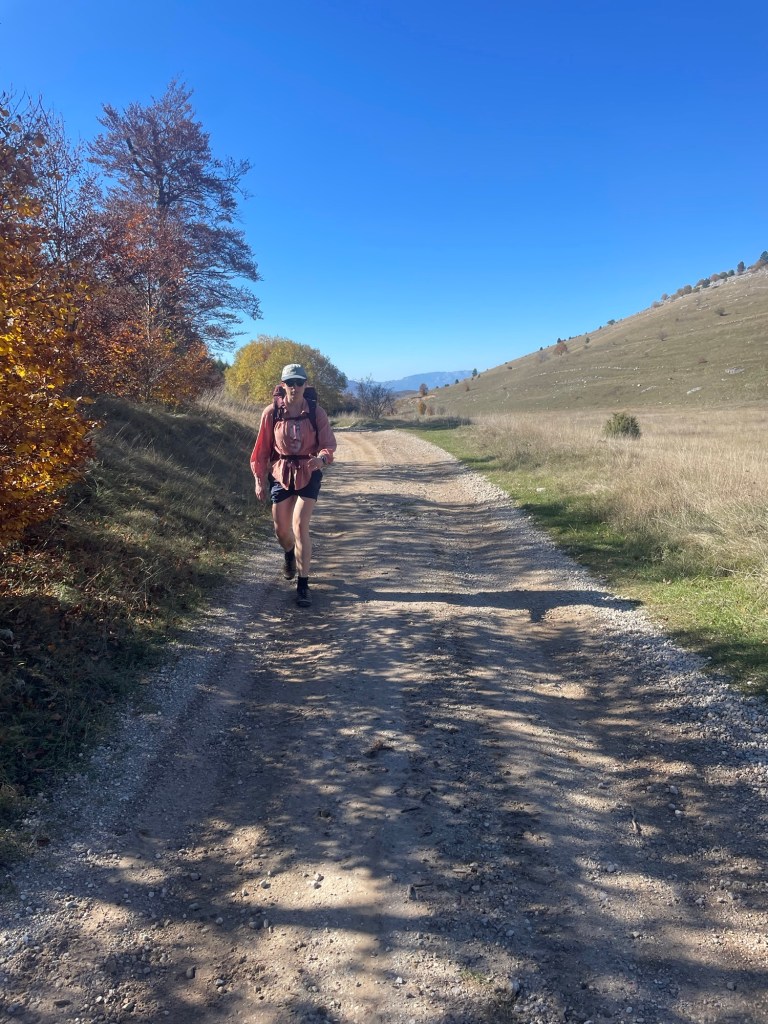
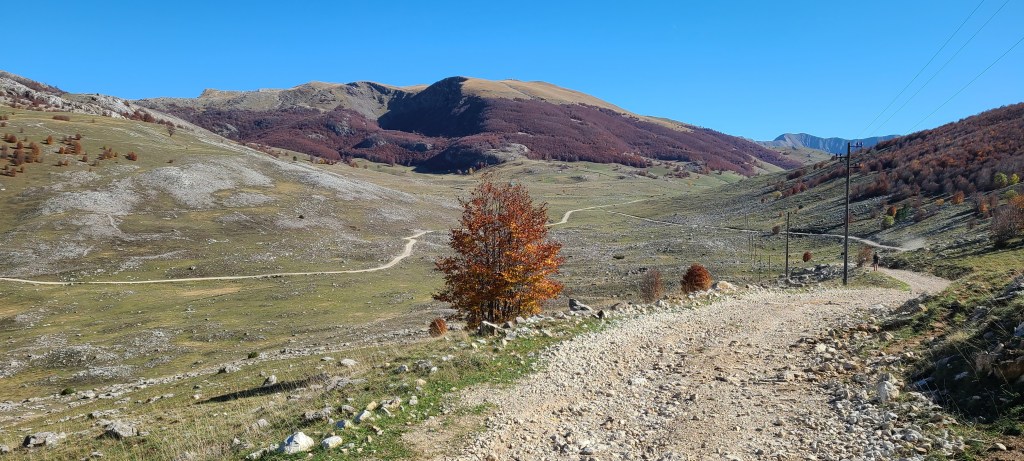
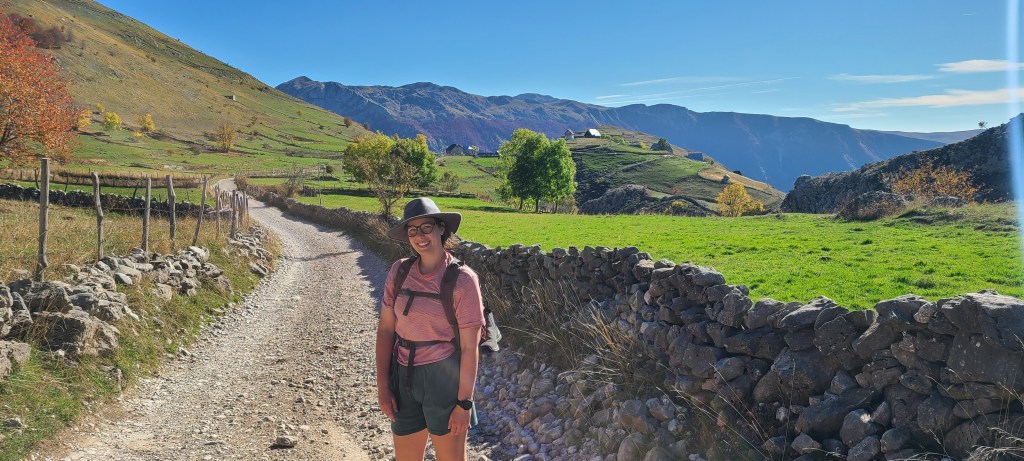
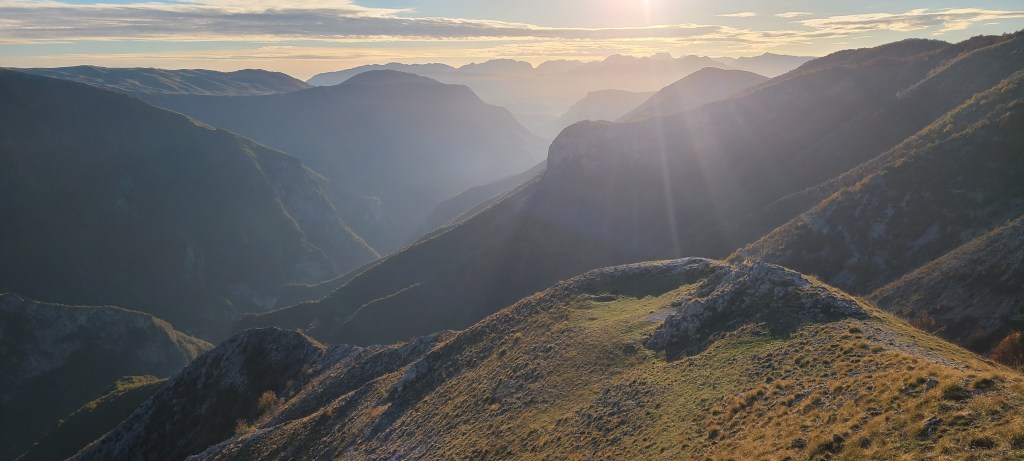
Lukomir wasn’t the quaint European village I’d envisioned. It was a couple rows of houses stretched across a few acres. It is the highest village in Bosnia (in altitude) and holds a population of about twenty people. Our hostel turned out to be the other half of a resaurant. We were greeted by an older gentelmen who was the father of our host. He had moved to France after the war because no work was available here, so he and I were able to communicate in some French.
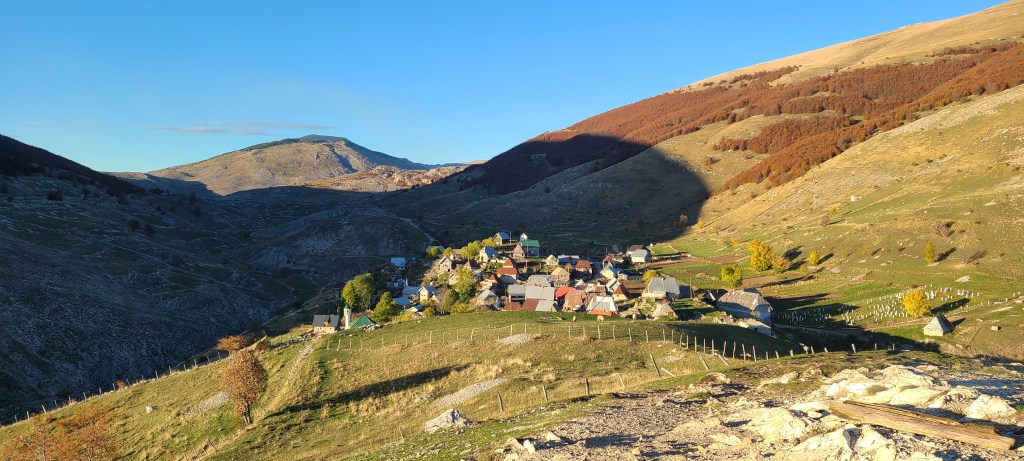
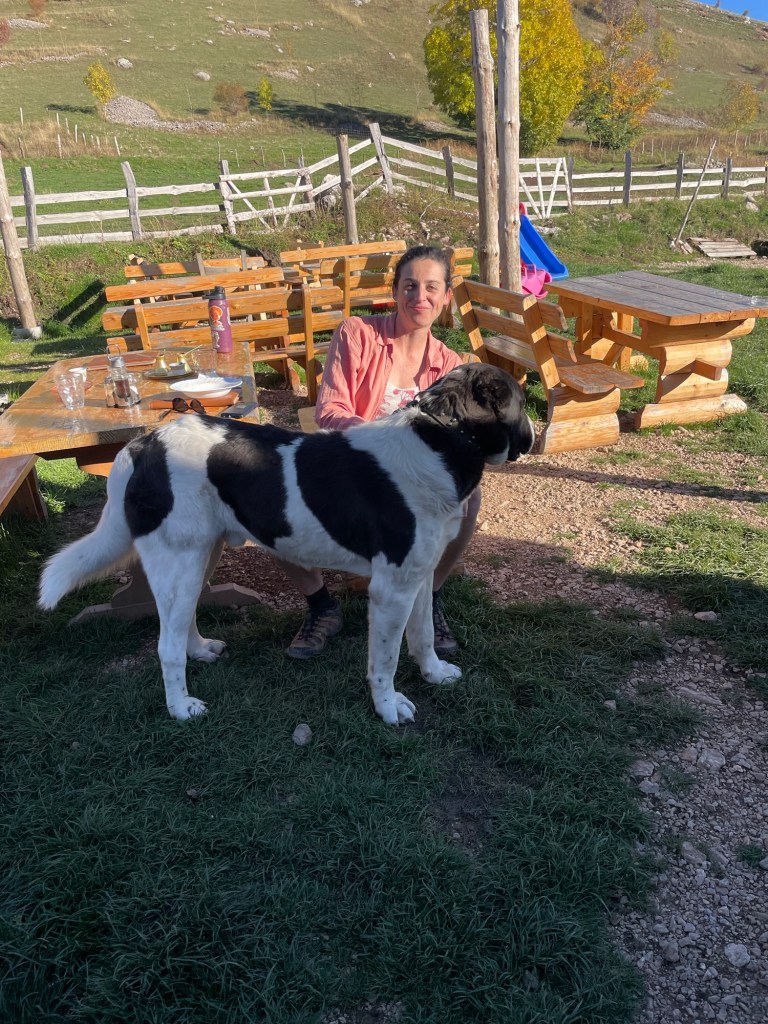
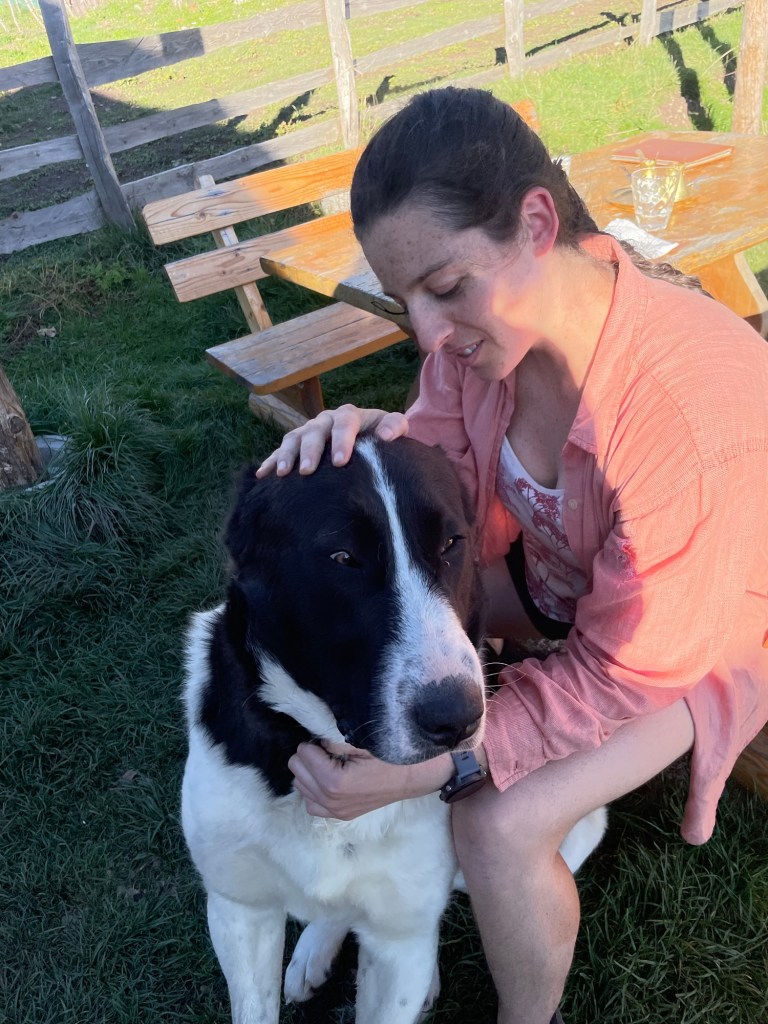
I felt oddly full after a lunch of coffee, soup, and baklava. The host’s father and I continued in conversation as Morghan and I acquainted ourself with Vuk — Wolf, in Bosnian — the sheepdog who protected the herd from wolves in the night.
A post-lunch walk immediately introduced us to elderly women approaching with hand-knit socks and gloves. A particular woman caught my eye across the road. Wrinkled with age, she stabilized herself with a can, bent forward a complete 90 degrees. The ladies pushed all their products toward us. We bought some, uneasy with the realization that this might be their primary income.
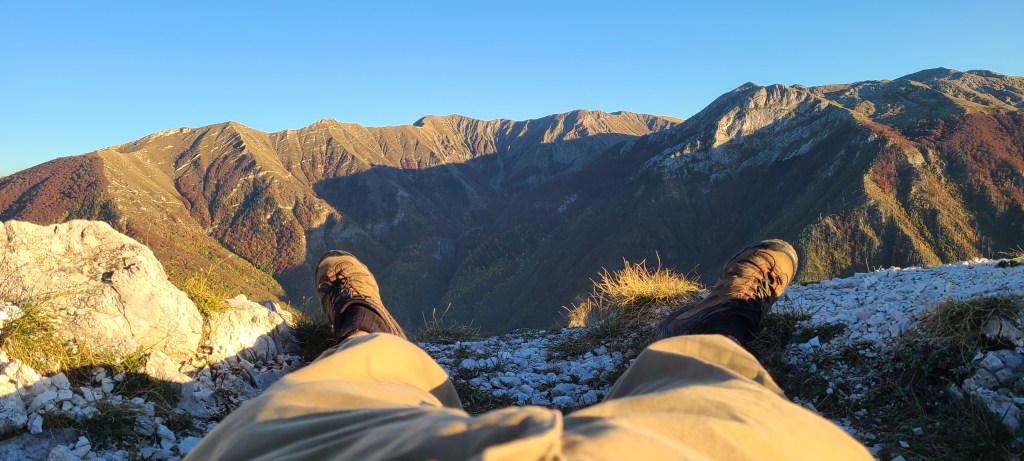
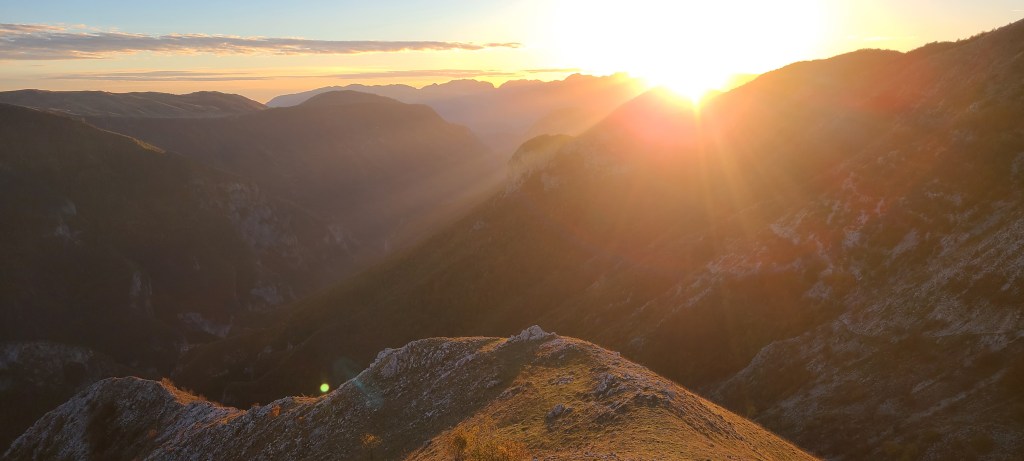
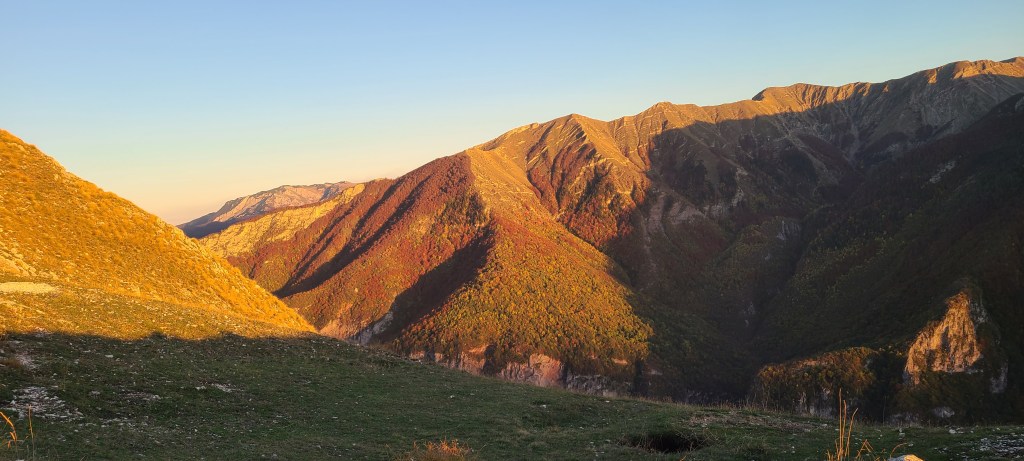
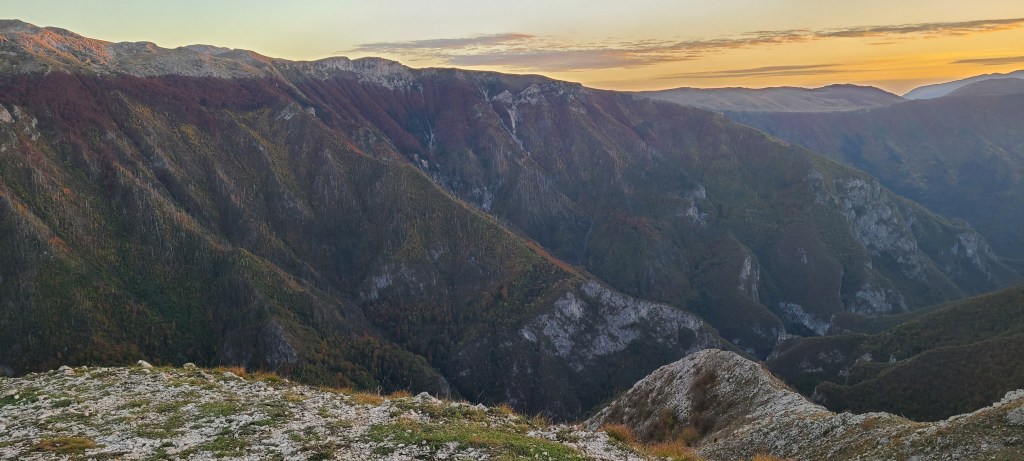
A sudden bout of fatigue had me in for a nap. I thought this was due to the dehydrated walk that incurred shortly before our arrival. Nausea overcame me. This would be the first time I’d ever gotten sick on a trip abroad. While the toilet of the bathroom had only a pulley style flusher with very little water pressure, the next several hours were miserable as I tried to manage with the extremely modest bathroom accommodation.
Morghan was a saint. The host’s father made me an herby tea that tasted quite unpleasant. Morghan relayed the message that it would make me feel better. I don’t know the ingredients of the tea, but I did feel slightly better afterward. Even though I’d only had about half of it.
I was so enervated from my random bout of sickness. It dawned on me that perhaps this was the reason I’d been losing my appetite over the past few days. I don’t know if it was a bug or a random strain of food poisoning, but Morghan and I left a night early upon the realization that Lukomir is best off as a day trip or single night’s stay.
Leaving Lukomir wasn’t as easy as hopping in the car and waving goodbye. Our host said he could drive us to our car. However, when I told him we came a different route, he said,
“I sent you the directions. You didn’t come that way?”
Whoops, again. That was my fault!
Even in his sturdy vehicle, he was only able to get us four miles down the jarring road.
Morgan and I started on foot for the next few miles. I was slow and both of us were worried about whether or not I could make the journey by the pace I was dragging, even with Morgan carrying my bag.
A small noise hummed. We turned to see a young European couple we’d met earlier that day bouncing toward us in their retro travel van. I stuck out my thumb and they kindly let us in. It was an incredibly bouncy ride, but the man loved these wild roads, his wife said. This was so fun for them! I’m sure they knew I was ill by my pale face and dark circle under my eyes. Those were some of the hardest two miles I’d ever walked!
Back to Sarajevo
Our final stop brought us full circle. I slept most of the ride home and was slightly jealous that Morghan enjoyed a delicious lunch while I was passed out in the car. Her meat and potato goulash was the tastiest meal on the entire trip. I wish I’d been able to eat that throughout the journey instead of our hearty diet of burek and ćivapi!
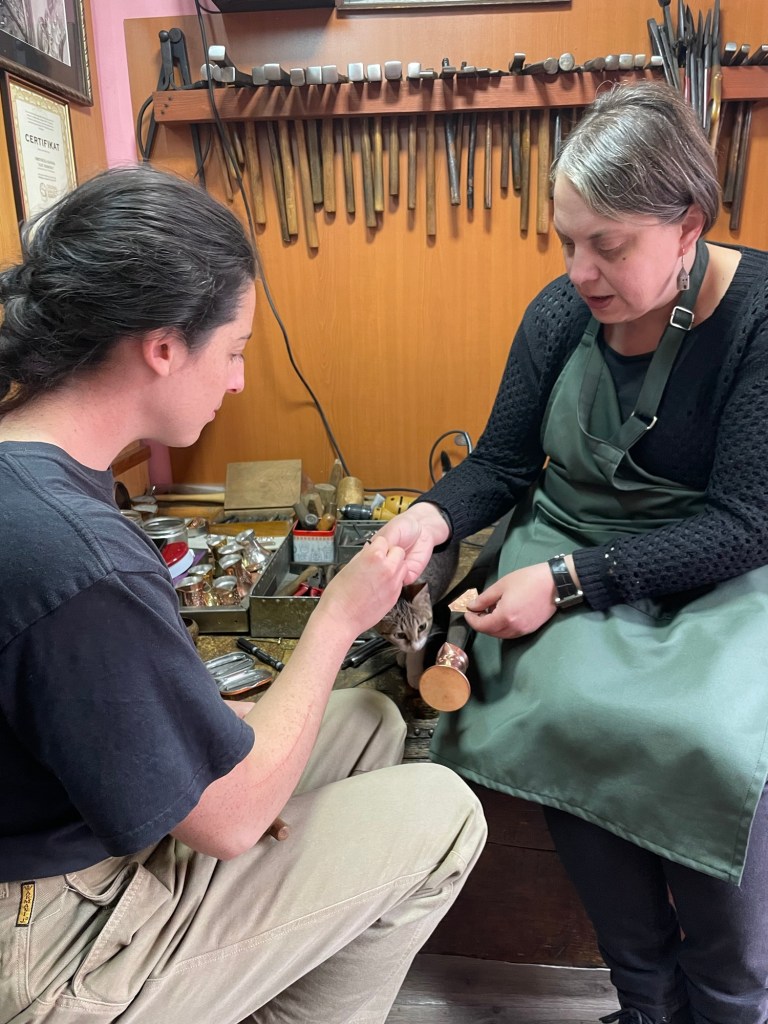
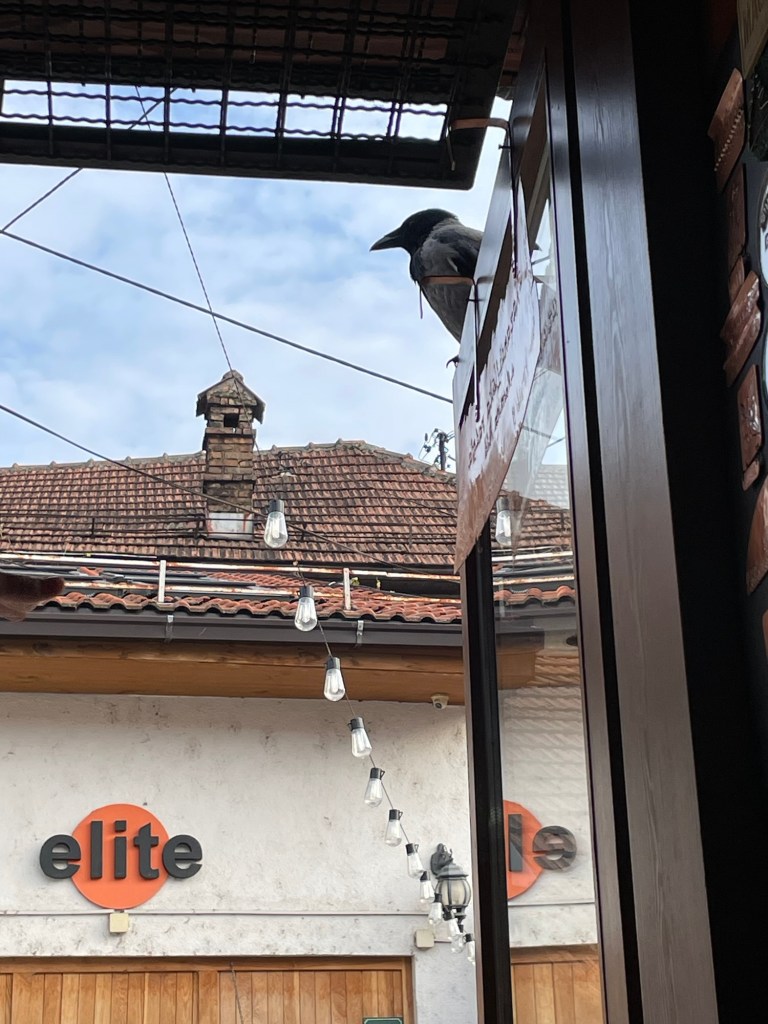
Our last activity was to take a coffee pot–making class. Our instructor was an animal lover who pointed out the old and young dog who wandered the streets together, explained that everyone feeds stray cats, and the crows stare up the street and wait for her every morning for breakfast!
With an extra night in Sarajevo, we walked the cobblestone streets once again and bought baklava and Turkish delight as souvenirs — Nutella Turkish delight being my favorite!
Feeling quite a bit better and enjoying many fruit purees as my preferred form of nutrition, Morghan and I packed our bags and said goodbye to the country which had taught us so much.
Bosnia and Herzegovina is not somewhere I ever imagined myself. It’s not a place I’d broadly recommend. But Sarajevo? If you have the chance to go — take it.
This trip wasn’t comfortable or beautiful in the way I expected. But it was honest. And that’s what Sarajevo was: a place to show me the reality of how people live today because of a war that took place thirty years ago.


 The Wonderland Journal
Leave a comment