Middle school created a very inaccurate picture in my mind of what Asia was like. I’m a little embarrassed to admit it now, but I thought Asia was the aesthetic playground of gothic eleven-year-olds who wore striped socks from The Addams Family and studded bracelets, lived on a diet of instant ramen, and only watched anime. Yes, I realize that is practically the definition of a stereotype.
My college friend Morghan had been teaching English abroad in Busan, South Korea. After my sophomore year wrapped up and I finished a summer job as a camp counselor, I flew out to visit her.
South Korea was not a place I ever imagined myself going. Asian culture wasn’t something I had taken much interest in, and at the time I didn’t feel particularly curious about it either. This would only be my third trip out of the country. I had been to Peru and Canada before this, but I was still very much in the early stages of learning how to travel.
Morghan and I had been friends for about two years by then. We met my freshman year of college, and then she left to teach abroad during my sophomore year. While we were friends, we weren’t particularly close at the time. Looking back, I think this trip is what turned our friendship into something deeper—something that would later support many more travels together.
It was August 29, 2018. I was twenty years old.
When I stepped off the plane, the airport announcements echoed in Korean as I wandered through the terminal until I spotted Morghan sitting on a bench with her backpack in her lap. She had just arrived from a solo weekend trip to Japan.
“My first bowl of ramen was amazing,” she said. “Every bowl after that was good… but nothing like the first.”
Apparently ramen is everywhere in Japan—like McDonald’s in the United States. Throughout the trip I found myself longing for some Japanese ramen. Korean food, it turns out, is not particularly high on my list of favorites.
Morghan had been attending an international church in Busan, and we stayed with a middle-aged couple from the church while I visited. We didn’t stay at Morghan’s place because she was at the very end of her time in Busan and was no longer living there. Because this was my first foreign trip without the help of my parents, I leaned heavily on Morghan to guide us around. I assumed she had everything figured out.
That first night she informed me that she actually didn’t know the people we were staying with all that well.
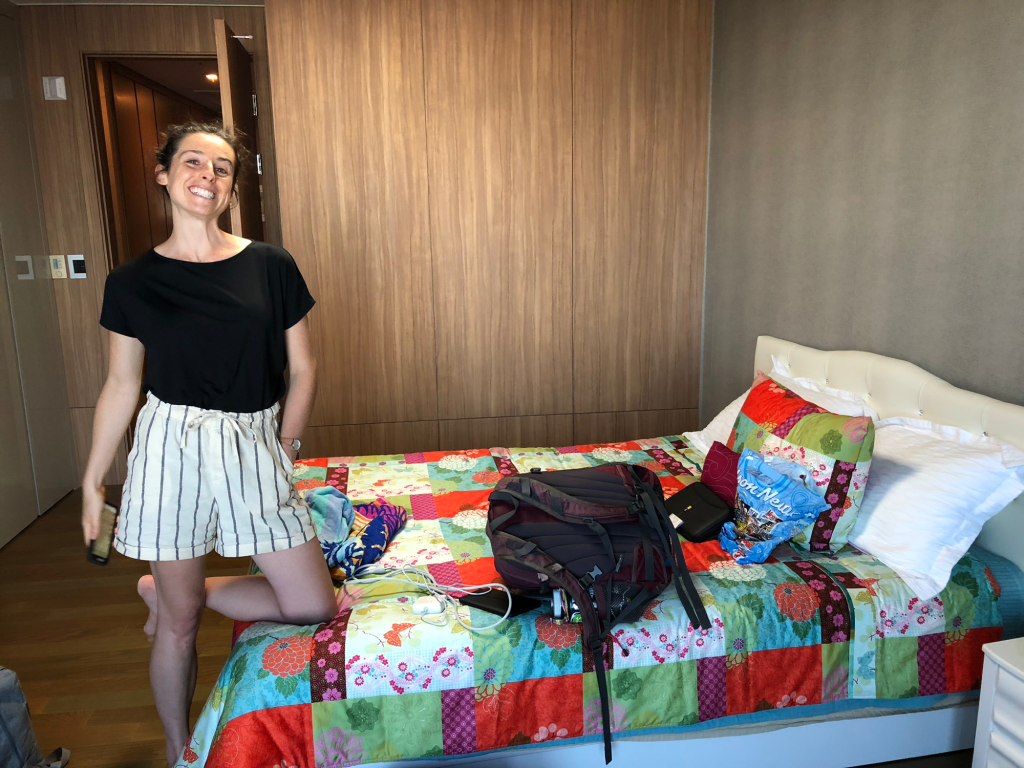
Up until then I had mostly traveled with my dad, who planned trips with meticulous care. I had subconsciously assumed Morghan would do the same. I felt naive about making that judgment. Morghan had still taken the time to plan a few fun activities for us.
Due to this experience—among others—I would later take the initiative to learn how to plan trips for myself.
Busan was overwhelming at first. The city felt endless. Streets stretched for miles with pop-up tents selling clothes, jewelry, trinkets, and food. The crowds were thick and constant. And something struck me immediately: everyone was Korean.
It sounds obvious now, but it was the first time I had ever been somewhere where nearly everyone shared the same ethnicity. It was a strange realization—to be the obvious outsider. I was used to much more cultural diversity than this.
Koreans often stared at us directly and without embarrassment. We were, after all, two of the only white people around.
I also started noticing cultural differences in small things. For women, short shorts were acceptable, but spaghetti straps were considered inappropriate. Young men were physically affectionate with one another in a way I rarely saw back home. Groups of playful young adults threw their heads back in laughter and clung to each other’s arms, dressed in fashionable clothes and stylish haircuts.
No anime? No striped socks? None of it matched the vague stereotype of Asia I had carried with me for nearly a decade.
One of the first activities Morghan took me to was a jimjilbang—a Korean bathhouse. Males and females were separated. The bath area had three rectangular tubs of different temperatures ranging from warm to very hot. Rows of sinks lined the walls where people sat on little stools to wash themselves, and showers filled another section of the room.
This was an immediately liberating experience, and the bathhouse quickly became one of my favorite places during the trip. It was unique and freeing in a way I had never experienced before.
Early on we ate a dish that involved some kind of sea creature covered in a red sauce. Morghan enjoyed it. To me, it tasted suspiciously like canned enchilada sauce and I thought it was terrible.
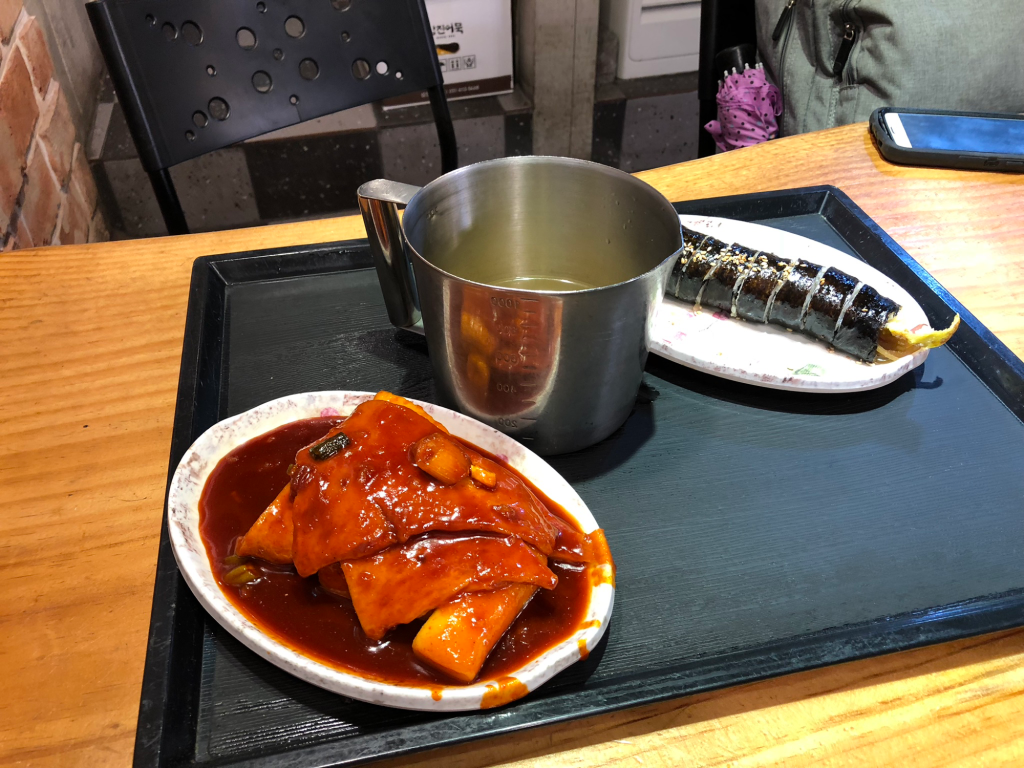
My favorite meal was what I still think of as a Korean version of pho—a bowl of noodle soup with clear broth and slices of beef. It was comforting and simple. The only place I found coarse salt to season the broth was at that restaurant. Everywhere else used seaweed instead.
Another thing I noticed: there were almost no trash cans.
When we had trash, we simply found a pile where someone else had already placed some and added ours on top. It felt like littering, even though that method of garbage disposal was the custom.
One evening we met up with one of Morghan’s high school friends, Hans, who happened to be visiting Busan with his brother. It felt strange and fun to meet someone who knew her from an entirely different chapter of her life. We went out together and drank makgeolli, a sweet and milky Korean rice wine.
It was smooth and slightly fizzy, and the whole evening felt like a collision of worlds—her high school life, her year in Korea, and my brief visit intersecting over bowls of rice wine in a busy Korean bar.
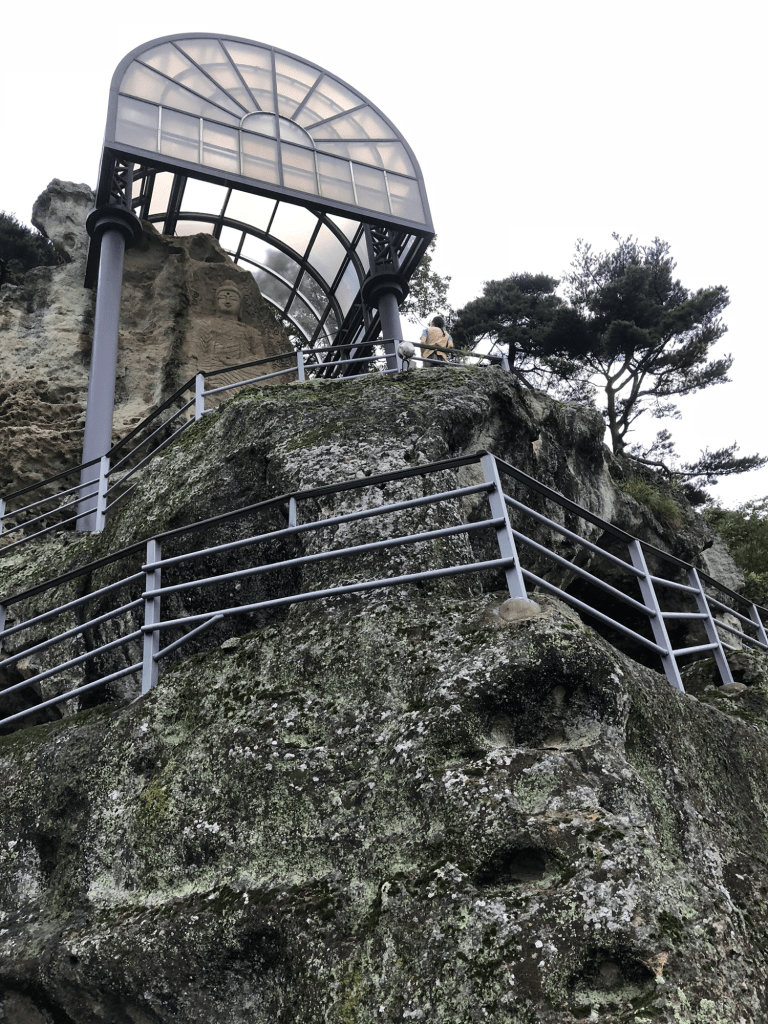
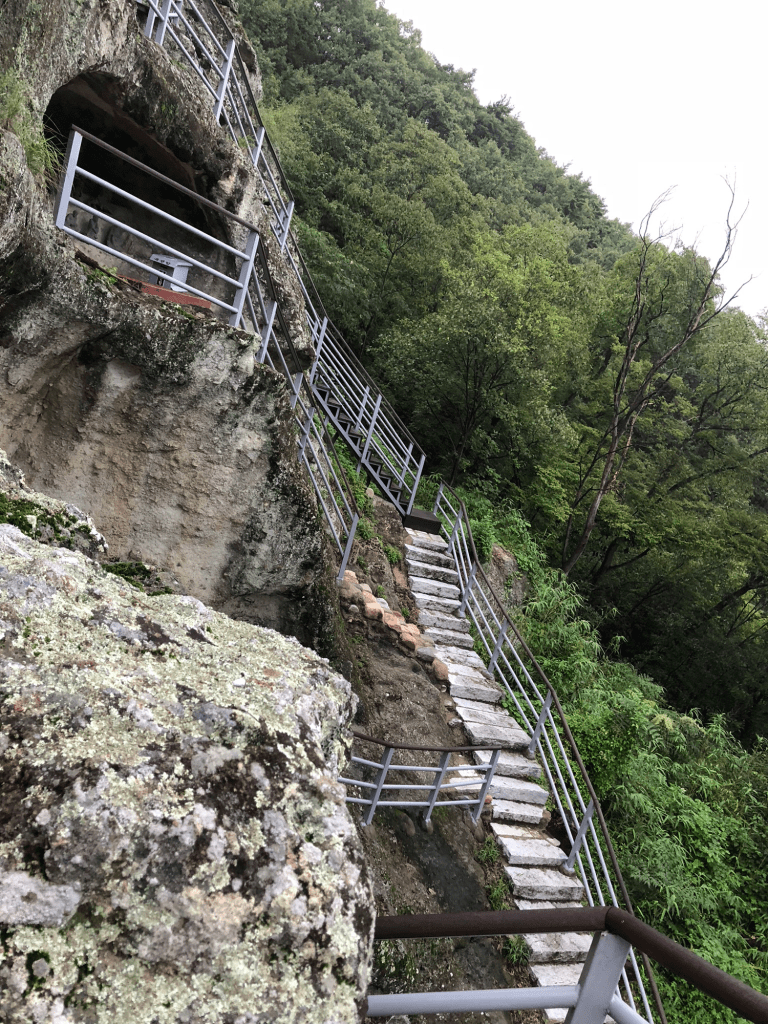
A couple days into the trip, we left Busan and traveled about three and a half hours by bus to a Buddhist temple called Golgusa in Gyeongju. Morghan’s friend from work, Becca, joined us for the temple stay.
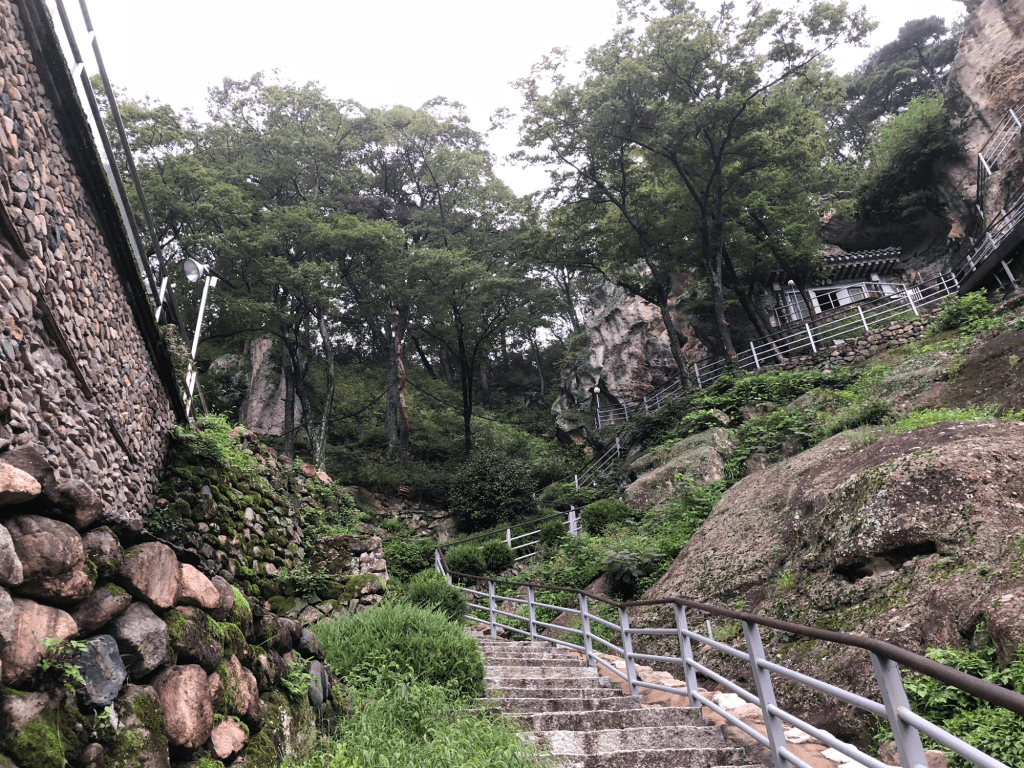
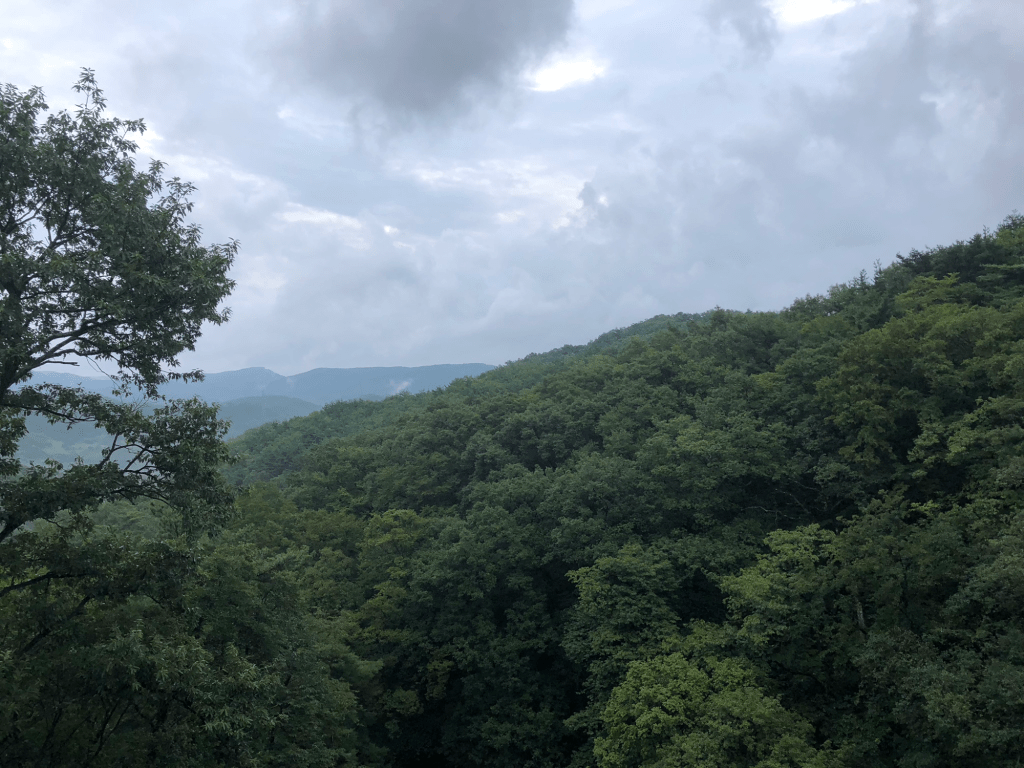
The temple was quiet and remote, surrounded by lush greenery and long stone staircases climbing up the hillside. Our first afternoon we sat for tea with a monk, a middle-aged guy who was tan, bald, lean, and strong as a rock. Later we attempted a yoga session with the monks.
Attempted.
Our monk led us through increasingly difficult poses until he eventually balanced on his pinkies. At that point I accepted defeat. But he was laughing—a silly monk. He knew we couldn’t do what he was doing.
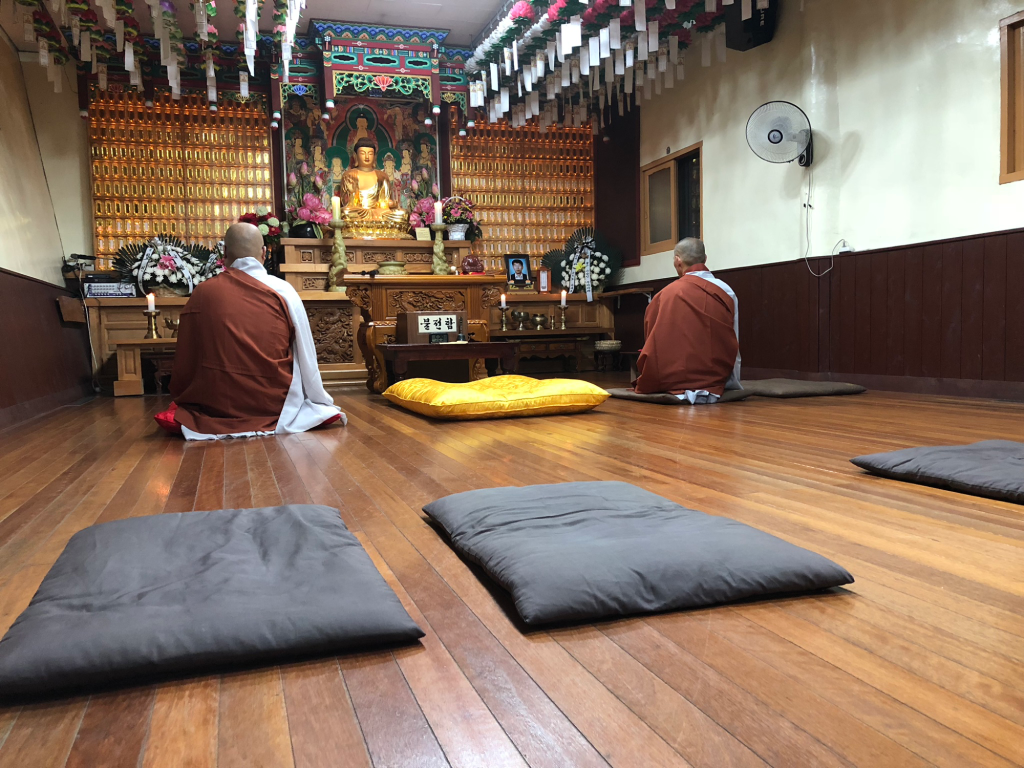
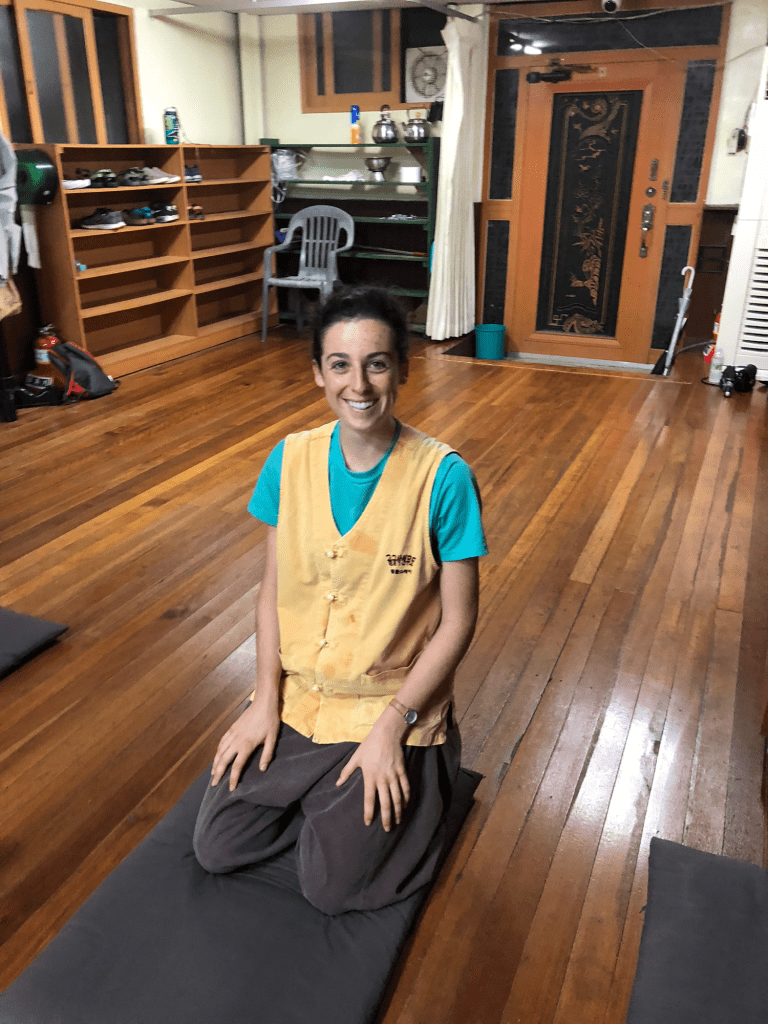
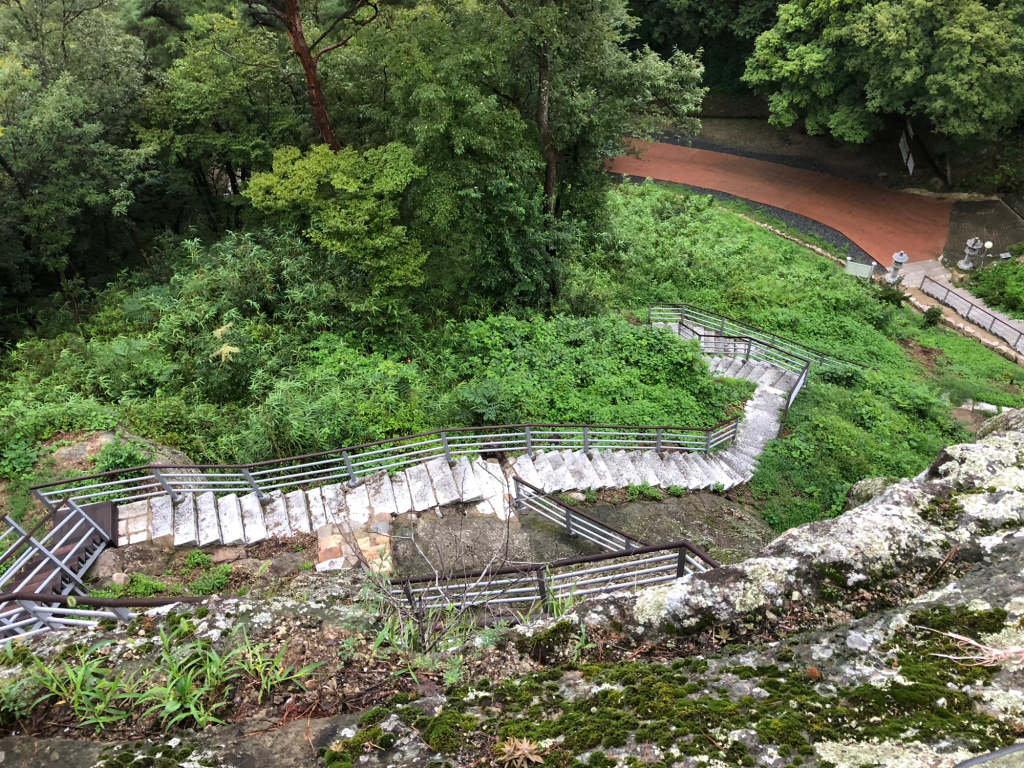
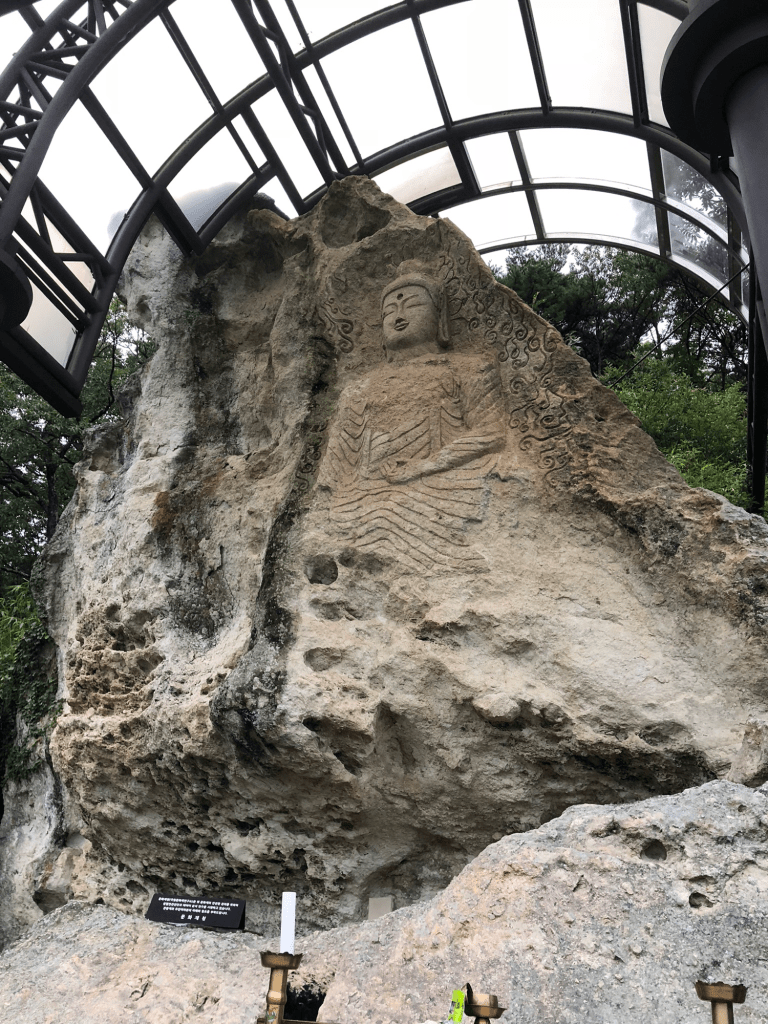
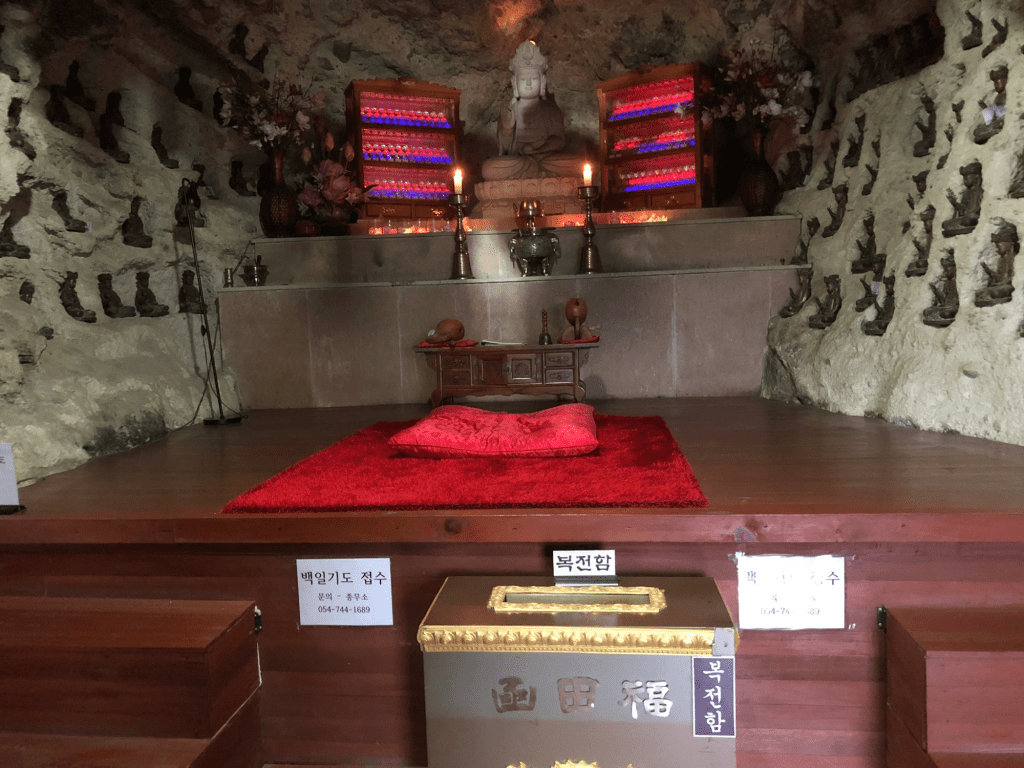
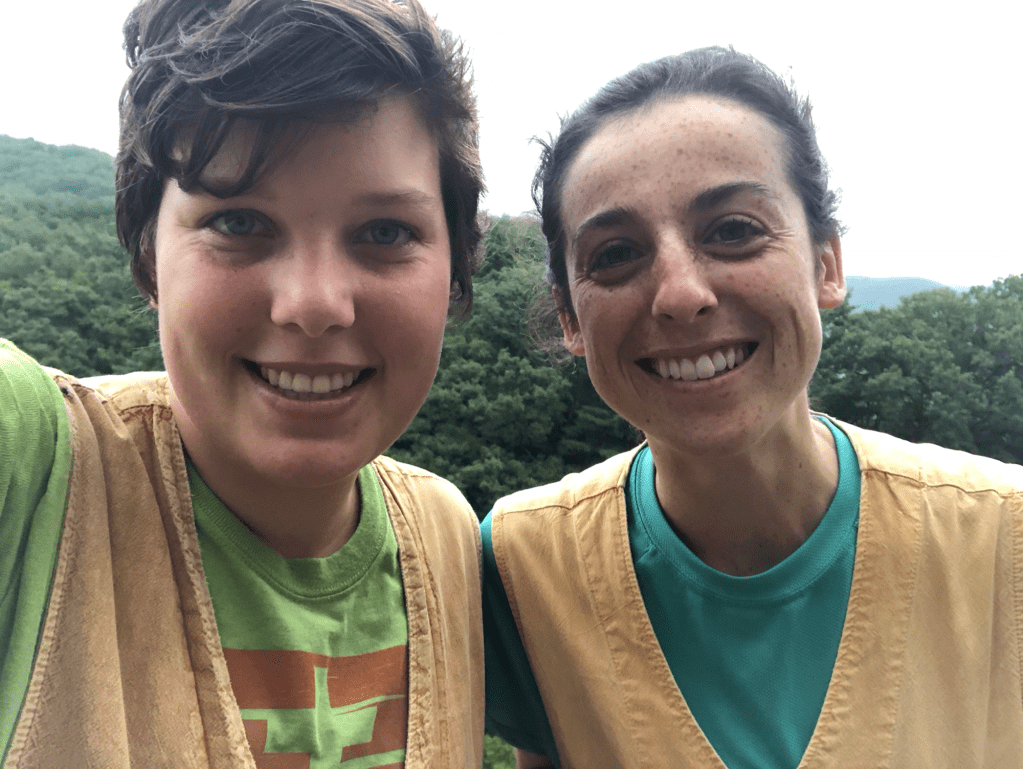
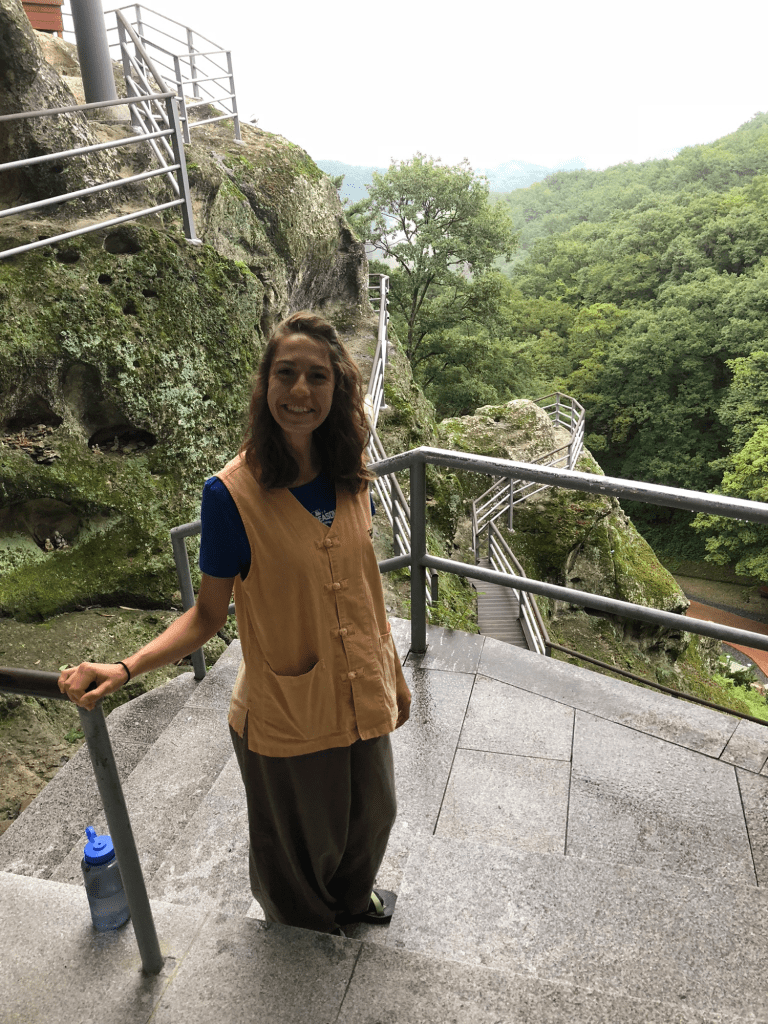
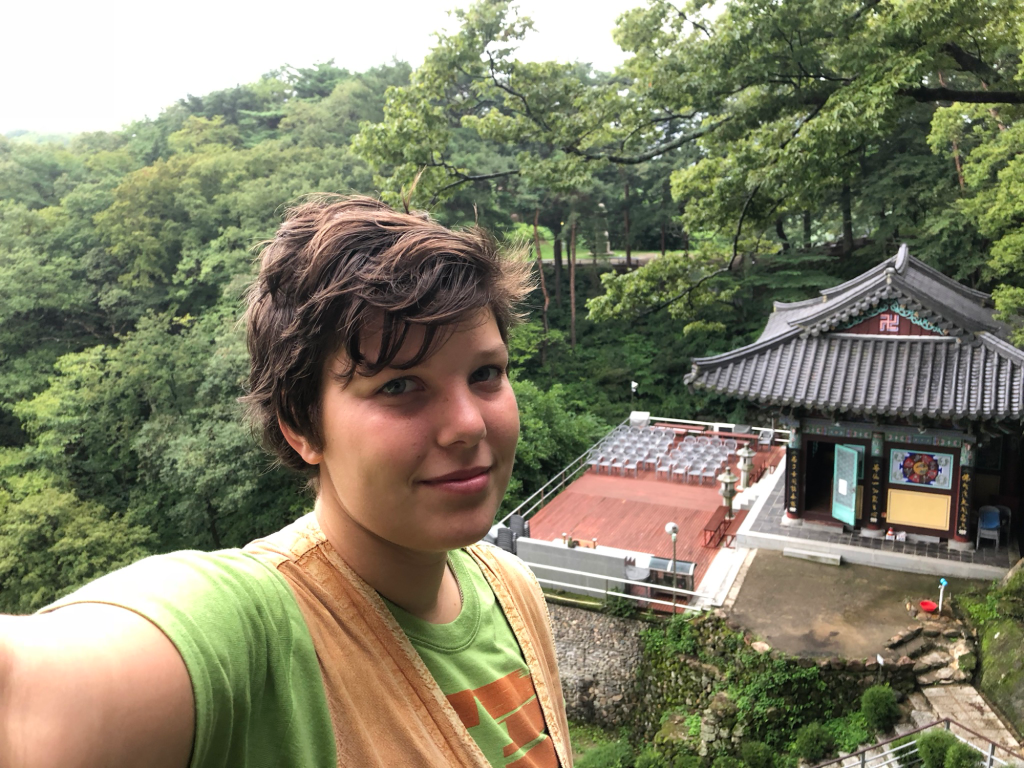
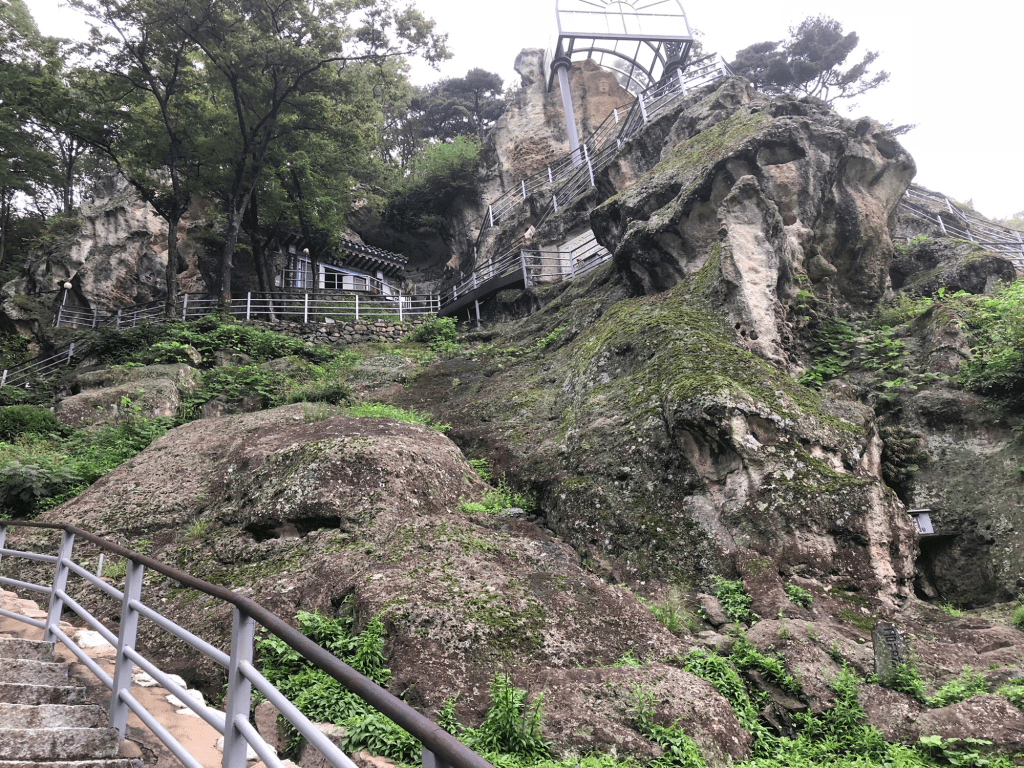
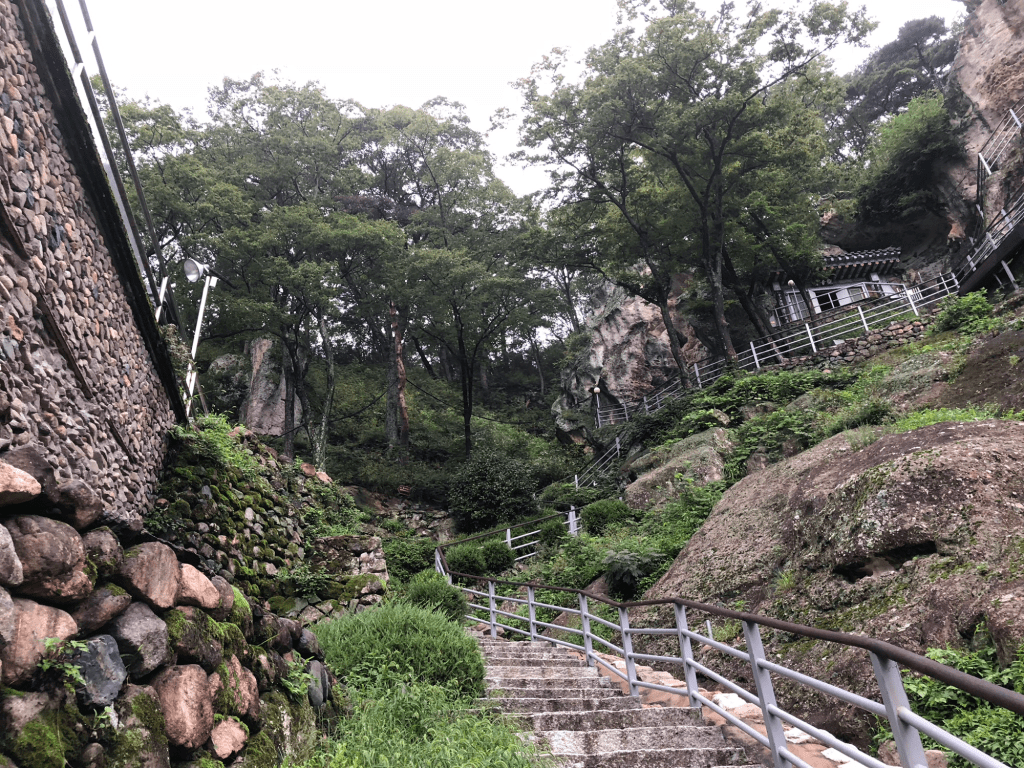
At night we slept on padded mats on the floor with thick blankets. The first night was freezing, and I sleepily refused to grab my sweatshirt. The next morning I complained about how cold it had been until Morghan pointed out the thermostat on the wall.
The next two nights were much more comfortable.
Our last day at the temple we did yoga on the beach. The monk clearly had looked up anatomical vocabulary beforehand, and as he carefully instructed us to tighten our “anal sphincter,” Morghan and I struggled not to burst into laughter.
Oh, to be twenty again.
Toward the end of the trip, Morghan had a few friends she wanted to see before leaving Korea. She had built a small life there during her year teaching abroad. One evening she went to visit a friend one last time while I stayed back with the couple hosting us.
Morghan was at the very end of her year abroad, tying up the loose ends of the life she had built there. Looking back, it might have been better timing for me to visit earlier in her year so she could have had the freedom to say her goodbyes and close that chapter without worrying about hosting a guest.
Travel teaches you little things like that.
My time with our hosts taught me something I still carry with me. I realized for the first time that people actually lived abroad in ordinary ways. The husband worked a regular job while his wife stayed home as a housewife. Until that moment I had thought living overseas was something people only did as missionaries.
That realization stuck with me. If other people could build lives abroad, maybe I could too someday.
As Morghan’s year in Korea came to an end, we took the subway to the airport together to catch our flight to Seattle. She carried a large suitcase, a smaller suitcase, and a backpack. At the time I had been leaning toward a more minimalist lifestyle, and I was exhausted by just looking at all that luggage she had to haul around.
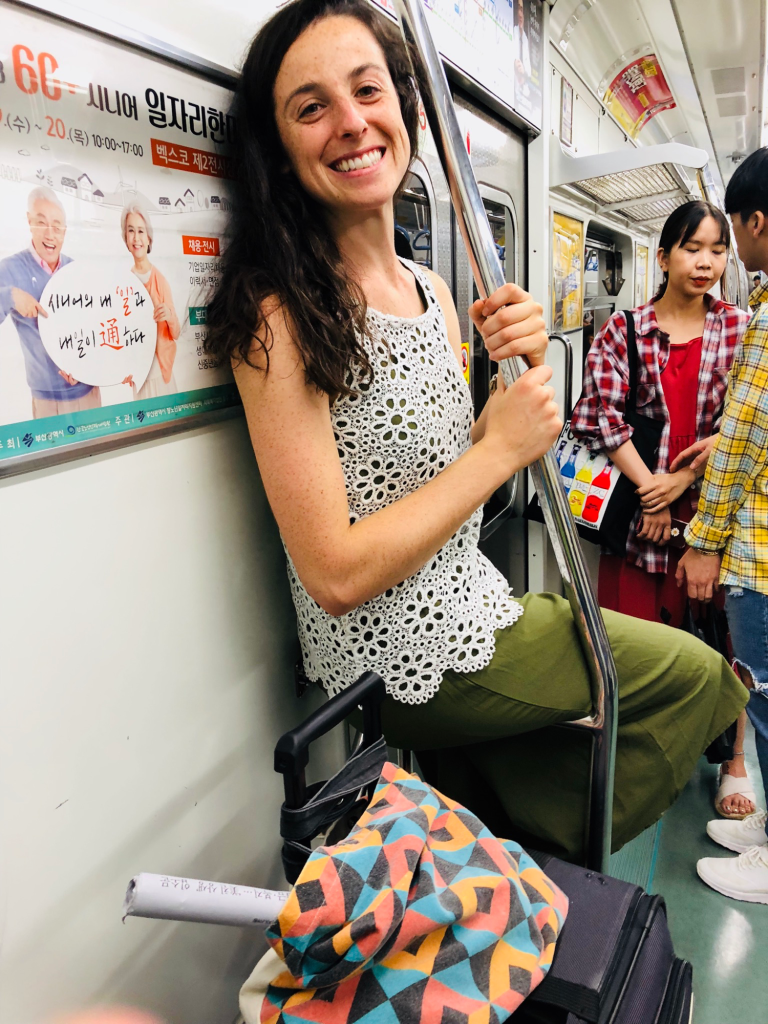
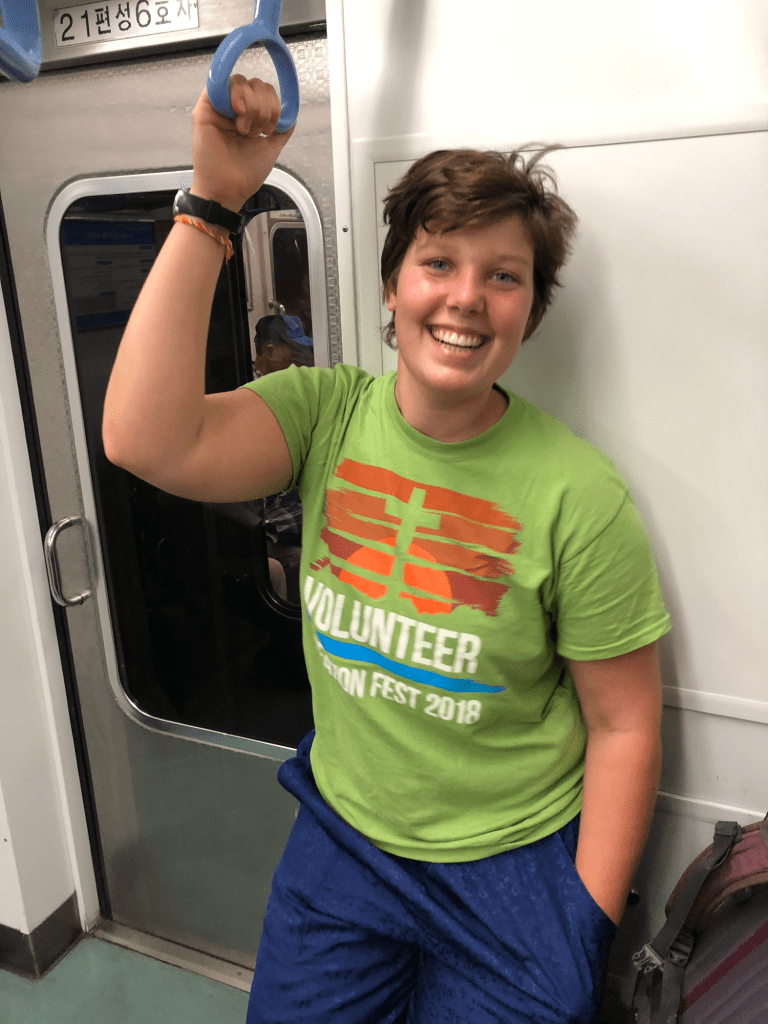
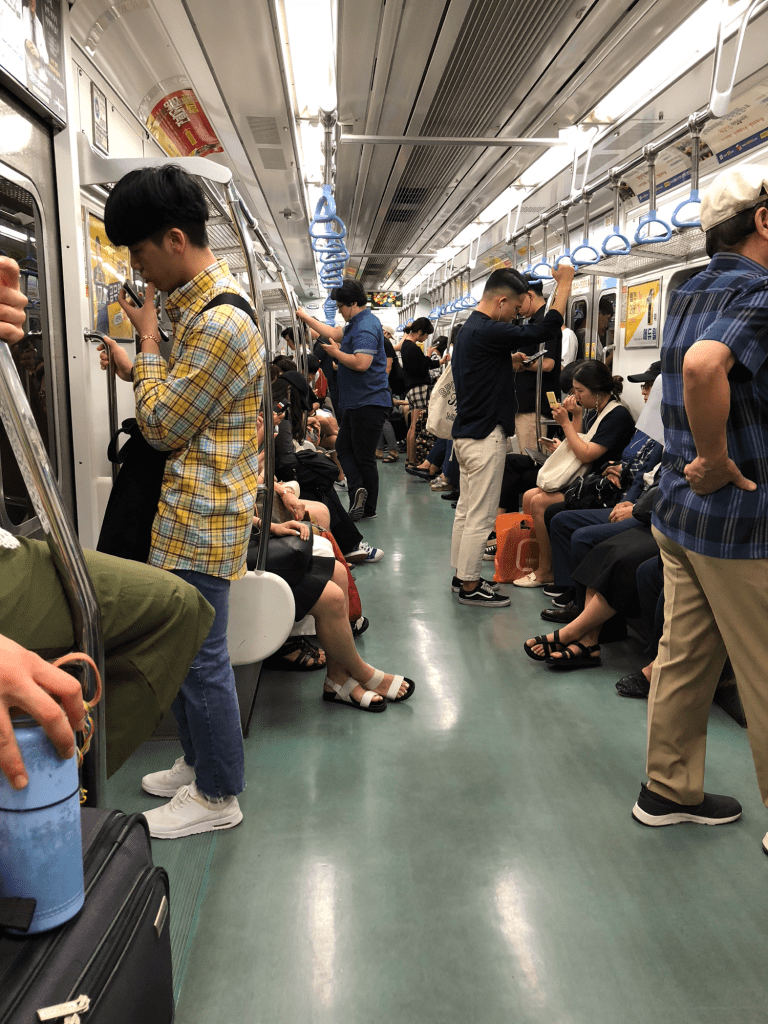
Morghan’s advice—which I regrettably ignored during a three-month stint in Ireland—was that if you’re living somewhere for a long stretch of time, the extra luggage is worth it. It may be inconvenient for a little while during travel, but it makes the months away from home much more comfortable.
Unfortunately, both of our suitcases disappeared somewhere in transit. I spent three days at my great-aunt and uncle’s house in Burien without my belongings.
The lesson from that trip was simple: never check a bag if you can help it.
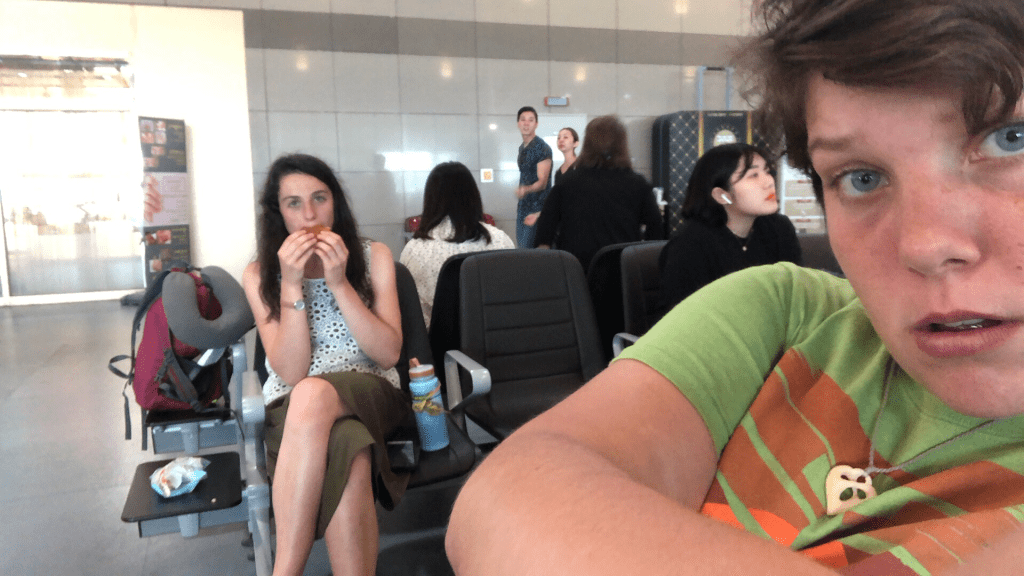
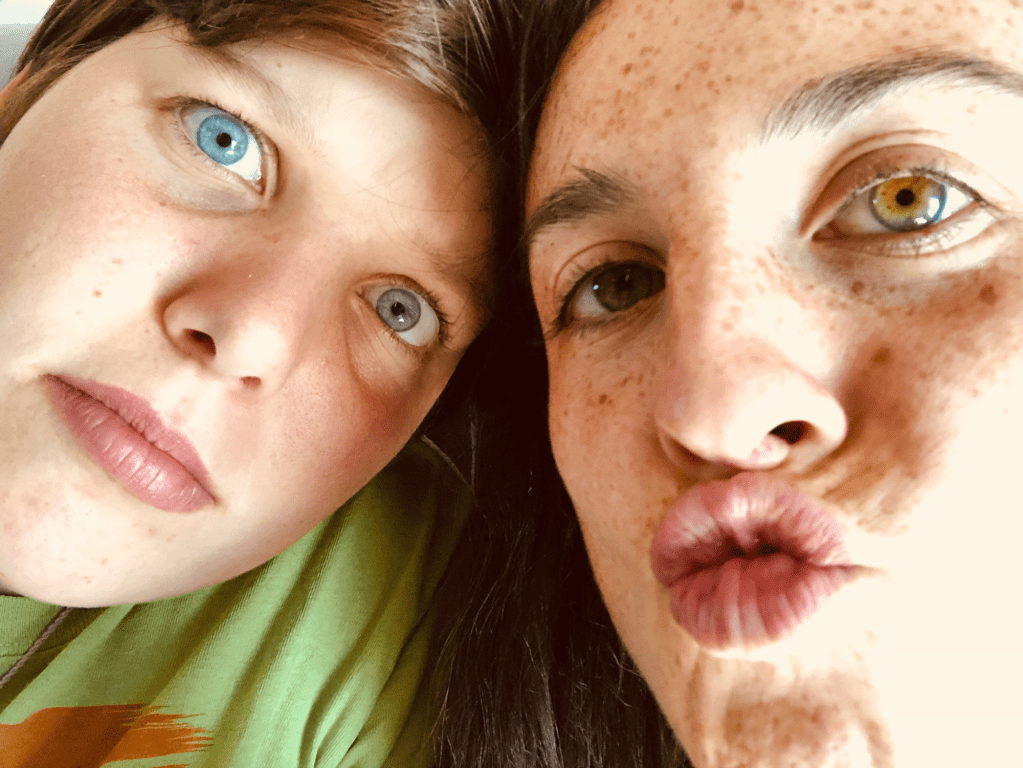
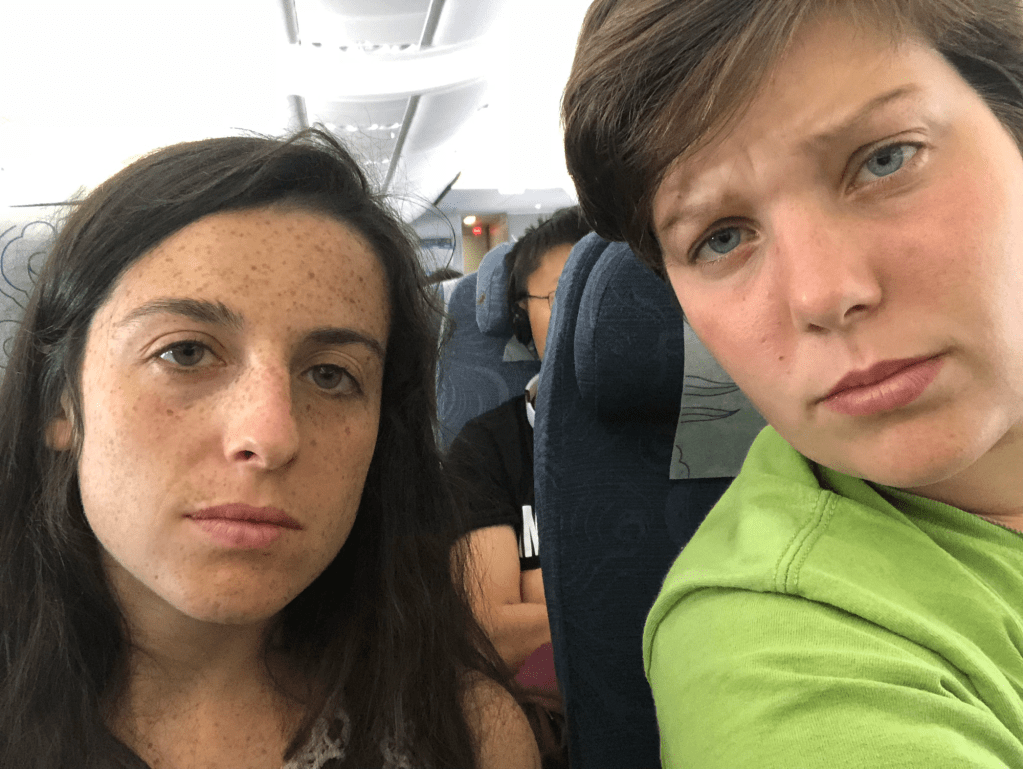
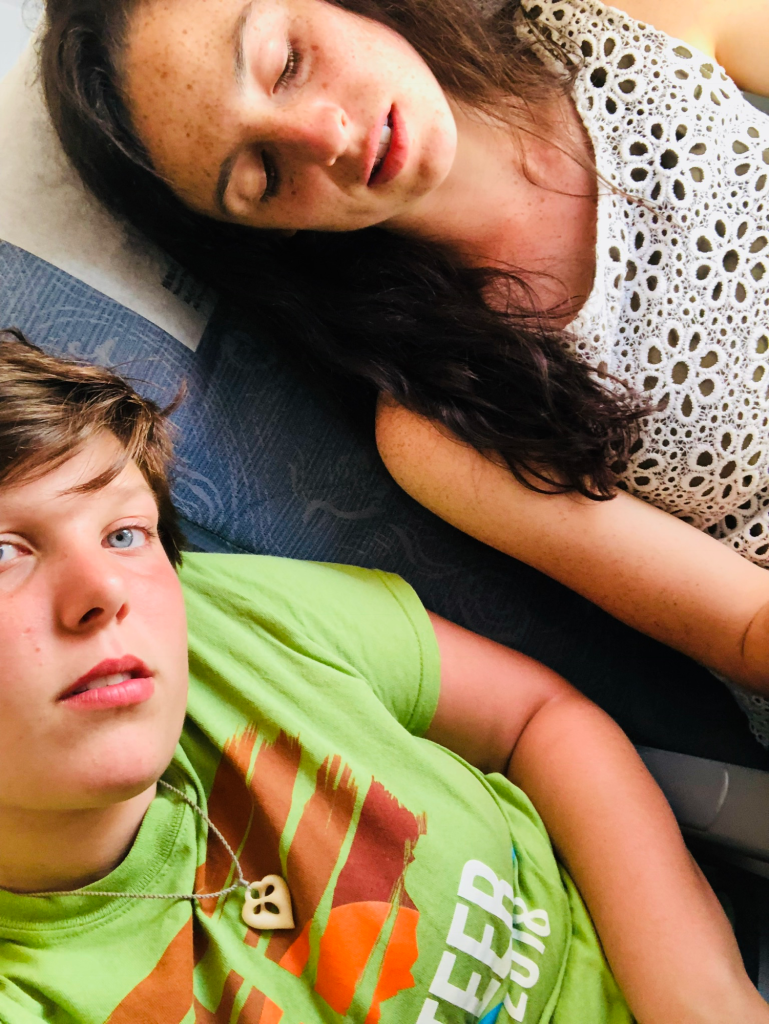
Looking back now, South Korea was one of the first trips that really shifted how I viewed the world. The version of Asia I had imagined as a preteen dissolved almost immediately once I arrived.
Busan looked nothing like my stereotypes.
It was crowded and colorful. It was fashionable and friendly. It was full of unfamiliar customs and surprising kindness. It was bathhouses, temple stairs, street markets, rice wine, and noodle soup.
And it was the first place that showed me how small my assumptions about the world had been.
I’m grateful to Morghan for inviting me into that experience—and for helping create one of the most memorable trips of my early travels.



 The Wonderland Journal
Leave a comment